


Dossier & Gastronomy: McDonald’s in Cambodia, Between Economic Opportunity and Authentic Cultural Challenge

Discussions between McDonald’s Corporation and Cambodian Deputy Prime Minister Sun Chanthol confirm a decisive step in the kingdom’s economic opening. The American giant, represented by Andrew Gregory, Executive Director for Southeast Asia, is currently exploring the conditions for establishing in Phnom Penh.
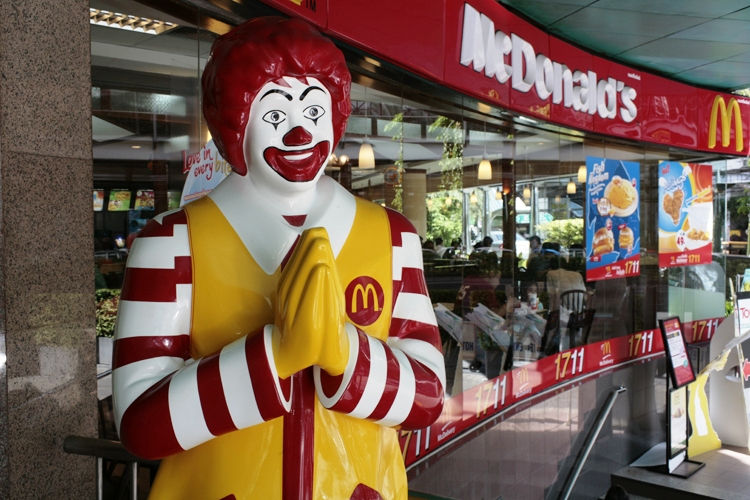
This initiative, based on a local franchise model and transparent supply chain, marks the convergence of two dynamics: the expansion of a global brand and the modernization of Cambodia in rapid growth.
An attractive Cambodian market for major international brands
With an economic growth rate close to 6% per year and a rapidly expanding middle class, Cambodia increasingly attracts foreign groups. Rapid urbanization, digital mobility, and the consumption habits of younger generations favor the emergence of new dining modes. McDonald’s sees potential in this landscape, both commercially and logistically.
According to economic experts’ forecasts, the Cambodian market could welcome between 15 and 25 restaurants of the brand within ten years. Each establishment would create up to 120 direct jobs, while indirect effects on logistics, agricultural production, and local trade would strengthen regional dynamics.
Foreign investment supported by the Cambodian government
Deputy Prime Minister Sun Chanthol confirmed that the government actively encourages international investments aligned with a sustainable development vision.
“The state offers tax incentives and a stable legal environment to attract brands like McDonald’s, which can contribute to job creation and youth training,” he emphasized.
The strategy envisaged would rely on a system of franchises held by Cambodian entrepreneurs, enabling local redistribution of profits while ensuring compliance with international standards.
McDonald’s and professional training: a lever for modernization
A key strength of the project lies in human resource training. Each McDonald’s franchise operates like a school for management, customer service, and food hygiene. Young employees acquire transferable skills: leadership, communication, team management, and mastery of industrial processes.
This model could inspire other local brands to structure their own training. For Cambodia, it would represent progress in the professionalization of the food and fast-food sector.
Local sourcing and sustainable agricultural development
McDonald’s is committed to favoring short supply chains whenever quality and food safety are guaranteed. The company could develop partnerships with local producers for meat, vegetables, or condiments. These collaborations would increase visibility for Cambodian agricultural sectors while consolidating a more sustainable production ecosystem.
The Ministry of Agriculture sees this as an opportunity to stimulate certain sectors by modernizing production and conservation standards. The challenge is to ensure that this opening to multinationals does not weaken small producers but rather integrates them into a better-paid value chain.
Risks of an unbalanced culinary globalization
Generally, McDonald’s arrival does not always receive unanimity. Voices often rise among gastronomy professionals and sociologists to warn of the risks of cultural homogenization.
The American food model, centered on speed and standardization, may contradict Cambodia’s gastronomic richness, based on freshness, diversity, and conviviality.
Others worry about health impacts linked to excessive consumption of processed products. Experiences from other emerging countries show that nutrition awareness is essential to avoid increases in obesity or cardiovascular diseases.
Local competition: a challenge for small restaurateurs
Independent restaurateurs fear economic pressure difficult to bear. Facing McDonald’s marketing and financial power, small businesses struggle to compete on price and perceived hygiene conditions by the public.
To preserve market balance, the government could implement support policies: subsidies for gastronomic innovation, modernization programs for local kitchens, and promotion of local products.
Economic sovereignty and geopolitical stakes
Adopting a standardized global model raises a major question: economic dependence. By integrating McDonald’s global supply chain, Cambodia exposes itself to international price variations and geopolitical risks.
Analysts recommend that the kingdom’s investment policy include safeguards: mandatory national production share, supplier diversification, and food security measures. This way, the influence of a foreign company would not compromise Cambodia’s economic resilience.
Cultural adaptation, key to McDonald’s Cambodia’s success
In other Asian markets, McDonald’s adapted its offer by integrating local flavors: rice, typical sauces, regional desserts. Success in Cambodia will depend on the brand’s ability to embrace Khmer tastes — a balance between American identity and local preferences.
A “Cambodian menu” based on local products would not only be a marketing argument: it would become a symbol of cultural respect and economic sustainability.
A balance between modernity and national identity
Cambodia is at a key development phase. McDonald’s arrival could symbolize a modern, open, and ambitious economy. But this modernity must reconcile with cultural and ethical demands: preserving community spirit, supporting Cambodian entrepreneurs, and protecting public health.
Success will depend on balanced dialogue among multinationals, the state, and civil society. If achieved, McDonald’s could become more than a global fast-food chain: a catalyst for social, economic, and cultural evolution in Cambodia.
Theoretical conditions to open a franchise
To open a McDonald’s franchise, a substantial personal contribution is required, generally around 190,000 euros, with a total investment of about 750,000 euros excluding installation costs. The entry fee is about 45,000 euros, whose payment formalizes entry into the network.
A 12-month training in operational restaurants is mandatory to master standards and network management. The franchisee must then fully commit, usually for a 20-year contractual duration, with exclusive involvement and active field presence.
The model also imposes strict respect of quality standards, operational procedures, and commercial obligations, including royalties between 10 and 20% of pre-tax turnover. The commercial site is chosen in consultation with the franchisor, ensuring a strategic location.
Finally, administrative steps include obtaining necessary licenses and permits, notably the operating permit and declaration of existence to competent authorities. The franchisee benefits from comprehensive support, including training, marketing assistance, and access to a purchasing center.
Example: McDonald’s in Vietnam
McDonald’s currently has about 25 restaurants operating in major economic cities like Ho Chi Minh City, Hanoi, Binh Duong, and the coastal city of Nha Trang. This presence remains modest compared to other markets, as the brand has not yet reached initial expansion targets, with less than a quarter of restaurant goals met per recent data.

The price of a McDonald’s meal in Vietnam is generally higher than local restaurants, averaging about 100,000 VND (~4.32 USD), nearly twice the price of a traditional meal. This premium positioning targets an urban and wealthier clientele, especially young urbanites and the growing middle class.
To better respond to Vietnamese tastes, McDonald’s introduced specific products like the “McPork,” a pork sandwich highly appreciated in Vietnam. However, major international icons such as the Big Mac, fries, and McNuggets remain flagship products, popular among consumers.
Besides classic restaurants, McDonald’s Vietnam offers adapted services, including 24/7 restaurants in some areas, drive-in ordering (highly popular in urban zones), and an efficient takeout ordering system. Focus on service quality and customer experience is a key lever to win the market.
McDonald’s establishment in Vietnam symbolizes the country’s gradual opening to a market economy since the 1990s reforms. The American brand, a capital and iconic symbol, sparked particular enthusiasm among young consumers, embodying a modern and globalized urban lifestyle. Nevertheless, McDonald’s must continue convincing against strong presence of traditional restaurants and deeply rooted eating habits in Vietnamese culture.
Despite a promising launch with a large clientele, including 22,500 on opening day, McDonald’s Vietnam grew slower than planned. The local market is very competitive, with great food offer diversity, and higher McDonald’s prices hinder a significant portion of the population.
McDonald’s in Vietnam represents an interesting example of adaptation and challenge in a rapidly changing economic and social country. With 25 restaurants currently and moderate ambition given market realities, the chain continues adjusting product and service strategies to capture the Vietnamese clientele while considering local cultural and economic specifics.
McDonald’s in Thailand: A brand combining innovation and tradition
Since officially arriving in 1985, McDonald’s has established itself as a pillar of fast food in Thailand. Today, the chain has about 240 restaurants nationwide, from major cities like Bangkok to more remote regions, ensuring strong presence and accessibility for Thai consumers.

The year 2024 was remarkable: McDonald’s Thailand achieved a record revenue of 7.9 billion baht, a 10% increase over the previous year, confirming sustained dynamism despite a unstable global economy. This growth is explained by several key factors: increased tourism, a government incentive program — “Easy E-receipt” — encouraging consumers, and menu diversification and adaptation.
Indeed, McDonald’s Thailand’s menu combines international classics like the Big Mac, McChicken, or Filet-O-Fish with highly appreciated local creations, such as the Samurai Pork Burger or McKhao Crispy Chicken Green Curry, blending local cuisine with fast-food codes. This innovative positioning helped McDonald’s integrate well into the culinary landscape.
Operationally, McDonald’s invests strongly to expand and modernize its network. In 2025, the company plans to invest 700 million baht to open 20 new restaurants and renovate 25 existing ones. This strategy aims to improve customer experience with self-service order kiosks and convivial spaces, and strengthen geographic coverage amid growing competition.
Thailand’s fast-food market remains very promising, estimated at 35.4 billion USD in 2024, with an annual growth rate near 8% through 2029. McDonald’s holds a significant market share, where consumers, mostly young and urban, prioritize speed and quality. Additionally, a trend toward healthier eating pushes the group to further diversify its offer.
In summary, McDonald’s in Thailand succeeds in combining its global heritage with strong local adaptability. Its strong revenue growth, numerous restaurants, and operational investments demonstrate its leadership in a growing market.


Comments