


Chinese New Year in Cambodia: Vibrant Spring Festival

Chinese New Year, also known as the Spring Festival, stands out as one of the most dazzling and unifying celebrations in Cambodia, especially within the Sino-Khmer communities that weave into the country's urban fabric.

This pivotal moment, coinciding with the first day of the lunar calendar, brings families, friends, and colleagues together around ancestral rituals rich in symbolism: purification of homes and souls, invocation of material and spiritual prosperity, and strengthening of harmonious social bonds.
In February 2026, two years after the last impacts of the Covid-19 pandemic and amid an encouraging economic recovery, Cambodia prepares to experience this festival with renewed intensity. In bustling Phnom Penh and rural provinces alike, preparations are in full swing, turning streets into a kaleidoscope of colors and sounds, a testament to enduring cultural resilience.
Mythical Origins and Deep Historical Roots
The roots of this festival delve into ancient Chinese mythology, exemplified by the famous legend of the monster Nian. According to tradition, this sea demon terrorized villages each winter until a clever old man repelled it with the color red, deafening firecracker noises, and flame light. These elements—ubiquitous scarlet decorations, festive explosions, and nighttime fireworks—remain the symbolic pillars of contemporary celebrations.
In Cambodia, these customs date back to the 1st century AD, when trade between the emerging Khmer Empire and China's Han dynasty opened flourishing maritime routes. Chinese immigrants, arriving in successive waves over centuries, did not impose their culture but subtly infused it into Khmer society, creating a rich syncretism where Khmer animist rites, Buddhist practices, and Chinese Confucian traditions intertwine fluidly.

This fusion strengthened under great Khmer kings like Jayavarman VII in the 12th century, who promoted trade in precious silk, aromatic spices, fine ceramics, and rare metals. Ports like Oc-Eo and Angkor welcomed Chinese merchants, laying the foundations for a fraternal friendship still alive today. In 2026, amid consolidated Sino-Khmer diplomatic ties—bolstered by bilateral economic partnerships and Beijing's growing influence in Southeast Asia—the New Year transcends ethnic boundaries to become a national event.
Though not an official public holiday in the Khmer calendar, it is celebrated nationwide: public and private schools, commercial banks, royal administrations, and many companies close for several consecutive days.
Family reunions thus span about fifteen days, from the eve of the first lunar day to the grand Lantern Festival, offering a rare pause in modern life's frenzy.
Meticulous Household Preparations and Bustling Popular Markets
Preparations begin weeks before the big day, transforming every home into a sanctuary of colors and hopes. The inaugural ritual is a thorough general cleaning, called "sweeping away worries," aimed at physically and symbolically banishing the past year's misfortunes.
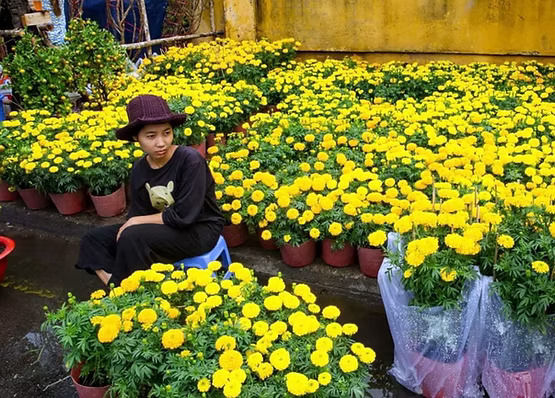
Entry doors, windows, and balconies adorn with finely cut red papers in auspicious motifs: the carp evokes inexhaustible abundance (yu meaning both "fish" and "surplus"), juicy peaches promise flourishing longevity, while smiling mandarin pairs embody marital and family harmony. Ceilings feature spherical or cylindrical lanterns diffusing soft light, and peach or Têt orange blossoms—imported or locally grown—complete this evocation of spring renewal, even in Cambodia's tropical climate.
In Phnom Penh, major markets like Psar Thmei, Psar O’Russei, or the Russian Market become hyperactive human anthills. Street vendors and fixed stalls overflow with exotic fruits—sweet mangoes, fragrant jackfruits, durians—as well as spit-roasted suckling pigs or whole glistening hogs spiced with oil, plus ancestral offerings of sticky rice, candies, and incense.
Traditional red envelopes, called hongbao, filled with new bills for children, singles, and elders, ensure luck, fertility, and social success. In 2026, freed from lingering health restrictions, these bazaars shatter attendance records, a tangible sign of deep cultural resilience: "Health first, but tradition endures, stronger than ever," confide Khmer and Sino-Khmer merchants, while Chinese tourism, boosted by direct flights, brings thousands of visitors.

On the culinary side, preparations peak with symbolically laden dishes. Yu sheng, the raw fish salad from southern China, becomes an interactive ritual: around the table, guests of all ages toss ingredients high—radish, carrots, seaweed, candies—shouting wishes like "prosperity with the year" or "growing fortune." In Cambodia, this adapts to local tastes with steamed amok fish in banana leaves, longevity noodles (miàn tiáo) for a century of happiness, or fried shrimp balls, a perfect fusion of Chinese heritage and spicy Khmer cuisine.
Meticulous Ancestral Rituals and Abundant Family Offerings
The ritual sequence formally opens on the 23rd day of the 12th lunar month, during the Little New Year festival, with homage to the Kitchen God (Zao Jun). This domestic deity, who ascends to heaven to report the household's deeds to the Jade Emperor, receives sweets and prayers for a favorable account. On New Year's Day itself, family altars groan under abundant offerings: golden-glazed suckling pigs, glossy roasted ducks, stacked sticky rice cakes (nian gao, whose name evokes "year after year, higher" for social ascent), and pyramids of tropical fruits symbolizing fertility and abundance. Collective prayers fervently invoke robust health, material wealth, and thriving business—priorities ingrained for Sino-Khmer entrepreneurs, pillars of Cambodia's expanding economy in 2026.
The protocol is immutable: the youngest first present wishes to elders, touching their hands in filial piety. A strict arsenal of taboos frames these moments: absolute ban on sweeping on the first day (lest luck be swept away with dust), prohibition of gloomy words, arguments, or tears, and obligation to wear new clothes, preferably red or gold, to embody personal and collective renewal. These prescriptions, passed orally through generations, maintain intangible social cohesion.
Spectacular Public Parades and Enchanting Acrobatic Dances
Beyond the family circle, celebrations spill into public spaces, with lion and dragon dances as the highlight: agile acrobats embody these mythical creatures, the green lion—benevolent guardian of luck—leaping to devour offered lettuces (lettuce signifying "continuous fortune") and bright oranges (another prosperity symbol). Sinuous dragons, handled by coordinated teams, writhe to drum rhythms, while fireworks and deafening firecrackers definitively chase away evil spirits.
Lunar Zodiac, Enduring Superstitions, and 2026 Specifics
2026 precisely marks the Year of the Fire Horse in the Chinese lunar zodiac, a sign synonymous with overflowing vitality, fruitful travels, and rapid success for the bold.
Superstitions, far from folklore, still guide choices: avoid cutting nails (lest "fortune be cut"), prioritize astrologer-determined auspicious dates, or even orient beds feng shui-style to capture positive energies.
Toward a Harmonious, Multicultural Future
Chinese New Year in Cambodia reveals the essence of a resilient, open nation where millennial Chinese traditions and ancestral Khmer heritage fuse into a unique, vibrant identity. In 2026, hopes for robust health, abundant prosperity, and collective harmony endure, inviting the entire nation—Khmers, Sino-Khmers, Vietnamese, and expatriates—to a shared celebration under a serene sky, bearer of promises for the Year of the Horse.


Comments