


The Guardians of Memory: Voices and Elephants of Mondulkiri

On the afternoon of 22 July 2025, the Hill Tribes Memory Community Centre organised a forum entitled ‘Listening to the Stories of Villagers’, bringing together twelve students who had participated in the Forum on the History of the Khmer Rouge a month earlier.

On the podium: Pyoy Teuv, an 85-year-old elder from the Bunong people, originally from the village of Dak Dam, now living in Putang, in Mondulkiri Province. Her testimony combined family memories, elephant traditions and painful recollections of Cambodia's turbulent years.
This forum, designed to strengthen ties between villagers and younger generations, aimed to deepen understanding of the fundamental role of elephants among Cambodia's indigenous peoples — totem animals and companions in labour, forever inseparable from the collective memory. It also sought to preserve the memory of survivors of the Khmer Rouge regime, so that past tragedies might inform the future.
Pyoy Teuv: A Life Marked by History and Elephants
Pyoy Teuv, a strong Bunong matriarch, recounted her life story: she had five children, lost two of them in the aftermath of the Khmer Rouge regime, and has been a widow since 2005. By her side is her most prized possession: Apun, a 45-year-old male elephant, inherited from her ancestors and now in the care of her grandson Naro Apo. This iconic animal is a guiding thread and a living link to her family history.
Her story goes back to the deep-rooted tradition of elephant breeding, marked by rituals:
‘The day my grandfather died after taking in a family who had come to give birth at our house, the elders demanded that we find the family concerned to perform a purification ceremony, after which an elephant was given as compensation,’ she says.
When the animal arrived, a new ritual was performed to tame the elephant, thus binding the family's destiny to that of the creature forever.
The Elephant, Mirror of Life and Spirituality
Elephant breeding is governed by strict codes. When an animal falls ill or refuses to eat, the entire community searches for the causes in social disagreements — children married against tradition, births outside marriage, miscarriages — all episodes that call for reparation through the ritual sacrifice of jars of wine, poultry and pigs.
Pyoy Teuv, who is also a traditional midwife, sees her status reinforced by these links to elephants. She is invited to weddings, but only on condition that the families offer the animals required for the rituals.

‘Elephants have always been at the heart of village life,’ she explains: they are beasts of burden for transporting food and materials, a means of transport when roads and engines are lacking, and saviours during floods.
Stories of war and resilience
The discussion turns to history. A student, Sokna, asks, ‘Why has our country experienced so many wars?’ Pyoy Teuv then delves into her childhood memories: the clashes between Lon Nol and Norodom Sihanouk, the rumours of the Vietcong. Far from today's social media, information was scarce.
Driven from her village by the Khmer Rouge in 1973, she recalls forced labour in the fields, hunger, and the unexplained disappearance of those ‘sent for re-education’.
In 1979, after the fall of Pol Pot, she returned to Mondolkiri and then Putang, marking a new era for her family and her elephant.
The Elephant, Symbol of Identity and Hope
At the end of the forum, some students dreamed of ‘adopting’ an elephant, while others discovered the demands of attachment and care. All saw in this great animal a living emblem of indigenous identity, enriched by the stories passed down by their elders.
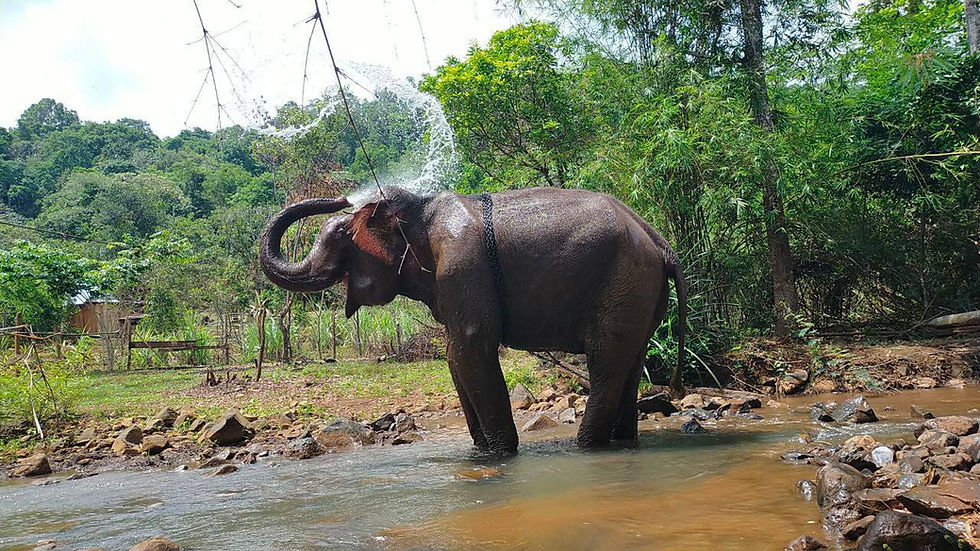
From the frescoes of Angkor to royal customs, colonial rituals and the horrors of war, Cambodian elephants have endured it all: beasts of war, victims of bombing, messengers of tradition and, today, assets for environmental conservation and tourism. Despite the decline in the domestic population, there are an estimated 50 wild elephants in Mondulkiri.
Lest We Forget
Pyoy Teuv's story echoes that of millions of Cambodian survivors, who carry precious memories for future generations. His struggle, like his final advice to young people, is to learn, remember, and proudly embrace their identity in order to build a peaceful society that respects its roots.
Photo by So Farina et Mony Bunsen
Texte by So Farina


Comments