


Nhiek Tioulong, a Century of Cambodia Told from the Inside

Éditions GOPE published Chroniques khmères in July. The book is the memoirs of the former prime minister and army chief of staff, and it covers 1845 to 1969. It is annotated by Henri Locard and prefaced by David Chandler.

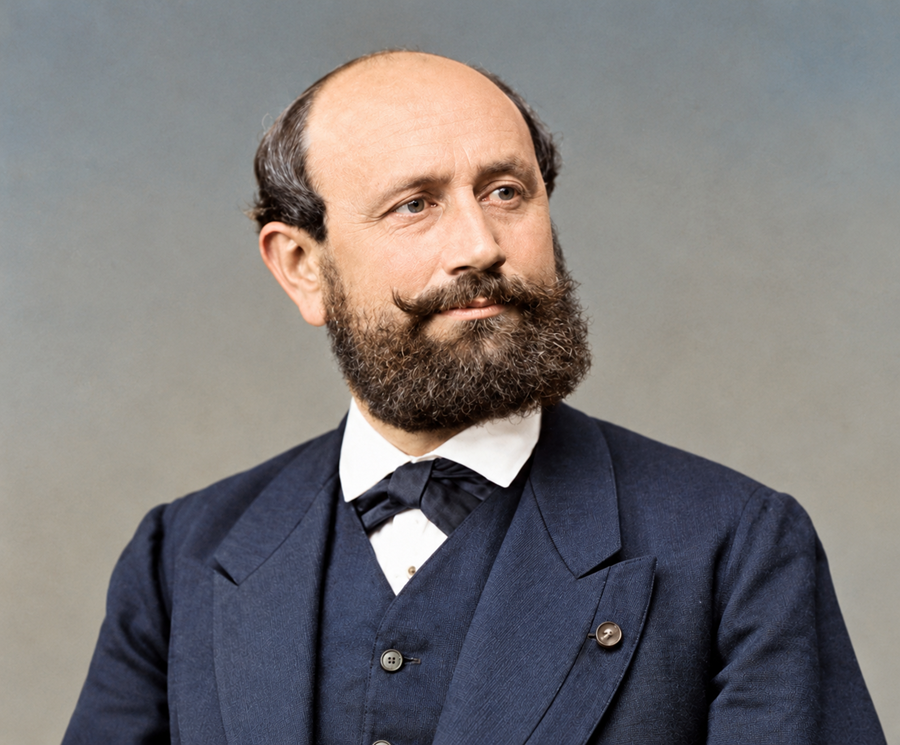
There are many books on Cambodian history. Few were written by a man who was in the room. Nhiek Tioulong, born in Phnom Penh in 1908 and died in 1996, was. Provincial governor, minister, head of government, chief of staff: he held the highest offices, under the Protectorate and after independence. From 1941 to 1969 he was one of Norodom Sihanouk's closest collaborators.
Chroniques khmères. Le Cambodge de 1845 à 1969 runs to 412 pages. The story begins at the end of King Ang Duong's reign and stops at the threshold of the Khmer Republic.
A man of the court
Nhiek Tioulong came from a family close to the Royal Palace. A graduate of the Royal School of Administration, he rose through the state apparatus during the Protectorate. He helped build the country's administrative structures alongside the French authorities, who trusted him. Later he stood beside Sihanouk in the "royal crusade for independence".
He wrote in French, the language of his education. The photographs in the book come from his personal archives. Several members of his family, including Antonya, Néva and Saumura Tioulong, helped with proofreading.
From 1845 to 1969
The book has two parts. The first deals with the French Protectorate: the reigns of Ang Duong, Norodom, Sisowath and Monivong, then the administration, the economy and the communities of the country before 1941. The second opens with the accession of the young Sihanouk. It follows the Vichy period, the Japanese occupation, the coup of 9 March 1945, the return of the French, the first political parties, the 1947 Constitution and the long road to independence.
The epilogue looks at what the country built once it was sovereign. It covers the 1960–1964 five-year plan, with figures on public health and education.
What the sample pages say
The pages offered by the publisher give a sense of the tone. The author is precise, factual, at times dry.
Chapter XIV opens in March 1953. Sihanouk is in France and sends a long memorandum to President Vincent Auriol. He argues that only real independence, military, economic and financial, can repair the situation. He describes a country where three fifths of the territory is outside the government's control, held by the Vietminh and Issarak rebels. Getting no answer, he presses the Élysée again. He finally leaves France on 10 April by a detour through Canada and the United States, instead of flying straight back to Phnom Penh.
The same chapter turns to the Geneva Conference, which opened on 25 April 1954, and to the fall of Diên Biên Phu on 7 May. The author explains why Cambodia, unlike Vietnam and Laos, kept its territory whole: on the ground, Khmer forces held their own against the Vietminh. He cites the battle of Srê Chis. A footnote states that the defence minister and chief of staff who led the military delegation at Geneva was the author himself. Another note, by the annotator, recalls that he and Sam Sary stood up to Molotov, Zhou Enlai and Pham Van Dong. The accords were signed only at dawn on 21 July, not on the 20th.
Chapter XVI tells how Sihanouk stepped onto the international stage. After Geneva, Cambodia was still little known beyond the temples of Angkor. Then came New Delhi, the Bandung Conference in April 1955, Tokyo, admission to the United Nations, Beijing in 1956 and a tour of European capitals from Paris to Moscow. The author sees the birth of a neutrality he calls active.
Two historians' eyes
The book is annotated by Henri Locard and prefaced by David Chandler. Their notes clarify people, dates and stakes. They also set the testimony in context. A text written by a leading actor keeps its value as a source, with its angles and its silences. Here, it comes with company.
For anyone interested in the period, it is a first-hand document, written in French, which remains rare.
Practical information
Chroniques khmères. Le Cambodge de 1845 à 1969, by Nhiek Tioulong. Annotated by Henri Locard, preface by David Chandler. Éditions GOPE (Scientrier, 74930, France), July 2026. 412 pages, 148 x 210 x 17 mm. ISBN 978-2-494118-44-7. Price: €24.
An excerpt and ordering are available at www.gope-editions.fr/livre/chroniques-khmeres


Comments