


The Khmer Smile: What It Says, and What It Doesn’t

In Cambodia, a smile welcomes, soothes, apologises. It can also hide embarrassment or fatigue. From the faces of the Bayon to Theravāda Buddhism and the wounds of the 20th century, what does this smile, which every visitor talks about, really say?
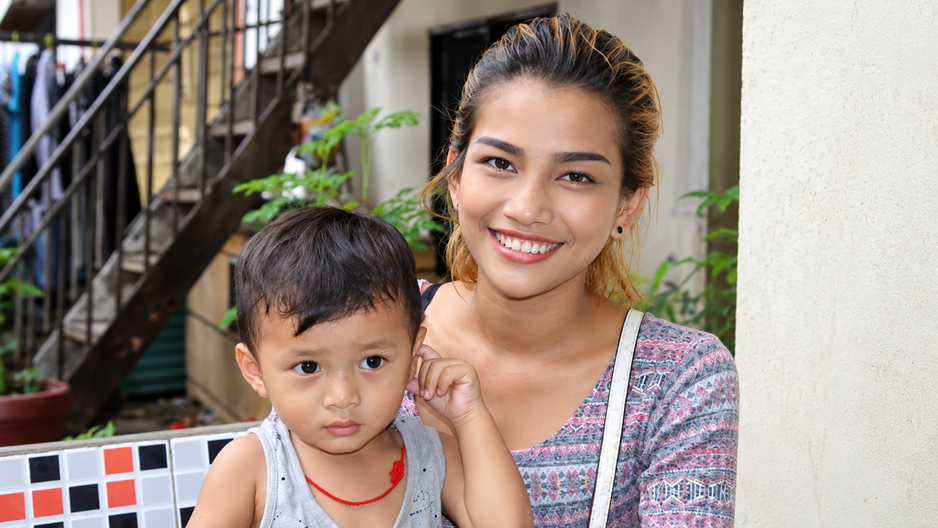
A fruit seller in a Phnom Penh alley. A child playing near a pagoda. An old man sitting in the shade of a mango tree. In Cambodia, the smile is everywhere. There is nothing spectacular about it: it is discreet, sometimes shy, barely visible. Travellers still remember it long after they leave.
The Khmer smile is more than a facial expression. It is a way of welcoming, of calming things down, of answering without speaking. Sometimes it is also a way of hiding what one feels.
The Smile of Angkor, a Centuries-Old Riddle
To understand the place of the smile in the Cambodian imagination, start by looking up at the towers of the Bayon.
At Angkor Thom, huge faces carved in stone look out at the world, eyelids lowered, lips slightly raised. Their expression has fascinated travellers, archaeologists and historians for generations.
These faces are generally linked to the reign of Jayavarman VII, in the late 12th and early 13th centuries. How to read them is still debated. Some see the idealised features of the king. Others see the bodhisattva of compassion, Avalokiteshvara. Others again see a mix of royal and religious symbols.
Scholars argue, but in front of these faces one impression stands out: they smile. Not in triumph, not with loud joy. It is an inward, peaceful smile, as if detached from human passions.
This image has become one of the most recognisable in Cambodia. It would be going too far, though, to look in it for the origin of the smile of Cambodians today. Between the Bayon and the daily life of the Khmer there is a cultural resonance, a symbolic continuity. Anyone can feel it. No one can really prove it.

A Silent Language
In Cambodia, a smile does far more than express happiness. It goes with greetings, softens exchanges, sometimes answers in place of words. It can mean welcome, gratitude, embarrassment, modesty, or the wish to keep a relationship calm.
In a society that traditionally values respect, age, status and restraint, facial expressions form a real language. A smile can defuse a delicate situation, soften a refusal, accompany an apology, stop a disagreement from turning into a quarrel.
Hence a frequent misunderstanding. A foreign visitor takes a smile for agreement, when the other person is simply embarrassed, or does not want to upset them. The smile does not always say what you think. To understand it, you also have to read the eyes, the silence, the posture, the context.
Gentleness as Strength
Cambodian culture is deeply shaped by Theravāda Buddhism, which values compassion, kindness and self-control. The notion of mettā, goodwill towards others, helps explain some social attitudes: looking at others without hostility, keeping relationships respectful.
It would be simplistic to say Cambodians smile because they are Buddhists. No behaviour comes down to a religion, and temperaments vary in Cambodia as elsewhere. But patience, moderation and attention to others, passed on by families, pagodas and community life, shape an ideal in which gentleness often comes before confrontation.
This gentleness is not weakness. Smiling when the situation is hard, answering a setback calmly: this sometimes takes more self-control than showing anger.
Behind the Smile, the Wounds of History
There is another side, a graver one. In the 20th century, Cambodia went through violence on an exceptional scale: civil war, bombing, the Khmer Rouge regime, forced displacement, long years of rebuilding. In some families those memories are still present, even when words are missing to tell them.
You sometimes meet older people whose smile seems to live alongside an old sadness. Their faces carry time, work, a history that younger people often know only through family stories.
Is it resilience? Perhaps, as long as suffering isn’t turned into a romantic image. A smile does not say the wounds have gone. It proves neither forgetting nor acceptance. It may simply express the wish to keep living, to hold on to moments of lightness, not to let the past take up every moment.
In villages and cities alike, life has resumed. People laugh at festivals, joke at the market, gather around a meal, celebrate weddings and religious ceremonies. The smile goes along with this life that continues, without erasing what came before.
The Smile in the Countryside
It is perhaps far from the big hotels and the tourist routes that the smile is at its most spontaneous. In the countryside of Battambang, Kampong Thom or Prey Veng, stopping near a house on stilts is often enough for an exchange of glances to turn into a smile. A grandmother watches the visitor from her hammock. A farmer looks up from his work. Children burst out laughing at the foreigner clumsily trying a few words of Khmer.
These scenes should not be idealised. Rural life remains demanding: economic hardship, unpredictable weather, daily labour. But relationships are built there on simple gestures. A smile, a wave, an invitation to sit down, a glass of water shared: these sometimes create an unexpected closeness, even without a common language.
Phnom Penh, a Thousand Ways to Smile
In the capital, the smile changes pace. You find it in the quick conversations of the markets, the jokes between colleagues, the cafés, the family tables.
Young Cambodians, connected and at ease with social media, have not given up the traditional smile. They give it other faces: playful, ironic, confident, flirtatious, openly mocking.
The younger generations don’t always recognise themselves in the image of an eternally peaceful, smiling Cambodia. They also claim the right to anger, to criticism, to ambition. Respecting a culture does not mean locking its people into a supposedly fixed character. The Khmer smile is not a national duty. Everyone is free to show what they feel.
What Visitors Sometimes Understand Too Late
For many travellers, the smile is the most lasting memory of a stay in Cambodia. The risk is to confuse hospitality with permanent availability.
A person who smiles is not necessarily happy, nor in agreement, nor ready to answer every request. A smiling employee may be tired. A friendly seller may refuse to bargain. A child laughing at a camera has not necessarily agreed to be photographed.

To understand the Khmer smile is also to respect what it does not say. To take the time to listen, to observe, to see behind each expression someone with their own story.
A Smile That Won’t Be Pinned Down
The smile does not sum up Cambodia on its own. A country is not reduced to one expression, however beautiful. Cambodia is made of contradictions, aspirations, tensions, traditions and fast change.
Some smiles still leave a singular impression. They don’t try to impress. They come when you least expect them. They remind us that an encounter can happen without speeches or staging.
At the Bayon, the stone faces keep smiling. In the streets of Phnom Penh, on the banks of the Mekong, in villages ringed by rice fields, other smiles appear and then fade, carried by far more fragile lives.


Comments