


Photo Phnom Penh 2026: eleven venues, one theme, “At Home in the World”

From October 22 to November 22, Photo Phnom Penh holds its 17th edition under the theme “At Home in the World”. Eleven venues, 28 named artists, 19th-century archives and the first graduates of Studio Images. The festival runs alongside the 20th Francophonie Summit.

A glass plate, 24 by 30 centimetres. A wall of Angkor Wat, a palm, a tall tree stretching its branches over the gallery. On the negative, the sky is black and the stone is white. The image dates from around 1870 and carries the name of Émile Gsell. His photographs are coming back to Bophana, twenty years after they were shown there for the opening of the centre.
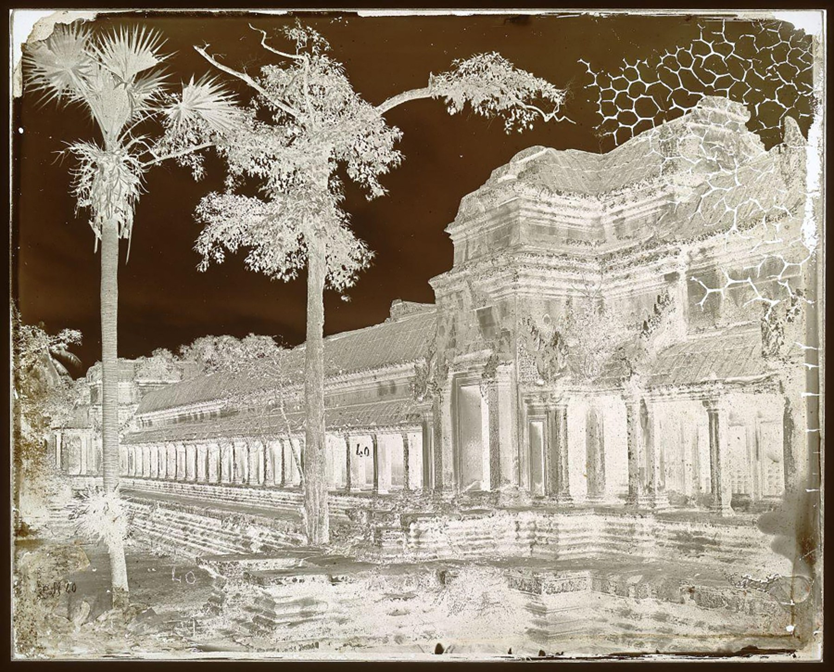
Bophana is one of eleven stops on Photo Phnom Penh. The festival opens on October 22 and runs for five weeks. It has received the “Bicentenary of Photography” label from the French Ministry of Culture: more than a thousand events and institutions worldwide are marking two hundred years since the invention of photography. It also coincides with the 20th Francophonie Summit, only the second to be held in Asia.
At Home in the World: the theme of the 2026 photography festival
The theme is At Home in the World (“Habiter le monde” in French). The organisers take “home” in the widest sense: the house, close relatives, the language, memories, communities, landscapes, beliefs. How do we stay attached to the places that shaped us while opening up to a larger world? The question carries weight in Cambodia, they write, whose history is one of displacement, migration, exile and diaspora.
The 2026 edition also changes how it is run. Artistic direction becomes collective: Marie Le Mounier (France), Moeng Meta (Cambodia), Isabelle Le Minh (France), Sovan Philong (Cambodia) and Sam I-shan (Singapore). The stated aim is to strengthen the festival’s local and regional roots. Studio Images – House of Photography, opened in Phnom Penh in 2024 by the Photo Phnom Penh association, becomes a pillar of the event. The school describes itself as the first higher-education school devoted entirely to photography in Southeast Asia. Its first class, 2024-2026, is finishing its training.
Bophana: Angkor seen by Émile Gsell, Angkor lived in by Jean Boulbet
Émile Gsell (1838-1879) was self-taught. In May 1866, as a young sailor, he joined the Mekong Exploration Commission led by Ernest Doudart de Lagrée. He brought back some of the earliest known photographs of Angkor Wat. His images from the 1860s and 1870s also show the Royal Court, dancers, musicians, King Norodom and the communities that make up Cambodian society.
The exhibition Émile Gsell: Portraits of 19th-Century Cambodia asks visitors to read them both as documents and as visual constructions. In his portraits, Gsell uses the codes of the studio: poses, costumes, props. His views of Angkor answer the European taste of the time for ruins. The curators are Chea Sopheap, Chan Synat and Alice Gomont.
Bophana hosts a second exhibition, When Temples Become Home, devoted to Jean Boulbet. A French ethnologist, geographer and cartographer, he settled in Cambodia in 1963, worked in Siem Reap with Bernard-Philippe Groslier, then at the École française d’Extrême-Orient, where he ran the Angkor Forest Park. In 1970 and 1971 he photographed civilians sheltering inside the walls of the site, at the start of the civil war. Children grow up among apsaras and bas-reliefs. The temples are lived in again. Boulbet left Cambodia in 1975, when the Khmer Rouge took power, and died in Phuket in 2007.
The exhibition text puts it this way: it is not only the temples that became a refuge for the displaced, the images themselves become one for the public.
Beat Streuli on the wall of the French Embassy
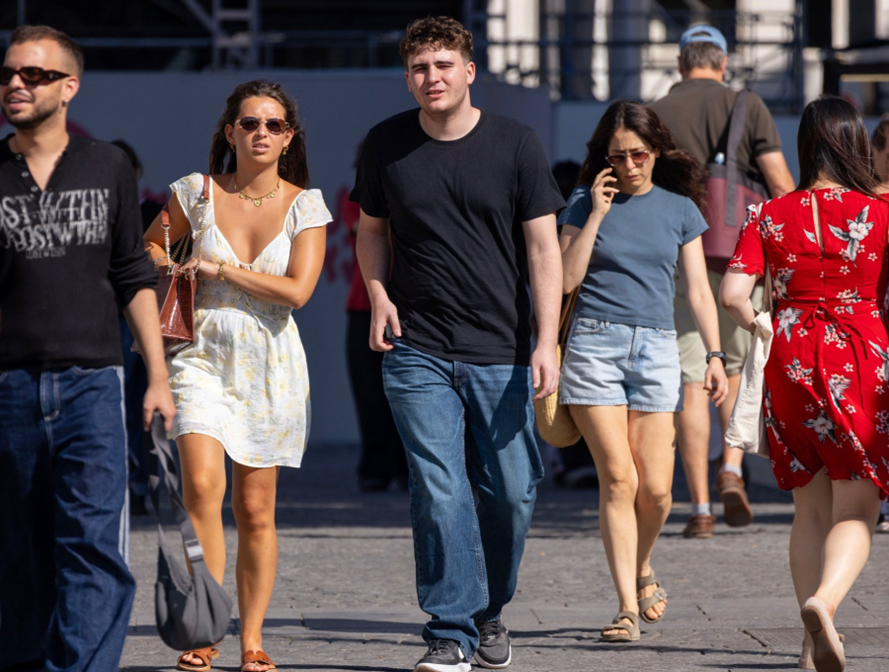
Swiss artist Beat Streuli is installing Shared Spaces, Singular Presences on the wall of the French Embassy. The photographs were taken in ten countries of the French-speaking world: Armenia, Belgium, Benin, Cambodia, Canada, Egypt, France (mainland and Martinique), Switzerland, Morocco and Vietnam. Since the 1990s, Streuli has photographed people in big cities, on the border between private life and public space, between intimacy and anonymity.
Born in Altdorf in 1957, he lives in Paris and Zurich. He has been active in Cambodia for several years and co-founded Studio Images. The installation is supported by Pro Helvetia.
Institut français du Cambodge: memory, heritage and family albums
In the gallery of the Institut français du Cambodge (IFC), the exhibition Memory, Heritage and Family Snapshots, curated by Marie Le Mounier, brings together four artists: Arnold Fokam (Cameroon), Kim Hak (Cambodia), Flora Nguyen (France/Vietnam) and Rima Samman (France/Lebanon). Their shared starting point is the family album photograph, which holds the myths, aspirations, fantasies and secrets of several generations. For people in exile, it keeps a link with the country of origin. In Cambodia, images hidden under the Khmer Rouge are traces of interrupted lives.
Kim Hak was born in Battambang in 1981, two years after the fall of the regime. He shows a previously unseen set of family photographs that his parents had buried under the Khmer Rouge. They are the origin of his series Alive, which he has developed since 2014 from photographs and objects kept by survivors.
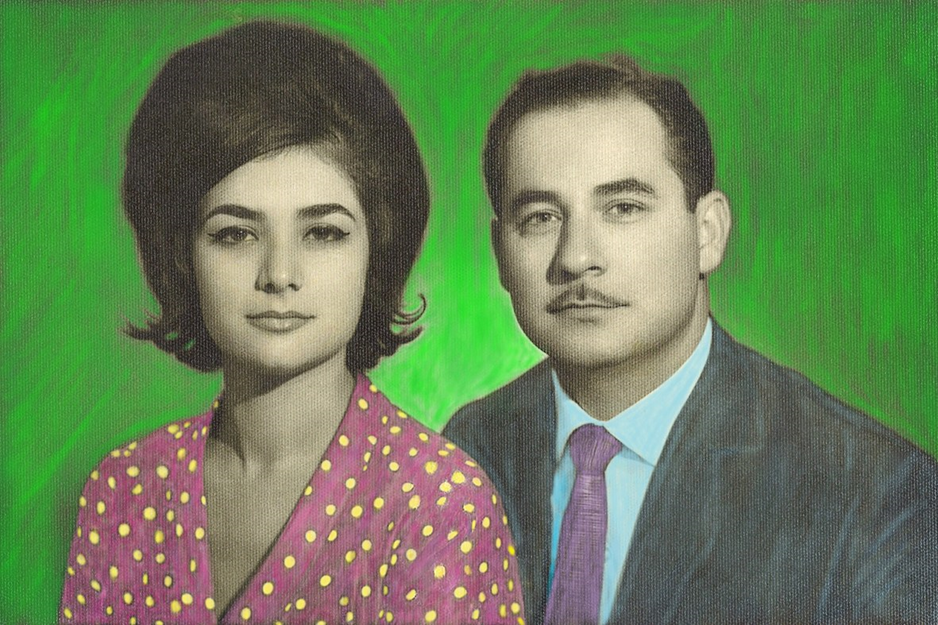
Rima Samman, born in Tripoli, Lebanon, in 1966, lives in Paris. Her brothers live in the United States, her parents in Lebanon. In L’amour se porte autour du cou (Love Is Worn Around the Neck), she goes back to the family albums, where the family stages itself, happy to be together. She looks at the family imagination, excessive, fragile, sometimes fantasised, with humour, tenderness and a certain irreverence. Her first short film, Crème et crémaillère (1999, 13 minutes), is also on the programme. Her feature film In the Heart, a Swallow screens at the IFC on Saturday, October 24, in the presence of the director.
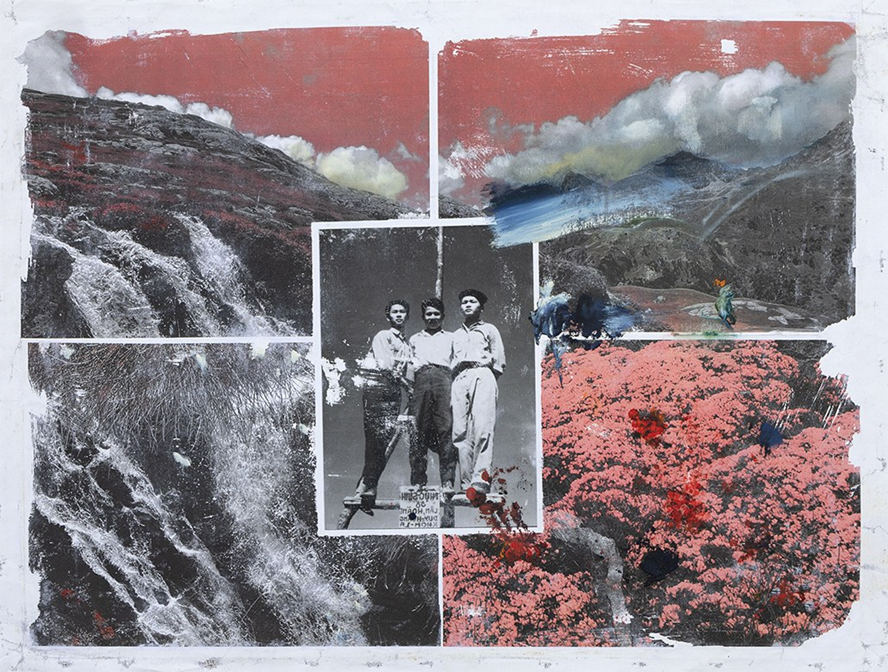
Flora Nguyen, born in Paris in 1975, starts from photographs found in her mother’s albums. She pairs them with old images of Vietnam and Indochina, made in a colonial context and held in French collections. She tears, transfers, layers, paints. The result is a series of “mental landscapes” in which her ancestors appear in places they may have known before exile. Her work was shown at Photo Hanoi 2025; its presence in Phnom Penh comes from the partnership between the two festivals.
Arnold Fokam, born in Douala in 1996, shows his series Les Re-enchanteresses, devoted to his late sister. He gives her a new body: landscapes, territories, the environment. He draws on Cameroonian traditions in which the dead continue to inhabit the world through nature, and so ties grief to ecology.
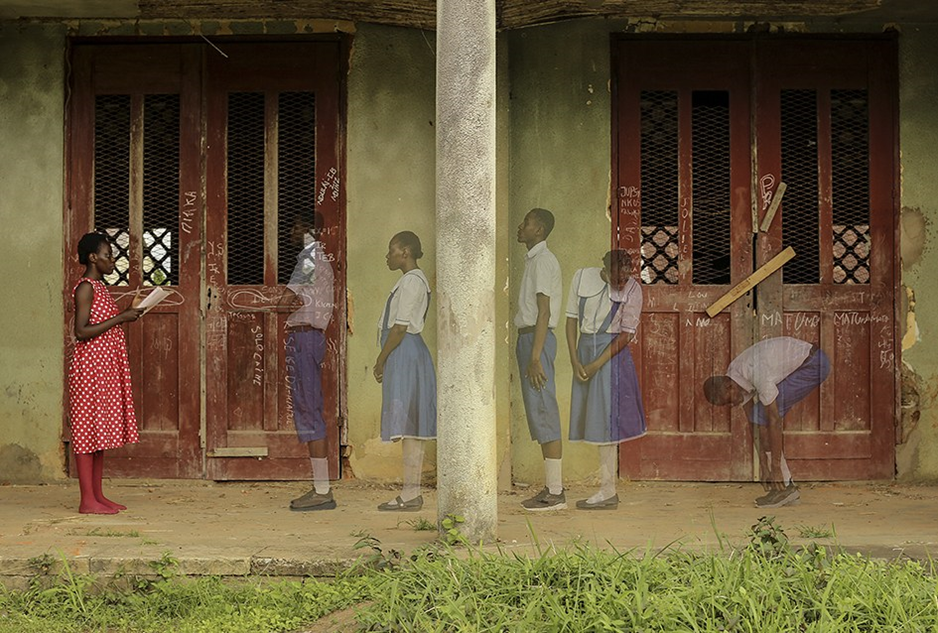
On the forecourt of the media library, Gosette Lubondo (born in Kinshasa in 1993) presents Imaginary Trip II. She revisits the former school of Gombe Matadi, founded in 1936 by the Brothers of the Christian Schools under Belgian colonial rule, nationalised in the 1970s, then abandoned. She plays Elikia, a woman in a red dress with white polka dots, a Congolese alter ego of Alice in Wonderland. Her name means “hope”. The scenes of school life draw on the accounts of former pupils. Lubondo represented the DRC at the 61st Venice Biennale in 2026.
Techo International Airport: focus on Cambodian photography
This exhibition is already open. It runs from October 1 to December 31. At Home in the World – Focus on Cambodian Photography brings together nine artists: Khvay Samnang, Lim Sokchanlina, Mak Remissa, Mech Sereyrath, Neak Sophal, Raphaël Pech, Sok Rina, Sovan Philong and Prum Ero. The curators are Moeng Meta and Sovan Philong. For them, an airport is a place of departures and arrivals, of passing through and of reunions, where paths cross.
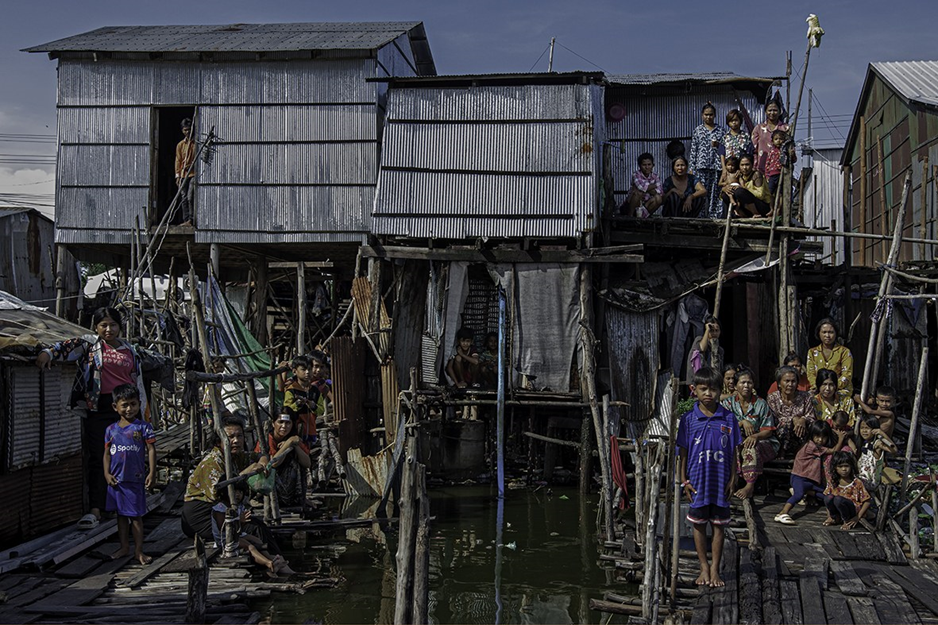
Water runs through several series. Mak Remissa (born in Phnom Penh in 1970) shows Water is Life: fish, frogs, turtles, rays and molluscs. Khvay Samnang (born in Svay Rieng in 1982) presents Popil (2018), two dancers performing a contemporary version of classical Khmer dance, a prayer in movement for rain and fertility. Sovan Philong documents Avalatan, a fishing village near the Thai border, where houses, school and pagoda are linked by a one-kilometre wooden bridge over the water. Prum Ero lights up coral reefs in Koh Kong to draw attention to their fragility.
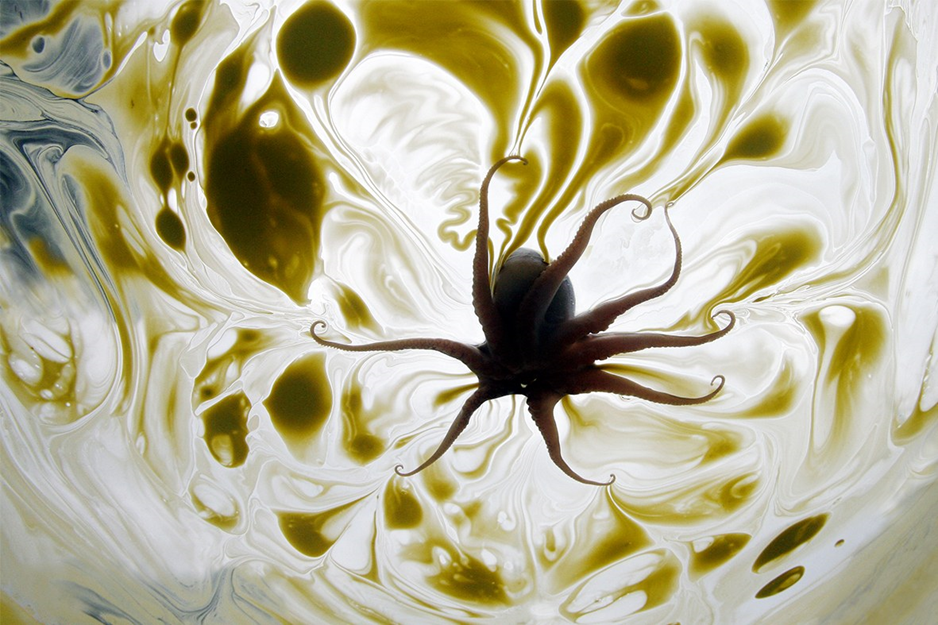
Others look at society. In Market to Supermarket, Mech Sereyrath sets two modes of consumption in crisis side by side, with bright colours for the supermarket and darker, warmer tones for the market. Neak Sophal asks passers-by to pose with their faces hidden behind objects that define them (Hang on), or replaced by leaves (Leaf, shot in Wat Po, in Takeo province). Raphaël Pech photographs the vendors of Phnom Penh’s riverfront against a plain background, in a temporary studio (Riverside Sellers). Sok Rina devotes her series Rice to the grain, tied to the country’s identity, economy and social fabric.
National Museum of Cambodia: “Configurations”, between people and plants
The National Museum hosts Configurations, by Luxembourg-based Pasha Rafiy, of Iranian origin (born in Tehran in 1980), and Daniel Wagener (born in Luxembourg in 1988). The curators are Danièle Igniti and Paul Di Felice. Rafiy photographs figures from a distance in places familiar to them. They seem set back from their surroundings. Wagener, who works on urban change, turns here to plants in the city, from fragile shoots to massive trunks. The exhibition seeks a dialogue between contemporary practices and the museum’s historical collections. It is produced with the support of Kultur LX, the Luxembourg Ministry of Culture and the Œuvre Nationale, in partnership with Lëtz’ Arles.
Friends Futures Factory (F3): plants that set sail
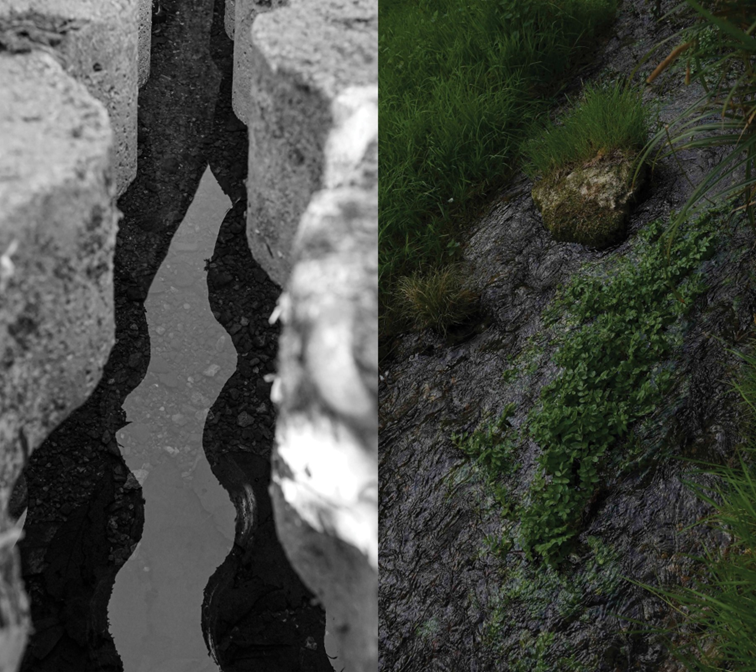
F3 hosts two exhibitions. The first, When Plants Set Sail, starts from a simple fact: many species in the Cambodian landscape are not native. The cannonball tree, the palm, the frangipani and some varieties of mango arrived over the years through exploration, scientific and commercial exchange, and migration. They took root, became familiar, and sometimes became emblems.
The project is led by Photo Phnom Penh with Studio Images and the botany department of the Royal University of Phnom Penh (National Herbarium of Cambodia). It was designed in part by the school’s students. It also shows photographs and archive documents lent by the École française d’Extrême-Orient, the musée du quai Branly – Jacques Chirac, the Muséum national d’histoire naturelle, ECPAD and the musée Albert-Kahn. The curators are Isabelle Le Minh and Marie Le Mounier. Cyanotype workshops are held in Phnom Penh and in provinces where access to culture is more limited.
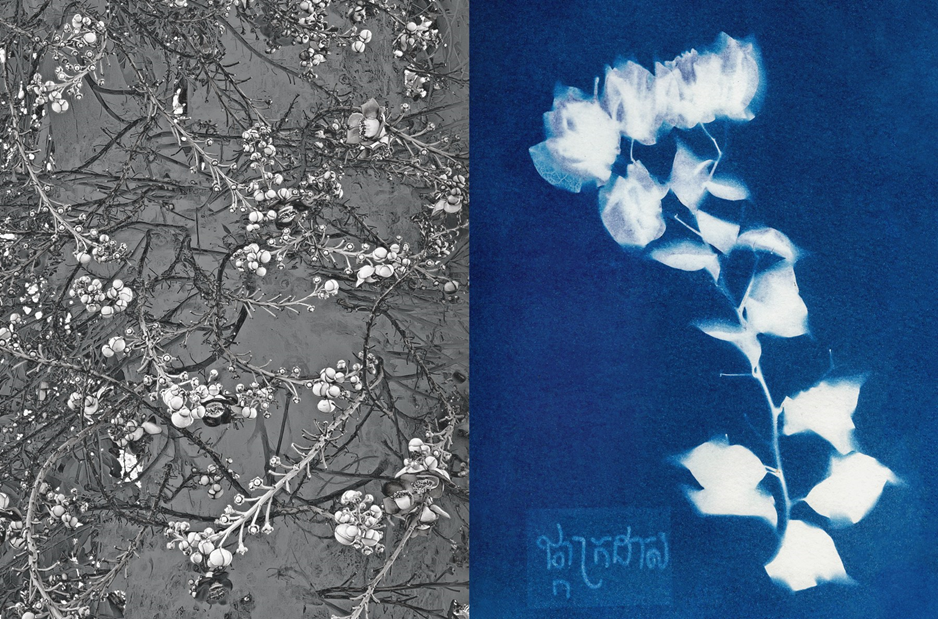
The second exhibition, Resonances – Where the Heart Beats in the Roots, brings together three graduates of schools partnered with Studio Images: the École nationale supérieure de la photographie in Arles, the École cantonale d’art de Lausanne and the Haute école des arts du Rhin. Arina Starykh (born in Moscow in 1996) pays tribute to the daily gestures of the women in her family and to a rural way of life. Ashley Schneiter works on the representation of the Black male body through laamb, Senegalese wrestling. Ismaël Roubert-Gueye, a French-Senegalese artist and graphic designer, draws on family archives to question the mixed-heritage condition. Curator: Isabelle Le Minh.
Hiroshima House of Cambodia: five women photographers
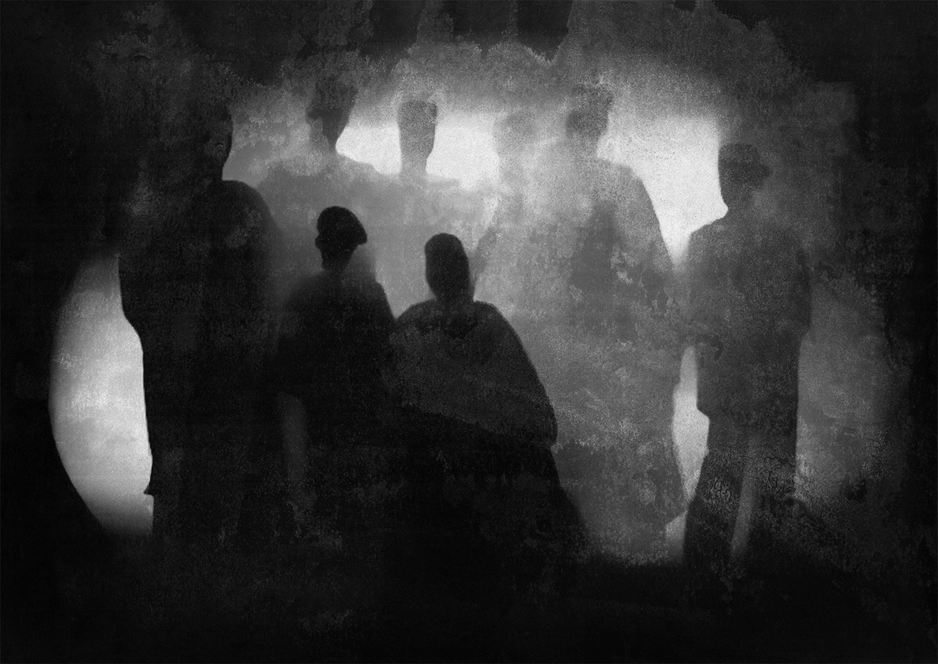
Home, Where We Feel We Belong, curated by Moeng Meta, brings together Hul Kanha, Keo Ponita, Mao Sovanchandy, Mean Pisey and Neak Sophal. Water, land, housing, personal stories and memory serve as starting points to ask what changes, and what we want to preserve, repair or reinvent.
Hul Kanha, born in Siem Reap in 1999, works on the place of women in Khmer society. Keo Ponita, born in 1991, saw her project Beauty and the Pigs nominated for the 2024 Leica Oskar Barnack Award. Mao Sovanchandy, an architect by training, born in Battambang in 1999, draws on old architecture and heritage. Mean Pisey, born in Phnom Penh in 1993, works with portraiture and emotion.
Studio Images, Vann Molyvann House, Ti’Samjort: the next generation
At Studio Images, Richard Pak presents Suddenly, Last Nights, made during his residency at the Villa Marguerite Duras, part of the IFC’s residency programme. His images of Phnom Penh at night are shot with flash, in a style close to street photography. The presentation text sums it up: “In Phnom Penh, night does not erase the city. It reveals it.” A masterclass on the theme “The city at night” accompanies the show. The participants’ work will be screened at the IFC during opening week.
At Vann Molyvann House, Living in the City is an exhibition and sale in aid of the school. It runs from October 17 to November 15 and marks the graduation of the first students of the Higher Diploma, a two-year course accredited by TVET. It brings together work by the graduates and pieces donated by well-known Cambodian photographers, including Sovan Philong and Sok Rina. The organisers thank the Swiss Agency for Development and Cooperation (SDC), “without whose support Studio Images would not exist”.
At Ti’Samjort, an independent art space and collective workshop, Kong Raksmey holds an open studio. Born in 1998 in Prey Veng province and a graduate of Studio Images, she was selected in April 2026 for the Résidences croisées programme between the Villa Pérochon in Niort and the IFC’s Villa Marguerite Duras. This second residency, in Phnom Penh, lets her carry on the work begun in France. She is a documentary filmmaker, journalist and photographer.
The programme: opening night, cyanotypes, trailer tour and screenings
Most events take place at the IFC.
• Thursday, October 22. Opening night at the IFC, 6 pm to 8 pm. The same day, from 9 am to 8 pm, the project Photography, Your Memory! offers free printing or scanning of personal photographs. It runs all opening weekend. The team retouches old or damaged images.
• Cyanotypes. Workshops from 9 am to 4 pm on October 22, 23 and 24 at the IFC, then on November 21 at F3. Fee: $2 per person. Participants make blue images from plants they have gathered. The technique dates from 1842.
• Friday, October 23. “Focus on the Book” with publishers (Filigranes, Atelier EXB, Patrick Remy, RVB Books, JRP Ringier, Spector Books), 11 am to noon. Round table “Archives, memory and imagination in contemporary art” at 1 pm with Rima Samman, Arnold Fokam and Anti-Archive. Opening of Richard Pak’s exhibition at Studio Images at 3 pm. At 6:30 pm, screening of the masterclass work by Richard Pak and Beat Streuli, followed by a meeting with the nine artists of the focus on Cambodian photography.
• Saturday, October 24. Screening of In the Heart, a Swallow (90 minutes, in French and Arabic, English subtitles) in the morning at the IFC. Trailer tour of the exhibitions from 2 pm to 5 pm: IFC, Bophana, French Embassy, Hiroshima House, National Museum, ending at F3 ($2 for adults, free for children under 5). At 6 pm, screening of work by Studio Images graduates. At 6:30 pm, awards ceremony for the “At Home in the World” photo competition, supported by the European Union in Cambodia. Music follows.
• Sunday, October 25. Free portfolio reviews at Vann Molyvann House, 3 pm to 5 pm. Fundraising opening, 6 pm to 8 pm.
• Saturday, November 21, closing day. Cyanotype workshop at F3. Conference “At Home in the World” at Bophana at 2 pm. Focus on books at Bophana, 4 pm to 6 pm.
Lumière completes the programme with documentaries shown on Saturdays and Sundays at 2:30 pm, in the original version with English subtitles. The room has 15 seats, at $5 a ticket. On the bill: I’m Not Everything I Want To Be by Klara Tasovska (October 24 and 25), Frame by Frame by Mo Scarpelli (October 31 and November 1), Patria Obscura by Stéphane Ragot (November 7 and 8), Helmut Newton: The Bad and the Beautiful by Gero von Boehm (November 14 and 15) and Looking for Gilles Caron by Mariana Otero (November 21 and 22).
Practical information
• Dates: October 22 to November 22, 2026 (Techo International Airport: October 1 to December 31).
• Venues: French Embassy, Institut français du Cambodge, Techo International Airport, National Museum of Cambodia, Friends Futures Factory (F3), Hiroshima House Cambodia, Studio Images, Vann Molyvann House, Ti’Samjort, Bophana and Lumière.
• Contact: photophnompenh@gmail.com – www.photophnompenh.com


Comments