


CIFF 360 & Kep: Thanet Thorn, “Cambodian cinema has stories. What it still lacks are structures

Meeting with Thanet Thorn, producer at Tiny Films, on the sidelines of the CIFF 360 professional forum in Kep. Between clear-eyed awareness of the fragility of an emerging industry and an unwavering belief in the power of Khmer storytelling.
Interview conducted during CIFF 360 · Knai Bang Chatt, Kep · May 2026
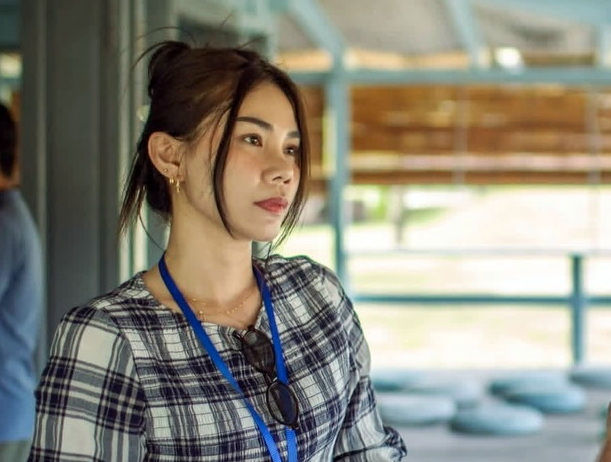
There is something distinctive in the way Thanet Thorn speaks about Cambodian cinema: without excessive illusions, yet with a quiet conviction. A producer at Tiny Films, she took part in the professional forum organized by CIFF 360 at the Knai Bang Chatt hotel in Kep — a gathering that brought together more than thirty industry professionals to collectively sketch the outlines of an industry still to be built. Portrait of a filmmaker who builds.
Background
Can you introduce yourself in a few words?
My name is Thanet Thorn. I was born in Siem Reap and have been living in Phnom Penh since 2014. That was the year I entered the film industry, almost by chance, initially working alongside the International Film Association.
Two years later, a decisive encounter changed my path — that of a mentor, a perspective. In 2018, I began producing my first films. Today, I work as a producer at Tiny Films.
What does the role of a producer concretely mean for you in Cambodia?
Above all, it is a role of talent scouting. I look for screenwriters, directors, and stories that deserve to exist. But I am also the one who thinks about distribution: how will this film find its audience? Not necessarily internationally — even if that remains a horizon — but first locally. Making a good film for Cambodians is already a huge objective.
State of the Industry
How would you describe the Cambodian film industry today?
Small. Very small. And fragile. We still do not have many high-quality productions, and those that exist struggle to find their audience. The core issue is storytelling: we have not yet fully learned how to tell good stories to our audience.
We also lack real diversity in genres — films that show who Cambodians are, their culture, their daily lives, their contradictions. Not only tragedy. Not only the past.
What are the most concrete obstacles you face?
There are several, and they accumulate. First, time: making a film in Cambodia is often a race against the clock with limited resources. Then, directors — there are simply not enough of them. Training is insufficient, and career paths are not well structured. And of course, investment: funding is scarce, and economic models still need to be invented. It is a cycle — not yet virtuous, but we are working on it.

CIFF 360
You participated in the CIFF 360 professional forum here at Knai Bang Chatt. What stood out to you in these exchanges?
The honesty. Thirty professionals — directors, screenwriters, producers, distributors, composers — speaking openly about what is not working. We addressed difficult topics: the absence of a legal framework for employment contracts in our sector, the lack of reliable data about our ecosystem, the need to create a true professional association. It was intense. Stimulating.
Was there one idea that particularly caught your attention?
The creation of a fund dedicated to young filmmakers. It resonated with me because it is exactly the type of mechanism that could have helped me when I started. Giving a new generation the opportunity to move into directing without relying solely on foreign co-productions is fundamental if an industry is to truly exist.
Outlook
What do you think of the CIFF 360 initiative and Kep as a festival location?
It is a very good idea. A necessary one. I sincerely hope this festival will last for years and continue to grow. What I appreciate here is the human dimension: the forums, the informal meetings, the conversations that continue in the evening by the sea.
This is not a showcase festival — it is a working space, a space for reflection. A place where people genuinely think about how to develop creativity, nurture storytelling, and build a sustainable cinematic ecosystem. It is rare. It is valuable.
A final word on what you expect from Cambodian cinema tomorrow?
That it truly exists. Not only in international festivals where certain subjects and formats are expected from us, but in cinemas across the country, in front of Cambodian audiences.
Tourism, the ecosystem, youth, the modernity of Phnom Penh, the magic of Siem Reap, the sea in Kep — there is an infinite number of stories to tell. It is a wonderful possibility. We just need the structures to follow.


Comments