


Cambodia & French Tech: Laurine Château — UMAMI or the art of transforming unsold goods

Laurine Château, co-founder and CEO of UMAMI, represents a new generation of entrepreneurs combining hands-on experience, social impact, and an international outlook. Based in Phnom Penh after studying business and completing a master’s degree in Japan, she dedicates her energy to reducing food waste in the restaurant and hospitality sectors while creating opportunities for local businesses and city residents.
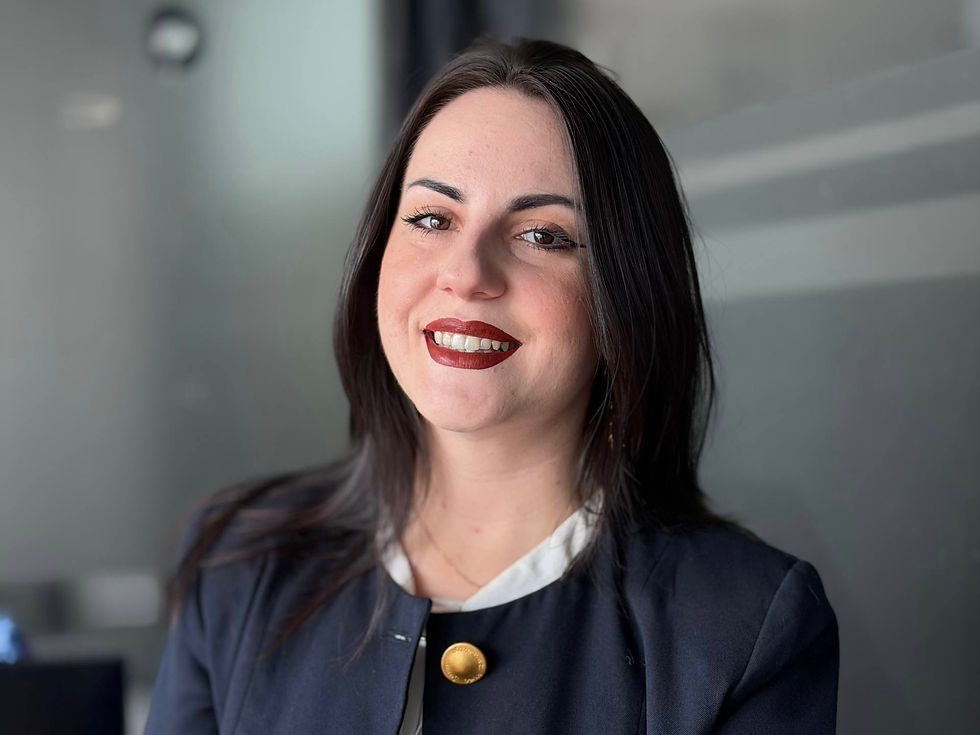
In this interview, Laurine reflects on her journey, the creation of UMAMI, her daily challenges, and her vision for a sustainable circular economy in Southeast Asia.
Can you introduce yourself in a few words?
My name is Laurine, I’m almost 25 years old, and I’ve been living in Phnom Penh since finishing my studies. I am the CEO and co-founder of UMAMI, a young company dedicated to adding value to unsold food in the restaurant and hospitality sectors in Cambodia. I also recently joined the board of French Tech Cambodia, where I am responsible for events. I strongly believe in collective work, patience, and the idea that we learn much more by listening than by speaking.
Tell us about your academic background
I had the opportunity to complete a four-year Bachelor’s degree in international business, focused on Asian markets, at a business school in Brittany, with a specialization in the Japanese market. The program included alternating between France and Japan; however, the 2020 health crisis changed those plans, and I completed most of my studies in France.
I then had the opportunity to join the Master’s International Business Study Program at Soka University in Japan, a two-year international program taught in Japanese and English, from which I graduated in 2024.
I dedicated my thesis to foreign direct investment in Cambodia, its effects on different economic sectors, and its impact on local populations.
It was a very educational experience, but it also left me with a real frustration: everything was highly quantitative, and I was never able to properly measure what may matter most—the real social and environmental impact on the ground.
Tell us about your professional beginnings
My early career was fairly typical for a business student: internships, lots of internships. In Paris, with ready-to-wear brands, where I learned sales, teamwork, and pace on the ground. At the same time, I managed a retail corner for one of these brands at Le Bon Marché, a role that trained me extensively in customer relations and point-of-sale management.
To continue working with these brands after my internships, I created a micro-enterprise and began offering consulting services, first in training, then in business development. In Japan, I continued this activity as a freelancer, working remotely with several French companies. It’s not a linear path, but it taught me how to be resourceful, knock on doors, and learn quickly.

Tell us about your connection to Cambodia
My first stay in Cambodia dates back to 2022, during a volunteer mission in Kep organized by my university, where the goal was to open a Japanese language class. I accepted out of curiosity, without knowing anything about the country.
What I found there left a deep impression on me.
I had just come out of repeated lockdowns in France, and Cambodia was a place where I could simply breathe again.
But what truly brought me back were the people: the welcome, the patience with which things were explained to me, the humor, the everyday generosity. I was received with a warmth I had not expected, and it taught me a lot about what it means to “build community.”
During my master’s, I returned whenever I could. After graduating in 2024, the decision to settle in Phnom Penh came naturally. I don’t forget that I am here as a guest, and I try every day to live up to that welcome by working, learning, and building things that I hope are meaningful for the people around me.
How did you come to join French Tech Cambodia?
It was Cédric Kang, co-president of French Tech Cambodia, who kindly invited me to apply for the recently renewed board. Without him and without the trust of the board members, I wouldn’t be there. The organization is built on collective work carried out over several years by entrepreneurs and volunteers who are far more experienced than I am, and it is a privilege to contribute modestly at my level, especially in organizing events and preparing major moments such as the Francophonie Summit.
What are your ambitions within this organization, and what do you expect from it?
My ambitions are those of the community that welcomes me. French Tech Cambodia brings together Cambodian, French, and international actors whose diverse backgrounds and skills create a real collective strength; the role of the board is to keep this community active and create the conditions for useful collaborations to emerge.
Regarding the events division, the goal is simple: to ensure that organized events lead to concrete outcomes (partnerships, connections, business opportunities) for members.
On a personal level, I still have much to learn. Being able to interact with established entrepreneurs, observe successful models here, and benefit from their advice is, in itself, a valuable opportunity.
Describe your professional activities
My main activity is developing UMAMI. At this stage of the project, several roles coexist (business development, partnerships, operational coordination, communication), and fieldwork plays a crucial role. Meeting bakery owners, hotel F&B directors, café managers, and restaurateurs is first and foremost about listening: understanding their constraints, habits, and what works or doesn’t in their business.
UMAMI’s value proposition is refined through these interactions, more than through my own initiative. Alongside this project, I continue occasional consulting work with French companies interested in Southeast Asia and dedicate regular time to my responsibilities within French Tech Cambodia.
Tell us about one of your projects
UMAMI is a company we co-founded. Our mission is to transform unsold food from Cambodia’s restaurant and hospitality sectors into a new source of value—for the businesses that produce it, for consumers who struggle to access quality food, and for a country that can position itself as a pioneer of the circular economy in Southeast Asia.
The situation is visible every evening in Phnom Penh: perfectly consumable products are removed from sale by bakeries, cafés, hotels, and restaurants, while part of the population is looking for more affordable access to quality products.
UMAMI connects these two realities: our partners sell their unsold items of the day as discounted baskets, accessible through an app.
For businesses, it’s additional revenue and a new customer relationship. For consumers, it’s greater access. For the country, it’s a concrete and measurable reduction in food waste.
We are fortunate to be engaging with leading players: Khéma Go, Shangri-La, Hotel Cambodiana, and Eric Kayser are among our first contacts.
Our rollout begins in Phnom Penh, covering BKK1, Toul Tom Poung, Daun Penh, and Tonle Bassac, before expanding to Siem Reap. UMAMI is a demanding venture built on the trust we establish with our Cambodian partners, and that is precisely what makes it, in my view, a project worth pursuing.
What do you do outside of work?
Outside of work, I practice photography as an amateur. Phnom Penh offers particularly rich visual material: markets at dawn, the banks of the Mekong in the late afternoon, and architectural details that resist the city’s rapid transformation. It’s a practice without a specific goal, but it teaches me to observe more carefully.
The rest of my free time is spent with my Cambodian, French, and international friends, often over dinner or coffee. In that sense, Phnom Penh is a city where connections happen naturally.
What do you like most and least about Cambodia?
What I appreciate most is the people and the way things are built here. There is a form of collective agility that allows ideas to find their place when they are carried with sincerity. Human proximity, the importance placed on relationships, and the availability of people are strong characteristics of the Cambodian context and represent a real opportunity for those who want to build something.
As for the more challenging aspects, it’s a very personal detail: the absence of distinct seasons, which I remain attached to, having grown up in Brittany.


Comments