


Cambodia’s Strategic Crossroads: Hun Manet’s Invitation to Trump’s “Board of Peace” Sparks Diplomatic Ripples in Southeast Asia

The official invitation extended in early January 2026 by U.S. President Donald J. Trump to Cambodian Prime Minister Hun Manet to join, as a founding member, the newly created “Board of Peace” has caused a minor diplomatic shockwave in a Southeast Asia already rife with strategic tensions.

Behind this gesture lies more than a mere act of political courtesy: it serves as a real-world test of Cambodia’s ability to navigate a fractured international environment, oscillating between its historical partner China and a Washington determined to redefine regional balances.
Presented by the White House as a “responsive” and “non-bureaucratic” alternative to aging multilateral institutions, the Board of Peace is intended, according to its promoters, as a tool of pragmatic diplomacy focused on rapid action in conflict prevention, reconstruction, and post-crisis management.
For Cambodia, the opportunity seems attractive. Its exports to the United States reached a record 12.73 billion USD in 2025 — nearly 42 % of its total exports estimated at 30.14 billion USD — confirming the U.S. as the kingdom’s largest non-Asian trade partner.
A Controversial Initiative Built on Fragile Ground
Yet, the creation of the Board of Peace — whose provisional charter was signed in Washington on January 10, 2026 — immediately sparked intense debate. While its official goal is to “facilitate rapid mediation and global post-conflict stabilization,” many observers see it primarily as a disguised geopolitical maneuver. Among roughly fifty countries invited, only Pakistan agreed to assume founding member status. Other middle powers — including France, India, Malaysia, and Vietnam — declined, denouncing what they called a biased “diplomatic circus,” seen as a pro-Israeli and explicitly anti-Chinese mechanism.
Lacking its own budget and permanent secretariat, the Board currently operates on voluntary contributions supervised by Washington. By bypassing the UN system, it raises doubts about its real nature: a cooperative structure or an “America First” instrument designed to expand U.S. influence while sidelining existing international institutions?
For Beijing, the answer is clear. The Board of Peace is viewed as an attempt to build a parallel alliance to contain China’s growing influence in developing countries, particularly in Southeast Asia.
The Cambodian Dilemma
In Phnom Penh, the invitation has triggered internal debate. On one hand, the government sees it as a strong signal of international recognition — a validation of Hun Manet’s diplomacy and his rise on the global stage. Cambodia would be the only ASEAN country invited to participate in a body so close to the American decision-making circle — an opportunity considered historic.
But for many Cambodian economists and diplomats, this honor could turn into a strategic miscalculation. In 2025, China provided more than 52 % of Cambodia’s foreign direct investment (FDI), particularly in infrastructure, energy, construction, and special economic zones. Any perceived shift viewed as hostile could provoke economic retaliation: suspension of concessional loans (estimated at 4 billion USD per year), slowing of key infrastructure projects, or even political pressure within regional forums.
Economic Openings and Diversification Promises
Economically, deeper cooperation with Washington offers immediate advantages stemming from tariff and regulatory reforms initiated in 2025. A bilateral agreement signed in October of that year abolished import duties on most U.S. goods and capped reciprocal tariffs at 19 %, down from the previous 36–49 % range. This openness was already encouraging U.S. capital inflows into logistics, green technology, and the mining sector.
Joining the Board could consolidate this dynamic while providing Cambodia with a kind of “political insurance” with U.S. donors. Prospects include increased FDI in emerging sectors such as critical mineral extraction (rare earths, lithium), digital energy infrastructure, cybersecurity, and post-pandemic supply chains.
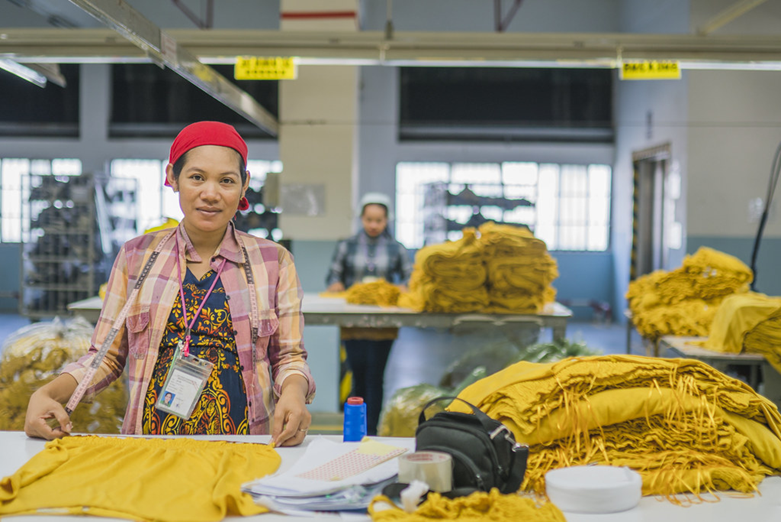
Analysts forecast a possible tripling of export revenues in these sectors within three years, largely driven by the relocation of U.S. manufacturing previously based in Vietnam. The government expects steady GDP growth — between 4.8 and 5.2 % in 2025, and 4 to 5 % in 2026 — with about 50,000 new jobs projected in industry and technology services. This would help diversify the economy beyond textiles and agri-foods, its current mainstays.
Macroeconomic Risks and Political Vulnerabilities
However, optimism should not overshadow the risks. Growing dependency on the U.S. market (42 % of total exports) leaves Cambodia highly exposed to any sudden policy changes in Washington. Temporary suspensions of tariff benefits in 2025 already cut industrial growth by 0.6 points. Moreover, if Beijing were to freeze aid and financing programs, Phnom Penh could face a major budgetary imbalance. Some estimates suggest that even a partial Chinese pullback could raise the debt-to-GDP ratio by 5 points in a single year, straining the national currency and foreign reserves.
Diplomatically, joining the Board of Peace too quickly could also complicate Cambodia’s position within ASEAN, whose doctrine of strategic neutrality and non-interference might clash with the bloc logic implicit in the Trump administration’s approach. Thailand, already at odds with Phnom Penh on border disputes, could exploit the situation to enhance its role as Beijing’s preferred ally or as an alternative mediator.
A Test for Cambodian Diplomacy
Beyond economic figures and potential benefits, the American invitation represents a genuine test of Cambodia’s diplomatic maturity. The Hun Manet generation — more anglophone and technologically inclined — seeks to reposition the kingdom in a fragmented world. The challenge is to turn this opening into a lever for diversification, not deeper dependency.
To succeed, Phnom Penh must ensure that any participation in the Board comes with clear safeguards: inclusion of multilateral institutions, alignment with ASEAN’s neutrality principles, and transparent governance mechanisms. A cautious, consultative, and coordinated approach would allow Cambodia to maximize economic gains while minimizing geopolitical risks.
Ultimately, the Board of Peace embodies the diplomatic turning point of early 2026 — a reconfiguration of alliances in the shadow of U.S.-China rivalry. For Cambodia, this is more than a partnership choice; it is an act of balance between ambition and prudence. Accepting the invitation would be a bold gamble; refusing it, perhaps a missed chance. The key will lie in the government’s ability to reconcile economic ambition with strategic sovereignty — the essential condition for existing as an autonomous actor in the new Indo-Pacific landscape.

Comments