


Opera for Peace: Cambodian Prince's Insights on Borders, Trade, Demographics, and Culture

Tensions on the Thai border, global trade crisis linked to Gulf conflicts, Europe's demographic aging, cultural diplomacy through opera… Prince Sisowath Ravivaddhana Monipong, ambassador of the Royal House of Cambodia and pioneer of lyric opera in Southeast Asia, gave a wide-ranging interview to journalist Luigi Galluzzo on TGCOM24. A conversation where geopolitics and musical passion converge with rare elegance.
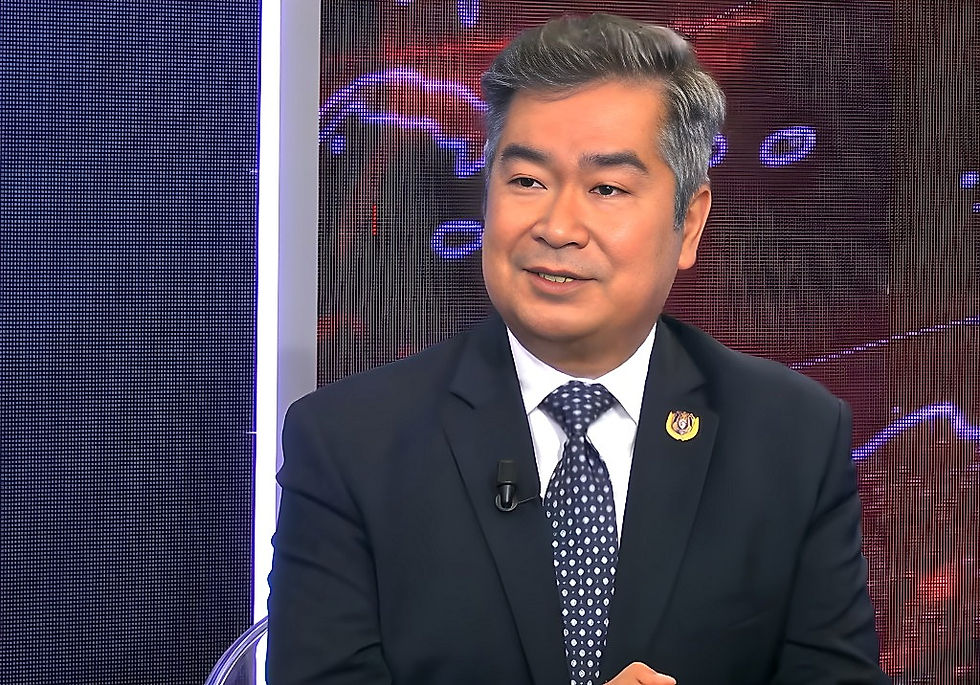
« Opera for Peace »: Art as a Response to Border Tensions
The interview opens with culture. In December 2025, Prince Ravivaddhana and maestro Vincenzo Grisostomi Travaglini staged Mozart's Don Giovanni in Phnom Penh — a historic first in Cambodia, inaugurating the brand-new Phnom Penh International Opera Festival. The event was aptly renamed « Opera for Peace » — and for good reason. Just one week after rehearsals began, Thai military drones started bombing the border area.
« It's like a matter of economic interests between different influence groups », the prince analyzes with characteristic diplomatic restraint.
Since then, the situation has gradually calmed, though Thai military maneuvers persist at the border. The Cambodian prime minister has multiplied consultations with ASEAN bodies, and official protests have been transmitted via the foreign affairs and defense ministries.
Gulf Crisis: Concrete Impact on the Cambodian Economy
Questioned on the economic repercussions of the trade blockade linked to Gulf tensions, the prince delivers a precise and grounded analysis. Cambodia maintains close trade relations with China, and the disruption of maritime traffic is already being felt.
« The price of a liter of gasoline has risen from $1.16 in February to over $1.48 today », he illustrates.
The first victims of this increase are small transporters and tuk-tuk drivers, essential artisans of local tourism. Even more worrying: the risk of shortages of raw materials transiting through the Strait of Hormuz directly threatens Cambodia's textile industry, which employs thousands of workers for major American brands. « For now, it's okay, but they're starting to fear for their jobs », the prince tempers.
Asia vs. Europe: The Clash of Demographics
Having lived in Europe for decades, first in France, then in Italy, the prince is ideally placed to draw parallels between the two worlds. His view is clear-cut: Asia is young, pragmatic, forward-looking. « Over 60% of Cambodia's population is under 30 », he reminds us. This youth looks resolutely north — China, Korea, Japan — and toward the Pacific.
On Europe's demographic aging, the prince nuances:
« It's a bit exaggerated. European society is very inclusive. But there's a risk of losing part of its identity if one isn't vigilant. »
In Italy, he observes a robust and vibrant Italianness. It's in France that he perceives the sharpest fractures, which he anticipates as a central issue in the next presidential elections.
He slips in a revealing anecdote about Cambodian modernity:
« In Cambodia, we no longer pay with credit cards. We use an app that everyone has had for years — like in China. »
Approaching 60, he admits with a smile that he comes across as an old man to young Cambodians whenever he pulls out his dollars.
Restored Monarchy, Francophonie, and Opening to the World
The prince returns to a historic turning point: the return of the constitutional monarchy in Cambodia, after the 1993 referendum that saw King Norodom Sihanouk return to the throne.
« The monarchy restored a sense of rebuilding traditional values, but with a drive for modernity », he explains.
A fragile and precious balance in a country still bearing the trauma of Pol Pot's genocide.
On the diplomatic front, a major event looms: Phnom Penh will host the 20th Francophonie Summit on November 15 and 16, 2026, in the presence of President Emmanuel Macron. A symbolic rendezvous for a country that, despite 90 years of French protectorate, sees its youth gradually turning away from the language of Molière — without renouncing its heritage.
Don Giovanni in Phnom Penh: When Mozart Reconciles Peoples
The interview ends on this note of hope. For over sixteen years, the prince and maestro Grisostomi Travaglini have tirelessly worked to bring Italian opera to Southeast Asia. The adventure began in the Philippines with Turandot and Lucia di Lammermoor, before expanding to Cambodia with Cavalleria Rusticana — chosen, the prince says with mischief, « to please Sicily ».
For Don Giovanni, the cast was resolutely international: three singers from Italy — two from Naples, one from Rome —, a Japanese conductor, an orchestra bringing together Malaysians and French musicians, joined by the Angkor Youth Orchestra. The impact on the audience was immediate.
« The young people wanted to know everything. It was a moment of total communion through music », the prince recalls, visibly moved.
He emphasizes that great Western classical music is already deeply rooted in northern Asia — China, Korea, Japan — and that Cambodia naturally aspires to join this cultural space.
Also mentioned in the interview: the awarding of the best actor prize at the 2026 Rome Asian Film Festival, received by the prince on behalf of Cambodian actor Piseth Chhun, honored for his performance in a poetic film tracing the story of a young journalist falling in love with a ghost.
In closing, the prince shares his deep conviction, the one that underpins all his actions: « The magic of music is that it is an international language. » A simple truth, but one that this exceptional man embodies with remarkable consistency, from the opera stages of Rome to the banks of the Mekong.
Interview conducted by Luigi Galluzzo for TGCOM24, May 1, 2026.
Prince Sisowath Ravivaddhana Monipong is ambassador of the Royal House of Cambodia and co-founder of the Phnom Penh International Opera Festival.


Comments