


In Cambodia, Bureau Veritas and URATA join forces to build a safer industry

The signing of a cooperation agreement between the French certification giant and its Japanese counterpart established in Phnom Penh marks a turning point for a sector that has long struggled to develop robust standards.

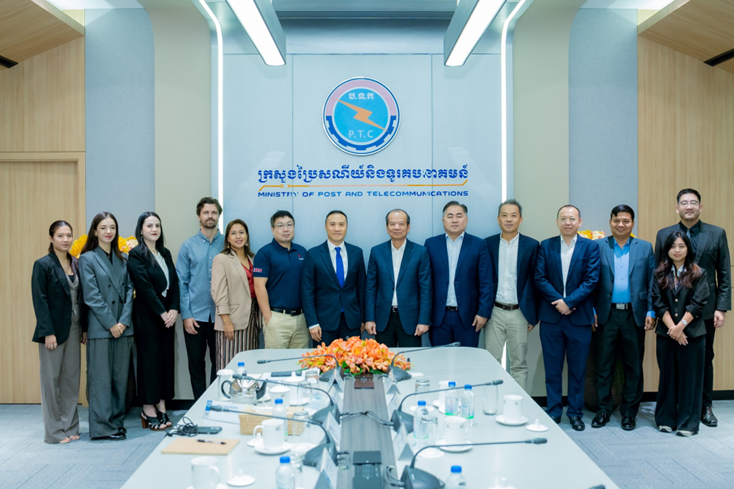
In the corridors of Cambodia's Ministry of Land Management, Urban Planning and Construction in Phnom Penh, two major inspection players have formalised a cooperation agreement — a memorandum of understanding (MOU) — aimed at fundamentally transforming inspection and certification practices in the Cambodian construction sector. On one side, Bureau Veritas, a French giant founded in 1828 that recently joined the CAC 40 with a market capitalisation of €13.6 billion; on the other, URATA (Cambodia) Co., Ltd., a Level 1 state-accredited construction certification body operating from within the ministry's own premises.
This strategic partnership, understated in its staging, is anything but trivial. It comes at a pivotal moment for a country whose construction sector remains one of four pillars of the national economy — alongside textiles, tourism and agriculture — yet continues to struggle in developing the safety and quality standards its accelerating growth demands.
A sector rebuilding itself, between fragility and ambition
The picture is mixed. Over twenty years, Cambodia has issued more than 66,000 building permits for construction projects representing some $77 billion in cumulative investment, including 60 buildings of over 40 storeys, according to the ministry. But this boom has often come at the expense of technical rigour. The country ranked as low as 179th out of 190 in the World Bank's ease of obtaining construction permits, a process involving 20 separate steps and an average duration exceeding 650 days.
The post-Covid recovery is slow but real. After approved projects collapsed to 1,500 in 2022, the sector rebounded to around 3,207 projects in 2023. GlobalData analysts forecast average annual growth of 7.3% between 2026 and 2028, driven by transport infrastructure, renewable energy and logistics. The government, for its part, has launched a 2023–2033 transport and logistics masterplan totalling $50 billion in planned investment across 174 projects, including the future Phnom Penh–Siem Reap–Poipet expressway.
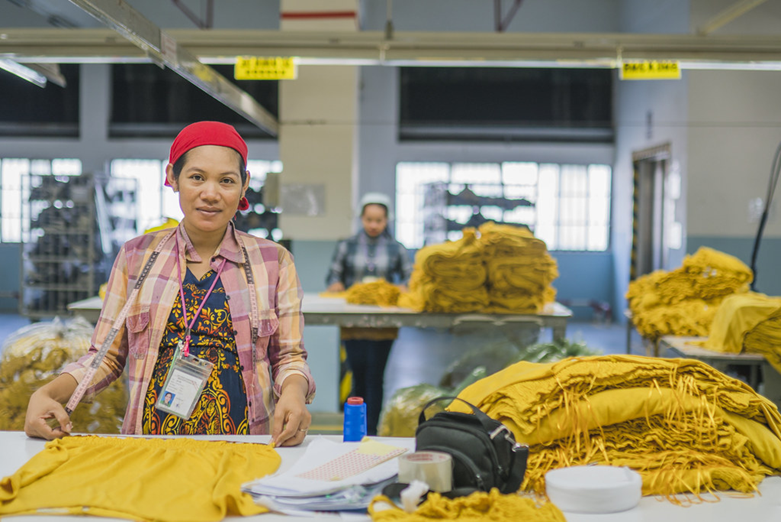
But this renewed momentum comes with conditions. The International Labour Organization (ILO) highlighted in a 2024 report the persistence of a largely informal sector, where female workers earn an average of $153 per month — well below the garment sector's threshold — and where on-site safety standards remain insufficiently enforced. Australia attempted to address this as early as 2022 by co-funding a national occupational health and safety reference framework for construction sites with the ministry, but its uptake remains partial.
"Construction is one of Cambodia's four economic pillars. It is essential to establish workplace health and safety guidelines to minimise risks and protect workers on construction sites."— H.E. Chea Sophara, Deputy Prime Minister of Cambodia
Bureau Veritas: an empire of trust in full expansion
To grasp the symbolic weight of this agreement, one must appreciate what Bureau Veritas represents on the global stage. Founded in Antwerp in 1828 as a maritime insurance intelligence bureau, the company has transformed itself into an indispensable player in testing, inspection and certification (TIC) across 140 countries, with more than 79,000 employees and revenues of $6.34 billion in 2024. Its entry into the CAC 40, effective 20 December 2024 with a market capitalisation of €13.6 billion, crowns a 31% stock market rise over the year. Its LEAP | 28 strategy, launched in March 2024, targets sustained organic growth and double-digit shareholder returns.
In the building and infrastructure segment — which accounts for 27% of revenue, the group's largest single revenue stream — Bureau Veritas has been multiplying strategic acquisitions: IDP Group for BIM and digital twins, Contec AQS in Italy for construction and HSE, London Building Control in the UK. The group is also accredited as an inspection body by Cambodia's General Department of Accreditation (GDAC), giving it formal legitimacy on Khmer territory.
URATA Cambodia: an operator embedded in the regulatory machinery
On the other side, URATA (Cambodia) Co., Ltd. occupies a singular position. Holding a Level 1 certification licence — the highest category granted by the ministry — it operates under Sub-Decree No. 225 and Prakas Nos. 109 and 126, which govern the certification of architectural plans, structures and construction site compliance. Its teams intervene at every stage: preliminary document inspection, mid-construction site visits, and final inspection before the issuance of a certificate of occupancy.
Physically located within the ministry itself (5th floor, Room 515), URATA embodies what one might call "proximity certification": rooted in local law, versed in Cambodian administrative procedures, and attuned to the practical requirements of local project owners. It is precisely this complementarity — Bureau Veritas's international methodological rigour paired with URATA's local regulatory expertise — that gives this MOU its full meaning.
What the agreement changes in practice
The memorandum signed between the two entities aims to align inspection practices with internationally recognised standards, share technical expertise, and strengthen the training of Cambodian engineers and inspectors. It fits within the broader reform momentum initiated by the government to modernise the construction regulatory framework and attract greater foreign investment into a sector that urgently needs it.
For developers and builders operating in Cambodia — whether local, Chinese, Japanese or European — this alliance promises an upgrade in certification quality, a reduction in structural risks on major projects, and greater international acceptance of certified buildings. For workers in the sector, it potentially represents another step toward safer job sites in a country where worker protection remains inadequate.
At a time when Cambodia is preparing to inaugurate major new infrastructure — such as the new Techo International Airport, opened in September 2025 on the outskirts of Phnom Penh — the question of building quality and inspection reliability is no longer a technical footnote. It is a matter of economic sovereignty.
Bureau Veritas estimates the global TIC market at nearly €300 billion — an ecosystem in which Southeast Asia represents one of the most promising growth zones.
A signal for the entire region
Beyond Cambodia, this partnership sends a signal to emerging markets across Southeast Asia where urban growth frequently outpaces regulatory capacity. Vietnam, Laos, Myanmar: many neighbouring countries are grappling with similar dynamics of growth-without-standards, and TIC players are actively seeking footholds. By combining the credibility of a CAC 40 heavyweight with the agility of a locally accredited operator, Bureau Veritas and URATA are proposing a partnership model that could well become a template.
It remains to be seen whether stated intentions will translate into real operational capacity: recruiting and training qualified inspectors, deploying digital construction monitoring tools, achieving genuine buy-in from local stakeholders. The road from signing an MOU to transforming an industry is long. But in Cambodia, where decades of reconstruction have taught patience as a strategy, this first agreement may be the hardest one to secure.

There’s something satisfying about how Drive Mad handles momentum. If you go too fast, you fail; too slow, you stall. Finding that balance is what keeps me retrying.