


Cambodia's Economy: Border Closure, Trade Tensions, and the 2050 High-Income Goal

Amid the border closure with Thailand, trade tensions, and the goal of achieving high-income status by 2050, the Cambodian economy is navigating a delicate phase. The Asian Development Bank anticipates a recovery in 2027 but emphasizes the urgent need for vocational training reform.

Sharp Growth Deceleration in 2025
According to the Asian Development Outlook report published in April 2026 by the Asian Development Bank (ADB), Cambodia's real GDP growth slowed to 5.2% in 2025, down from 6.0% in 2024. This sharper-than-expected slowdown stems from two exogenous shocks: the border closure with Thailand in the second half of 2025 and persistent uncertainty over U.S. trade policy.
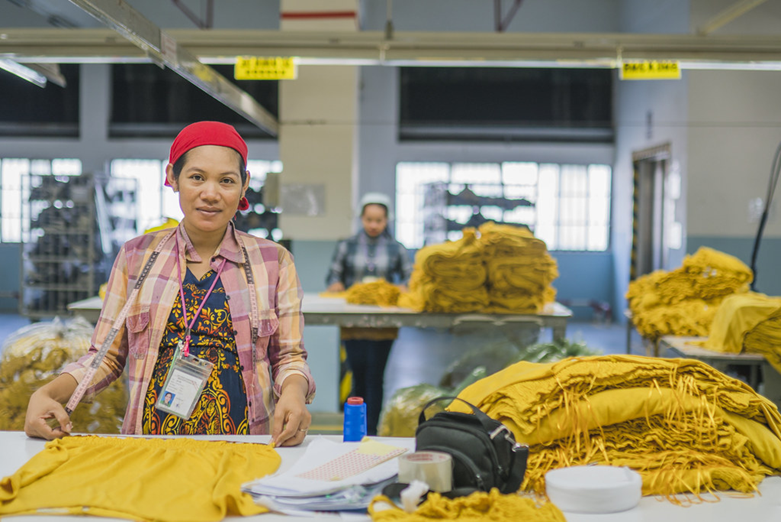
On the supply side, industry remains the main driver, with industrial production rising 7.9% in 2025, bolstered by a 16.3% increase in garment exports and 15.2% in other manufactures (wood products, electrical parts, car tires, bicycles). Construction, however, has yet to recover to pre-pandemic levels, hampered by weak domestic demand.
Services growth eased to +3.4% in 2025 from higher rates in prior years, as the Thai border closure weighed on tourism, remittances, and trade. International tourist arrivals fell 16.9% in 2025, despite a 41.5% surge from the People's Republic of China; arrivals from other countries (excluding China and Thailand) also declined post-border conflict.
Agriculture grew just 0.9% in 2025, supported by favorable external demand (agricultural exports up 8.4%, led by cashews and rice) and decent weather, though cassava and rubber exports retreated.
Inflation Rises on Food Pressures
After very low inflation of 0.8% in 2024, the consumer price index averaged 2.5% in 2025, driven mainly by food prices. Inflation had dipped in the first half of 2025 due to slower food price rises and lower oil prices, but September's Thai trade disruptions raised import costs before a December pullback.
For 2026, the ADB forecasts inflation accelerating to 2.8%, fueled by expected rises in international fuel prices from Middle East conflict escalation; it would ease to 2.5% in 2027 assuming regional stabilization.
Deteriorating Public and External Accounts
Widening Budget Deficit
The budget deficit widened from 2.7% of GDP in 2024 to an estimated 3.7% in 2025. Public revenues edged up slightly from 14.6% to 14.7% of GDP, aided by better goods and services tax collection, but spending jumped from 17.3% to 18.4% of GDP due to public wage hikes and social benefits.
In 2026, the deficit is projected to widen further to 3.8% of GDP, with spending (defense, aid for border closure-affected households) outpacing revenues weakened by economic slowdown. The government plans to borrow about $2.2 billion externally, $0.5 billion domestically, and draw on public deposits to fund it.
Public Debt Still Sustainable
Public debt stock reached $13.1 billion by end-2025 (26.5% of GDP), up from $12.0 billion (26.3%) in 2024. To fund public investment, the state issued $172.2 million in bonds in 2025, lifting domestic debt to $246.8 million; it plans up to $528 million in 2026, over four times the 2025 amount.
The ADB assesses Cambodia at low risk of debt distress, with public external debt projected at $14.0 billion in 2026 and $15.2 billion in 2027 (about 26.6% of GDP).
Current Account Degradation
The current account shifted from a 0.5% GDP surplus in 2024 to a 3.5% deficit in 2025, due to a widening goods trade deficit and falling migrant remittances (from 6.0% to 4.0% of GDP), as workers returned from Thailand post-border closure.
For 2026, the ADB expects the current account deficit to deepen to 6.9% of GDP, reflecting further remittance drops and persistent trade gaps, as imports of raw materials and FDI-related capital goods outpace exports; it would narrow in 2027.
FDI as Essential Counterweight
Despite shocks, foreign direct investment inflows surged 24% in the first nine months of 2025 to $3.9 billion. Garments benefited less than other manufacturing; notably, 93% of manufacturing FDI targeted non-traditional activities (excluding garments). Approved manufacturing investments rose 54% year-on-year in that period (vs. +75% in 2024), while fixed investments jumped 45% in 2025, signaling sustained investor confidence.
These inflows boosted international reserves from $22.5 billion end-2024 to $27.5 billion end-2025 (8.2 months of imports coverage); the ADB projects $29.6 billion by end-2027 (7.1 months).
2026-2027 Forecasts: Low in 2026, Rebound in 2027
ADB projections (early Middle East stabilization scenario, as of March 10, 2026) see growth at 4.5% in 2026, rebounding to 5.0% in 2027.
Industry output should grow 7.3% in 2026 then 7.9% in 2027, driven by light goods exports (tires, electrical parts, furniture); garment orders remain solid early 2026. Construction expects gradual recovery via industrial and residential activity.
Services growth slows to 2.3% in 2026 (from 3.4% in 2025) before accelerating to 2.9% in 2027; border closure continues burdening remittances and tourism, with higher transport costs curbing other markets, though Phnom Penh's new international airport and government promotions may offset some impacts.
Agriculture holds modest 0.9% annual growth in 2026-2027, aided by export diversification (rice, cashews), quality production initiatives, migrant reintegration, and incoming agricultural FDI for productivity.
The ADB notes high uncertainty around these forecasts, especially from Middle East conflict evolution and potential new border disruptions.
Downside Risks: Borders, Commodities, Climate
Key risks include renewed Thai border disruptions (worsening tourism, agriculture, domestic demand), delays in reintegrating hundreds of thousands of returning migrants (risking prolonged unemployment and consumption drops), prolonged commodity price hikes from Middle East tensions (adding inflation and activity pressures; government responses include fuel subsidies, tax cuts, market controls, public energy savings, contingency pricing), and extreme weather events (disrupting agriculture and infrastructure).
Upside factors: successful migrant labor reintegration boosting consumption; direct flight expansions aiding tourism.
Structural Challenge: Skills for High-Income Goal
Beyond cyclical issues, the ADB highlights human capital as a structural drag. Cambodia aims for high-income status by 2050, requiring over 7% annual GDP growth for two decades, but post-pandemic growth hovers around 5%.
Labor productivity lags regional peers; a 2024 Eurocham Cambodia survey found 74% of firms struggle to find skilled workers, due to misalignment between education, vocational training, and market needs. Vocational institutes are vital for reskilling returning Thai migrants, yet graduates often lack practical skills in construction, manufacturing, and agro-processing.
Government reforms include the 2023 Skills Development Fund (incentivizing private training investment), 2025 private recognition of prior learning (certifying ~10,000 experienced workers), and improved regulations enabling public-private co-design/delivery of industry-tailored programs.
Long-term, better-skilled labor would attract diversified FDI; the UNCTAD World Investment Report 2025 notes skilled workers as key for investment decisions, fostering a virtuous cycle (skills up → attractiveness up → higher-value FDI).
Demographic Window Not to Miss
Cambodia's young population offers opportunity, but skill gaps hinder high-income convergence. 2023-2025 reforms are promising but need scaling; the ADB urges prioritizing public resources on core/transferable skills and deeper private sector involvement in technical training. 2026's projected 4.5% growth offers a chance to accelerate these structural shifts.
Sources:Asian Development Outlook April 2026 – Asian Development Bank (chapter 2.21, pages 1 to 5)
Ministry of Economy and Finance of CambodiaNational
Institute of Statistics of Cambodia2024
Eurocham Cambodia Chamber of Commerce Survey
World Investment Report 2025 – UNCTAD (cited in ADB report)

Drift boss is about driving as far as can on curving roads with many obstacles. Drifting exercise should continue while driving. Enjoy Drift Boss as your driving talents improve, unlocking new features only talented racers may achieve and earning greater scores.