


EuroCham Tax Forum: Cambodia Seeks to Shed Its Fiscal Ambiguity

More than 150 tax specialists, senior officials and private-sector representatives gathered in Phnom Penh on 25 June to discuss the future of Cambodia's tax system. From the fight against informality to transfer pricing and double-taxation treaties, the Kingdom is sharpening its strategy to win over foreign capital.

Cambodia wants to leave fiscal ambiguity behind. That was the message delivered on 25 June by the European Chamber of Commerce in Cambodia (EuroCham) at its annual Tax Forum, held in Phnom Penh in partnership with its Tax Committee. The event brought together the principal architects of the Kingdom's tax policy: the General Department of Taxation (GDT), the Ministry of Economy and Finance, the World Bank, and a substantial delegation of lawyers, auditors and business leaders.
Informality, growth's blind spot
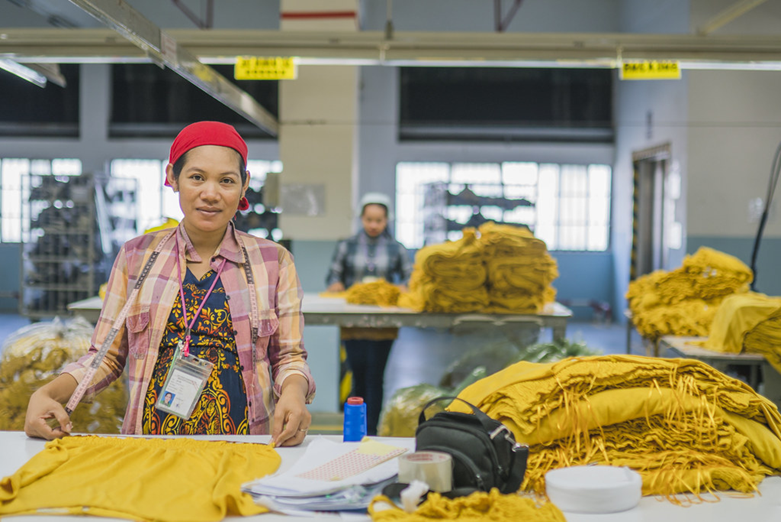
The morning's plenary session set the tone for the day, tackling a central question: how to bring into the formal fold an economy still dominated by small, undeclared businesses. A panel bringing together Bun Neary, deputy director-general of the GDT, Bunna Oudom of the Ministry of Economy and Finance, Panayiotis Nicolaides of the World Bank, and EuroCham executive director Martin Brisson, examined the structural barriers that continue to discourage many operators from joining the formal tax system — pointing to the digitalisation of tax administration, simplified compliance procedures and stronger public-private cooperation among the levers under discussion. The message from EuroCham's leadership was clear: rather than waiting for informal operators to comply overnight, the priority should be strengthening the conditions that allow already-formalised businesses to grow, as part of a long-term strategy.
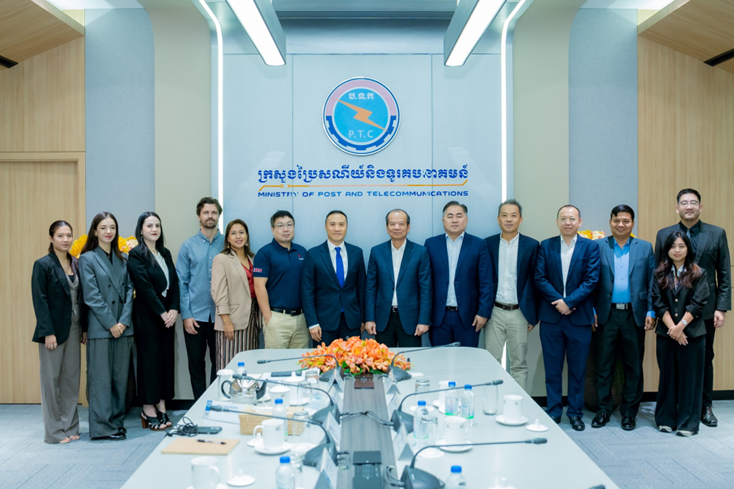
It was in this context that EuroCham formally handed over its White Book 2027 to the GDT — the chamber's annual policy publication setting out its recommendations for improving Cambodia's business climate.
Transfer pricing, capital gains and tax treaties on the afternoon agenda
The afternoon was devoted to four technical breakout sessions, chosen to reflect the concerns most frequently raised by member companies. One examined Cambodia's Capital Gains Tax, bringing together specialists from Bun & Associates alongside representatives of the GDT, DFDL and Knight Frank Cambodia to discuss its practical implementation — a sensitive issue for real-estate investors.
A second session explored Cambodia's growing network of double-taxation agreements (DTAs). EuroCham Secretary General Antoine Fontaine led the discussion alongside Tiv Dina, founder of Compliance Partner, who described a tax treaty as far more than a legal text: a bridge between countries and a source of certainty for businesses investing across borders.
It was in that same set of breakout sessions, in Breakout Room II, that a well-attended panel addressed director remuneration and share premium — a topic that touches directly on the legal and tax structuring of foreign companies operating in Cambodia. Moderated by Chamnan Vajiravann, tax partner at DFDL, the discussion brought together Ryo Kawahara, director for public-private partnerships at the Japan Business Association in Cambodia (JBAC), and Chum Sochenda, tax manager at Rajah & Tann Sok & Heng Law Office — a telling sign of the growing interest among Japanese and regional business communities in the clarity of Cambodia's corporate-governance tax framework.
Modernisation on a forced march
In an interview with EuroCham ahead of the event, Linda Oum, tax manager at Heineken Cambodia and vice-chairperson of the chamber's Tax Committee, captured the ambivalence of the moment well: Cambodia's tax system has modernised rapidly, particularly through digitalisation and closer alignment with international standards, which is improving transparency even as it raises compliance expectations and audit scrutiny. She pointed to a broader shift toward economic substance, with growing attention to transfer pricing, documentation and audit readiness.
This assessment fits within a wider pattern of deepening dialogue between Brussels and Phnom Penh. Two days before the Tax Forum, EuroCham and the Council for the Development of Cambodia (CDC) held their fourth Cambodia-Europe Public-Private Sector Dialogue, where the chamber notably called for the 1% Prepayment Tax on turnover — seen as penalising low-margin sectors — to be gradually recalculated on the basis of profit before tax rather than sales volume alone.
Looking toward 2029
Behind these technical discussions lies a larger strategic stake: Cambodia's scheduled graduation from Least Developed Country (LDC) status in 2029. That transition will bring a gradual loss of certain preferential trade advantages, making it all the more urgent to build a tax framework that foreign investors see as stable, predictable and competitive. That is precisely the ambition set out in EuroCham's White Book 2027, whose tax chapter calls for faster reform across taxation, trade, energy and digital policy.
Whether the tax administration can turn these recommendations into concrete implementing texts remains to be seen. For now, the GDT is signalling a willingness to listen: the formal handover of the White Book to its representatives, at the close of the morning session, was meant as a symbol of public-private dialogue — one that the business leaders gathered in Phnom Penh hope will translate, in the months ahead, into clearer rules and a more predictable administration.

Comments