


CIFF 360 & Kep: Sarita Reth — "Kep Has Everything to Become Cambodia's Little Cannes"

Actress, producer, activist — meeting with an essential voice of Cambodian cinema: Sarita Reth. A familiar face on Khmer screens, she today embodies a new generation of professionals who no longer content themselves with playing the game, but intend to rewrite the rules. In front of the camera as much as behind it, on stage as much as in industry forums, Sarita carries a rare demand: that of a Cambodian cinema finally structured, fair, and recognized at its true value on the world stage.

Portrait
There are presences that naturally impose themselves in a space. Sarita Reth is one of them. A familiar face on Cambodian screens, she built her notoriety through inhabited roles and a rare stage presence. But Sarita does not allow herself to be boxed into a single category.
After years in front of the camera, she stepped into production — and with her very first attempt earned international recognition.
Her first two short films as a producer were officially selected at the Cambodia International Film Festival, and also at two Academy-accredited festivals: Short Shorts in Japan and Huesca 54 in Spain. A striking debut that says a lot about the rigor and ambition of this woman of cinema.
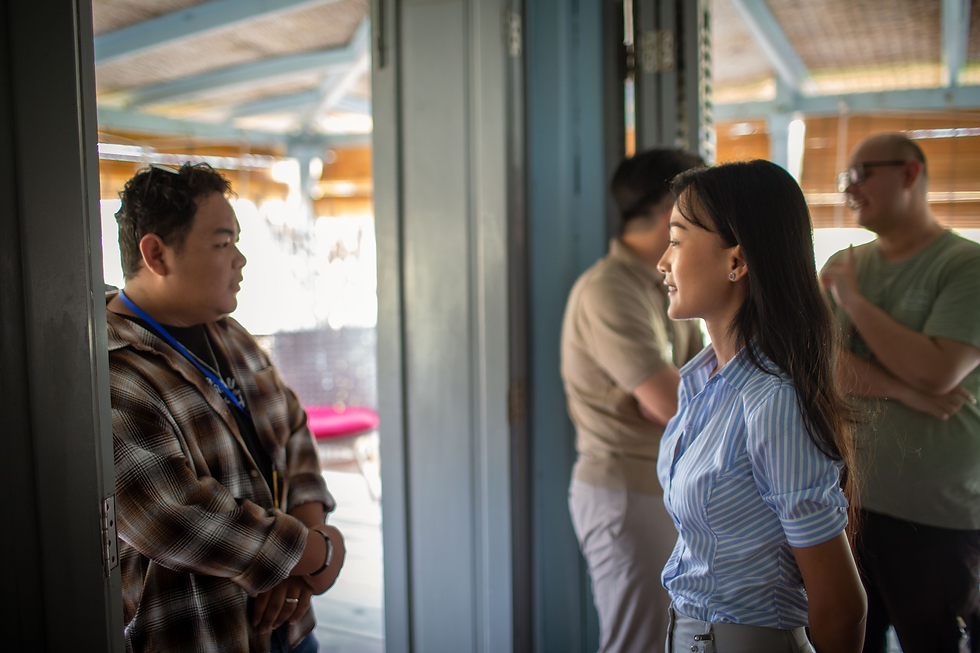
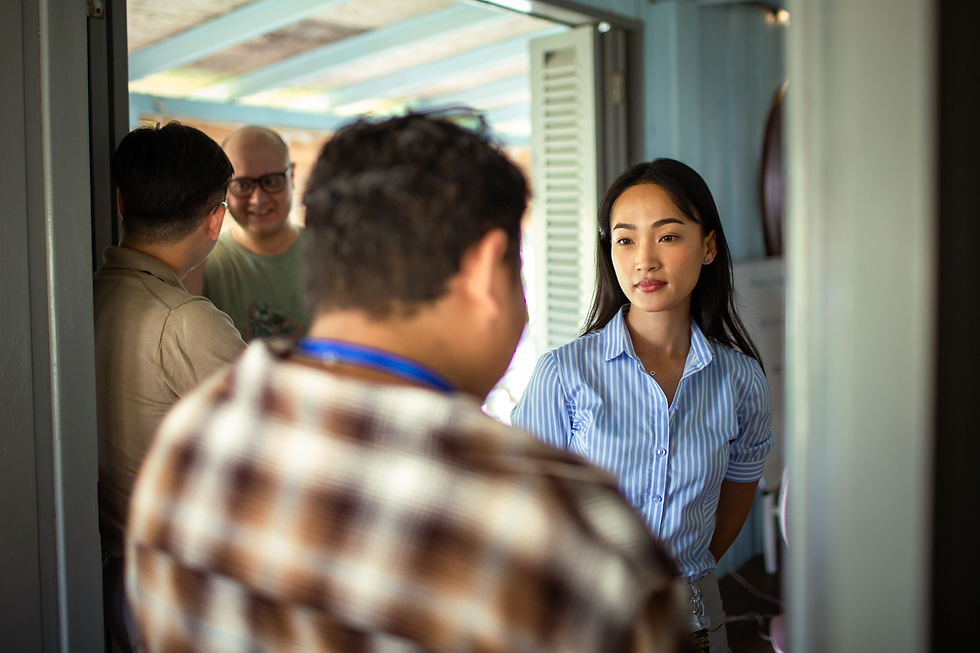
It was in the idyllic setting of Knai Bang Chatt in Kep, on the sidelines of the professional workshop organized by CIFF 360, that we met her. More than thirty industry professionals — directors, producers, screenwriters, ministry representatives — were gathered that day to take an unsparing inventory of Cambodian cinema and imagine, together, the structures of tomorrow. Sarita participated there as an actress, as a producer, and as a voice carried by field experience.
Interview
Sarita, you have just signed your first steps as a producer, and the result crosses Cambodian borders. How do you experience this success?
It's a great pride, of course. But above all an immense learning experience. Moving behind the camera is a whole different world. From fundraising to post-production, nothing is simple — oh my God, really! I still don't know if I like it (laughs). But it's an extraordinary experience. And when you see that the work is recognized internationally, you tell yourself the team managed to create something genuine.
Can you tell us about the two short films you produced?
The first, Chant of the Desert Flower, was directed by Kim Sophea — whom you interviewed, by the way. It's a fifteen-minute film, dense and beautiful. It was selected at CIFF and at the two Academy-accredited festivals I mentioned. The second is called Rest in Pieces.
For both films, I am both producer and in front of the camera. It's a demanding dual role, but I couldn't imagine doing things any other way — not yet.
This CIFF 360 workshop brought together professionals from all backgrounds this morning. What do you think were the essential points raised?
We were there to speak frankly — directors, producers, actors, ministry people, all sectors connected to one another.
The goal was to take an honest inventory: what are our problems today, and how to solve them without repeating the same mistakes? It's about building a truly sustainable film industry, not only creatively but also economically.
You mentioned one problem in particular that affects you directly…
Working hours. It's an issue that is really close to my heart — and it's even a trauma for me. Some productions are exemplary, but they are unfortunately few.
In other countries, shoots are ten hours and that's it. If you go over, there is financial compensation regulated by law. Here, there is no legal protection for artists on this point.
We cannot operate 24 hours a day — no one can. It's one of the issues we raised today.
Is there hope for concrete change?
I really hope so. And the fact that government representatives were present this morning to listen to us is already a signal. I hope they will take these problems to heart and escalate them to higher instances. Cinema is soft power — it can have a profound impact on a country's image. It must finally be recognized as such.
One last question: what do you think of the idea of making Kep a venue for an international festival?
Kep is a magnificent place. We have the sea, we have the mountain, we have that particular gentleness. If Cannes can exist, why not Kep? It's a place where all creative people could come and give their best.
I think its potential is widely underestimated. Kep has all the assets to become an incredible cinema destination, nationally and internationally. I support this initiative wholeheartedly.
CG. Additional photos by CIFF 360


Comments