


Cambodia Investment Forum 2026 : Cambodia Positions Itself as a Leading Investment Destination in Southeast Asia

In a global geopolitical context marked by uncertainty and the recomposition of supply chains, Cambodia is clearly aiming to position itself as a leading investment destination in Southeast Asia.

A Forum Rooted in Strategic Partnership
Organized by the Council for the Development of Cambodia (CDC), the forum took place under the ambitious theme “Beyond Investment: Strengthening Resilience through Proactive Aftercare and Strategic Partnership”—a formulation that signals a turning point in Cambodia’s approach to investment. The focus is no longer merely on attracting capital, but on retaining and accompanying investors as enduring partners in national development.
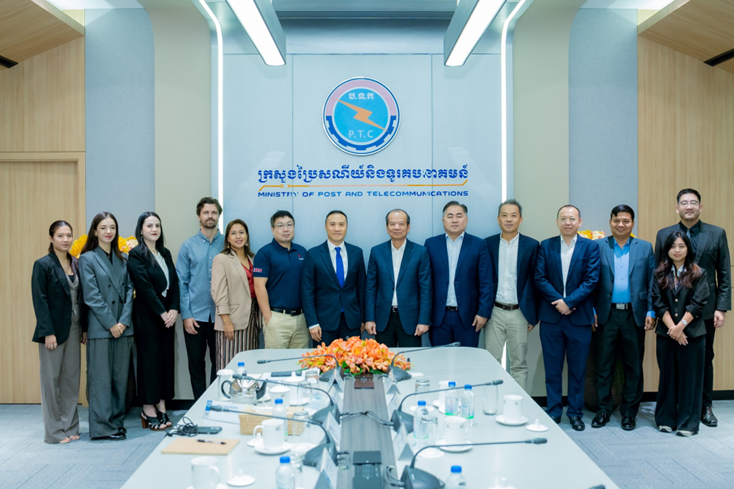
The day, chaired by H.E. Sun Chanthol, Deputy Prime Minister and First Vice‑Chairman of the CDC, brought together representatives from relevant ministries, the Cambodian Chamber of Commerce (CCC), the Cambodian Oknha Association, and international chambers of commerce operating in Cambodia. Domestic and foreign investors also participated, giving the event a clearly transnational dimension.
A Straightforwardly Reform‑Oriented Agenda
In his opening speech, Deputy Prime Minister Sun Chanthol highlighted the firm commitment of the Royal Government to a more competitive and transparent business environment. Among the flagship measures presented that day, three initiatives particularly caught the attention of economic observers.
The cdcIPM (CDC Investment Project Management System), an integrated digital platform, aims to centralize and streamline the monitoring of investment projects. Its implementation is part of an administrative‑modernization logic that responds to investors’ growing expectations for predictability and institutional responsiveness.
The National Single Window System, in turn, seeks to radically simplify administrative and customs procedures. In a regional environment where competition to attract FDI (foreign direct investment) is especially intense, this streamlining of processes represents a significant competitive advantage over destinations such as Vietnam, Thailand, or Indonesia.
Finally, the anti‑fraud technology law directly addresses the legitimate concerns of investors and the tourism sector, long affected by the country’s tarnished image linked to online scams and cybercrime centers operating from certain border areas. By clearly signaling the government’s determination to end these practices, this legislation aims to restore international confidence in Cambodia as an investment destination.
Investor Aftercare: A Priority Finally Institutionalized
One of the forum’s major conceptual innovations lies in the explicit emphasis placed on investor aftercare—a notion long overlooked in the investment‑promotion policies of emerging economies, which have traditionally prioritized the acquisition phase over investor retention.
The Royal Government has officially reaffirmed its intention to place post‑investment support at the core of its strategy. In concrete terms, this translates into the establishment of personalized follow‑up mechanisms, dedicated communication channels between the private sector and government bodies, and a rapid‑response framework for resolving operational problems faced by already‑established companies.
“The forum has fostered closer ties between public institutions and the private sector and has compiled suggestions aimed at improving the mechanisms that ensure investors continue to invest in Cambodia over the long term,” the CCC noted in its press release.
This approach reflects a new level of maturity in Cambodian economic policy. It is no longer enough to sign agreements or inaugurate special economic zones; the government must now demonstrate through concrete actions that Cambodia is a reliable, responsive partner mindful of the long‑term sustainability of the investments it receives.
Public‑Private Dialogue as an Engine of Continuous Reform
The 2026 forum also stood out for the quality of the dialogue between government representatives and economic operators. Based on the public‑private partnership (PPP) mechanism, this exchange allowed participants to jointly update their knowledge about recent regulatory developments, available support mechanisms, and sector‑specific opportunities.
Discussions highlighted several persistent challenges: the complexity of certain registration procedures, processing delays, access to land, and uncertainties related to the interpretation of certain tax provisions. These identified bottlenecks were discussed openly, with concrete solutions either proposed or currently under development.
When such structured dialogue leads to verifiable commitments and clear implementation timelines, it becomes one of the most reliable indicators of a country’s institutional maturity. Cambodia appears determined to turn this process into a regular practice, rather than a one‑off communication exercise.
Cambodia in the Regional Race for FDI
Placed within its regional context, the Cambodia Investment Forum 2026 comes at a pivotal moment. The redirection of global value chains, accelerated by Sino‑American trade tensions and the long‑lasting effects of the Covid‑19 pandemic, has opened new windows of opportunity for Southeast Asian economies.
Cambodia, which benefits from one of the region’s most competitive labor‑cost structures and a strategic geographical position at the heart of ASEAN, holds genuine advantages. Its participation in the RCEP (Regional Comprehensive Economic Partnership) free‑trade agreement, effective since 2022, strengthens its access to regional markets and improves its export competitiveness.
Nevertheless, to fully confirm its attractiveness, the Kingdom still needs to make progress on several fronts: strengthening the rule of law, combating corruption, improving the quality of logistics and energy infrastructure, and upgrading the skills of the local workforce. The 2026 forum provided an occasion to reiterate that these challenges are not only recognized but are actively being addressed by the competent authorities.
Toward a Consolidated Investment Ecosystem
The Cambodian Chamber of Commerce concluded its final statement by asserting that the forum “has contributed significantly to strengthening investors’ confidence in the government through concrete and immediately actionable solutions.” Beyond its institutional tone, this assessment reflects a real dynamic of progress.
The coming months will reveal the actual impact of the commitments made. Investors—whether already present in Cambodia or considering establishing operations there—will pay close attention to how these announcements translate into everyday administrative practice. It is by this practical standard, and not by speeches alone, that Cambodia’s credibility as a long‑term investment destination will be measured.
In a world where trust has become the rarest and most valuable resource, the Cambodia Investment Forum 2026, at least, has had the merit of framing the question in the right terms.

Wow its a very good post. The information provided by you is really very good and helpful for me. Keep sharing good information.I bookmark your blog because I found very good information on your Harley Quinn Costume
The content was really very interesting. I am really thankful to you for providing this unique information You have a good point here! I totally agree with what you have said!! Thanks for sharing your views. Life of a Showgirl Cardigan