


Cambodia: International Trade Charts a Path Toward a Prosperous Future

Cambodia: international trade is charting a path toward a prosperous future, reaching a total volume of US$65.24 billion in 2025, an 18% increase compared with US$55.45 billion in 2024.

This momentum, highlighted at the January 8, 2026 conference by Minister of Commerce Cham Nimul and spokesperson Pen Sovicheat, illustrates the Khmer economy’s capacity to adapt to global geopolitical and economic turbulence.
Exports reached US$31.28 billion (+16.95%), while imports amounted to US$33.96 billion (+18.32%), generating a moderate deficit of US$2.68 billion, offset by rising inflows of foreign investment.
Global partners: China, the United States and the EU as growth engines
China remains the undisputed leader with US$19.73 billion in trade, absorbing a broad range of Cambodian goods while supplying technologies, raw materials and essential infrastructure.
The United States follows closely at US$13.14 billion (+29.24%), despite U.S. tariff measures. Cambodian exports surged to US$12.73 billion (+28.48%), driven by successful negotiations under the TIFA framework, resulting in a reciprocal rate of 19%. Key products shipped to the U.S. include garments, travel goods and bags, bicycles, spare parts and consumer goods, while U.S. imports into Cambodia cover automobiles, machinery, jewelry, cosmetics and electronics.
The European Union, at US$5.87 billion (+10.2%), continues to benefit fully from its preferential tariffs: exports reached approximately US$5 billion (+13.55%), contrasted with a decline in imports to US$863 million (-5.88%).
At the 12th meeting of the SGTI sub-group in 2025, discussions focused on the bicycle industry, improving the investment climate, market access and technical assistance, with a busy 2026 agenda including fiscal transparency, solar energy, environmental impact assessments and vehicle safety standards.
Other solid partners round out the picture: Japan (US$2.53 billion), Canada (US$1.33 billion), the United Kingdom (US$1.07 billion), South Korea (US$923 million), Australia (US$626 million) and India (US$511 million).
Boom in regional trade
Regional trade, dominated by ASEAN with US$16.37 billion, stands as a cornerstone of Cambodia’s strategy, fostering deeper Southeast Asian economic integration.
Vietnam emerges as a pivotal partner, with bilateral trade peaking at US$11.33 billion in 2025, up 11.7%: Cambodian exports reached US$5.66 billion (+18.4%) and imports US$5.67 billion (+5.7%). Vietnamese Ambassador Nguyen Minh Vu praised this trajectory at an event in January 2026, confirming the shared ambition to double trade to US$20 billion in the coming years—an objective reaffirmed by Vietnamese leaders To Lam, Tran Thanh Man and Pham Minh Chinh during a crucial meeting in September 2025.
Flagship products and winning diversification
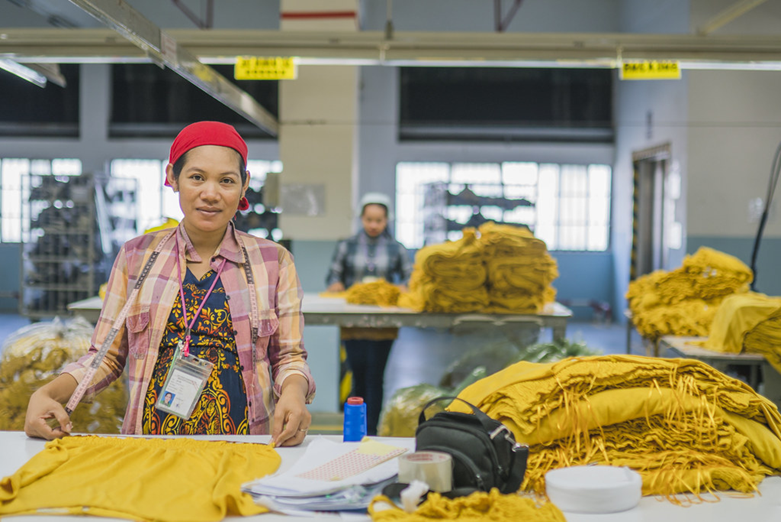
Leading exports rest on a diversified portfolio: at the forefront, garments, footwear, travel goods and bags; followed by rice, automotive tires, cashew nuts, electronic equipment and components, cassava, bicycles, electrical cables and wire assemblies.
This range, shipped to 169 countries compared with 164 in 2024, marks a successful diversification beyond traditional textiles, integrating agriculture, agro-industry and electronics into global value chains. Pen Sovicheat underscored how this performance reflects sustained confidence among international buyers and strengthened supply capacity, even amid global uncertainty.
Imports, for their part, support industrialization: automobiles and machinery from the United States, along with similar goods from the EU and ASEAN, are driving the kingdom’s productive transformation.
Resilience amid challenges, a bright 2026 horizon
Despite a moderate trade deficit, overall trade growth—17.66% according to Pen Sovicheat—demonstrates Cambodia’s resilience, maintaining access to key markets while diversifying destinations. The launch of the 2026 trade action plan, unveiled during the annual review, emphasizes consolidating these gains through bilateral and regional forums.
Within the ASEAN context, deeper integration could propel Cambodia into an emerging logistics and manufacturing hub, capitalizing on its young and skilled workforce, preferential agreements and strategic location.
Thai uncertainties
Cambodia and Thailand had aimed for US$15 billion in bilateral trade by the end of 2025, a joint target set by their prime ministers in 2023 and reaffirmed in 2024, but it was not achieved due to recurring border tensions that led to a nearly 15% drop in trade in 2025.
Partial data point to approximately US$3.17 billion for the first nine months of 2024 (with a Cambodian deficit of US$1.88 billion), and an acceleration to US$1.88 billion for the first five months of 2025 (+8.3%). Should peace endure, projected volumes could reach US$20 billion by 2030 within the ASEAN–RCEP framework.


Comments