


Cambodia & Tech : “Data is the real performance lever” – Cédric Kang, Co-President of La French Tech Phnom Penh

Franco-Cambodian by heart and commitment, Cédric Kang embodies a certain vision of entrepreneurship—one that combines technical expertise, tangible impact, and a strong sense of community. Having arrived in Phnom Penh in 2010 with the ambition to build something, he has never left.

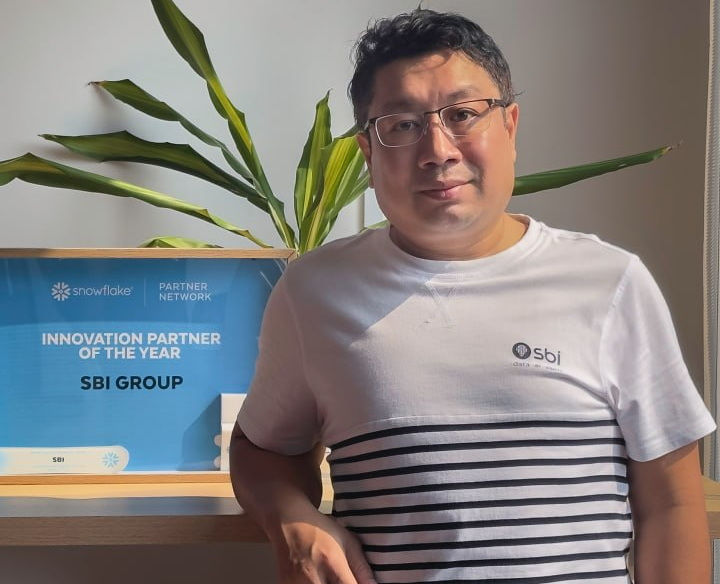
After co-founding Bikay, a software development company specializing in web and mobile applications, he took over the leadership of SBI in Cambodia in 2016, before moving in January 2025 to the position of Deputy CEO APAC, responsible for driving the company’s data and AI strategy across the entire Asia-Pacific region.
Alongside his professional responsibilities, Cédric is actively involved in structuring the Francophone tech ecosystem in Southeast Asia. Co-President of La French Tech Phnom Penh since January 2024—and re-elected for the 2026–2028 term—he also serves on the board of EuroCham Cambodia as Treasurer. These two commitments reflect a deep conviction: giving back to an ecosystem what it has given you.
In this interview, he reflects on his unique journey, his ambitions for La French Tech Phnom Penh, and his vision of a Cambodia on the path to becoming a regional hub for Francophone innovation.
Can you introduce yourself in a few words?
My name is Cédric Kang. I am Franco-Cambodian, an entrepreneur, and passionate about digital technology. I settled in Phnom Penh in 2010 and have never left since. Today, I am Deputy CEO APAC at SBI, where I help companies across the region regain control of their performance through digital solutions—a mission that excites me even more in the age of AI.
Alongside this, I have the privilege of co-presiding La French Tech Phnom Penh since 2024 and serving as Treasurer on the Board of EuroCham Cambodia.
Ultimately, my days revolve around two things that matter deeply to me: helping my clients transform and growing our Francophone tech ecosystem in Southeast Asia.
Tell us about your academic background
I followed a fairly traditional path as a telecommunications and IT engineer. I began with a DUT at Paris-Est Créteil University in Telecommunications and Networks from 2000 to 2002, then continued with a Master’s degree at ESIGETEL, an engineering school in IT and telecommunications based in Paris-Sud, until 2006. I graduated with a specialization in real-time embedded systems, a fascinating field now central to autonomous vehicles, where every millisecond counts to process sensor data, make the right driving decisions, and ensure passenger safety.
Honestly, what truly marked my student years was not lectures, but what I built alongside them.
In 2005, I became Treasurer of the JSE (Job Service Student) association. The idea was simple but useful: helping students find part-time jobs to make ends meet or finance their studies. Many of us were struggling, and it was our way of supporting one another. It taught me early on the importance of mutual support and collective organization.
Then in 2009, I took a major step with MathsTonic, which I co-founded with partners. It was my very first real entrepreneurial venture, and I remember it vividly. The concept was to offer affordable in-home tutoring for students up to high school, delivered by university students. We aimed to meet two needs at once: enabling families to provide quality academic support without excessive cost, and giving students meaningful income opportunities, in line with the same philosophy as JSE.
Looking back, I realize these two experiences laid all the foundations for what followed: a taste for collective work, the desire to build things, and the belief that entrepreneurship can have a real impact on people’s lives. It is exactly the mindset I bring today to La French Tech and EuroCham.
Tell us about your early professional career
I began my career as a BI Project Manager at Dexia Crédit Local, within the management control department. That is where everything shifted for me. Coming from a highly technical background, I found myself immersed in corporate finance, management control, and performance management. I discovered how a company is truly run on a daily basis—through monitoring resources (costs), tracking revenues, analyzing revenue by channel, COGS by channel, and all the indicators that help leaders make informed decisions.
This experience was a real turning point. I understood that digital technology creates value only when it serves a concrete business need—and that performance management is where technology can truly transform a company.
This conviction has remained unchanged. In 2010, I took the leap: I left France, moved to Cambodia, and co-founded Bikay with a French engineer friend. The company provided software development and integration services, specializing in web applications, websites, e-commerce, and mobile apps. Our goal was simple: bring French expertise to a region full of opportunities.
For six years, Bikay was an incredible learning experience. I had the opportunity to work on highly diverse projects.
With Gefco and Danone, I supported major financial transformation initiatives—revamping reporting tools, forecasting, and performance management systems. This allowed me to consolidate what I had learned at Dexia in real-world contexts.
At the same time, I worked with Cambodia’s public sector. The project I am most proud of from that period is the implementation of a public school management system for the Ministry of Education, Youth and Sport. Seeing our work directly benefit tens of thousands of Cambodian students gave real meaning to what we were doing.
This dual exposure—international corporations on one side, local public institutions on the other—shaped me deeply. It taught me that digital transformation is not just about technology; it is above all about people and context.
In 2016, I joined SBI as Managing Director to lead its expansion in Asia through Cambodia. Over eight years, we built the entity almost from scratch. I am proud to have seen our teams grow and our clients trust us project after project.
Since January 2025, I have taken on the role of Deputy CEO APAC, leading development across the region.
If I had to summarize the common thread, it is this: data and digital solutions are the true levers of business performance management.
Digital transformation only makes sense when it serves a concrete human and strategic objective. This belief is even more relevant today in the era of AI—because without a solid data foundation, AI remains a nice gadget. With clean, governed, and usable data, it becomes a true driver of value.
Tell us about your relationship with Cambodia
My connection to Cambodia is, above all, a story of heritage and heart. I grew up in France but always carried my Cambodian roots with me. Over time, my attraction to Southeast Asia grew stronger.
In 2010, I made the move—not only to reconnect with my origins, but also to attempt something bigger: building my own consulting and digital development company to bring French expertise to a country and region in transformation. Looking back, it was a bold gamble—leaving Paris, its major corporations, and its comfort, for a country I mostly knew through family stories. But I have never regretted it.
Bikay was the first chapter of this Cambodian journey. Then in 2016, I took over SBI Cambodia, where I spent more than eight years building the business before moving to Deputy CEO APAC in January 2025.
Beyond business, Cambodia has given me a lot on a human level. It is a country that welcomed me, helped me grow, and continues to teach me something every day. That is also why I am so involved in EuroCham and La French Tech—I strongly believe in giving back to the ecosystem that has given so much to me.
How did you come to join La French Tech in Cambodia?
It happened quite naturally. As a Franco-Cambodian entrepreneur in tech, you inevitably orbit around La French Tech at some point. From the launch of Bikay in 2010, we already positioned ourselves as part of this ecosystem—participating in events, engaging with other entrepreneurs, and being part of the landscape.
The shift to a more formal commitment came in January 2024, when I was elected Co-President during the board renewal. For me, it was a natural next step: moving from an active community member to someone helping structure it. Alongside Sébastien Ung, we took on the challenge together.
In March 2026, I had the honor of being re-elected Co-President for the 2026–2028 term, with a newly expanded board of nine members. A new chapter begins, with two major milestones ahead: official accreditation and the Francophonie Summit to be held in Phnom Penh in November 2026.
What are your ambitions within this organization?
I have three main ambitions for this term.
First, to obtain official 2026–2028 accreditation from the Mission French Tech. It is not just an administrative stamp—it is recognition of the work done by an entire community and a springboard to go further.
Second, to make Phnom Penh a regional hub for Francophone innovation. The Francophonie Summit in November 2026 and the associated FrancoTech event represent a unique opportunity to put Phnom Penh on the map, and we intend to seize it.
Finally, to concretely accelerate startups and entrepreneurs in our community—through networking, mentoring, acceleration programs, and talent development—while strengthening connections between France, Cambodia, and ASEAN.
What do I expect personally? Collective impact. Seeing projects materialize, entrepreneurs succeed, and our ecosystem grow beyond our borders. That is the real measure of success.
Describe your professional activities
Today, I wear three complementary hats that reinforce one another.
My primary role is Deputy CEO APAC at SBI since January 2025. I lead the strategy and development of our data and AI consulting activities across the Asia-Pacific region. Our conviction is clear: in an era where AI is increasingly central, data has become the cornerstone of performance management.
Without a solid data foundation, there are no reliable decisions and no AI that truly creates value. That is what we build for our clients—robust data platforms, strategic management tools, and analytical solutions that turn data into a real competitive advantage.
My second role is Treasurer and Board Member of EuroCham Cambodia since March 2025. EuroCham is the largest European chamber of commerce in Cambodia, with over 400 members, 7 national chapters, and 23 countries represented. Contributing to its governance is also a way to serve the European business ecosystem in Cambodia.
My third role is Co-President of La French Tech Phnom Penh since January 2024, re-elected for 2026–2028.
What ties all of this together is one idea: putting data, transformation, and collective effort at the service of business growth and the ecosystem I am part of.
Describe one of your projectsOne project that is particularly important to me right now is the French Tech Phnom Penh 2026–2028 accreditation—and it is much broader than it may seem.
The goal is to have Phnom Penh officially recognized as a French Tech Community internationally by the Mission French Tech. To achieve this, we have worked on three fronts simultaneously:
Governance: We democratically elected a new board of nine members in March 2026, ensuring real diversity—entrepreneurs, executives, Franco-Cambodian and international profiles—to reflect the richness of our community.
Institutional anchoring: We secured official backing from the French Chamber of Commerce in Cambodia, support from the French Embassy, and more than 20 letters of support from key players in the Cambodian ecosystem.
Strategic vision: Structuring our 2026 events, playing a leading role in the Francophonie Summit in November, and positioning Cambodia as a sustainable regional innovation hub.
Beyond the label itself, what excites me most is mobilizing an entire community around a shared ambition—turning vision into a concrete collective movement.
What do you do outside of work?
Above all, I enjoy spending time with my wife and children. They are my priority, and I try to protect that time. Watching them grow and sharing simple moments gives meaning to everything else.
It is also a topic I care deeply about. I believe one of the true revolutions of digital technology is enabling companies to better structure their business processes, extract useful data, and continuously improve. AI and robotics will accelerate this by significantly increasing productivity—freeing up time. While the industrial era absorbed more and more of our time at work, I believe we are returning to fundamentals: spending less time working and more time on what truly matters—family, loved ones, and personal passions.
For sports, badminton is my main outlet. I play regularly, and it has become an important ritual in my life. I enjoy the physical aspect, the concentration and strategy it requires, and especially the friendly atmosphere of matches with friends—it is a great way to release the pressure of busy days.
I also dedicate time to networking and community life, which has become a natural extension of my professional activity, but with a more human dimension—especially through my involvement in La French Tech and EuroCham.
And I enjoy exploring the region—traveling in Cambodia and Southeast Asia, discovering local cuisine and culture, often with my family. This region has so much to offer that there is always something new to learn.
What do you like most and least about Cambodia?
What I like most is the unique entrepreneurial energy of the country. In Cambodia, there is still a feeling that you can “write history.” Decision-makers are accessible, the ecosystem is young and agile, and opportunities to create real impact are everywhere. It is also a gateway to ASEAN, with cultural and economic diversity that makes it a true open-air laboratory. And perhaps most importantly, there is the warmth of the Cambodian people, which makes each day brighter.
What I like less, honestly, are certain administrative complexities and the need for further structuring in some sectors. But paradoxically, these also create opportunities for entrepreneurs willing to help build solutions. And then there is traffic in Phnom Penh—which can test even the calmest patience.


Comments