


Border: The fate of 18 Cambodian soldiers detained in Thailand amid tensions

Since the ceasefire between Cambodia and Thailand was declared on 28 July 2025, the detention of 18 Cambodian soldiers in Thailand has been a source of serious diplomatic concern and intense legal debate.
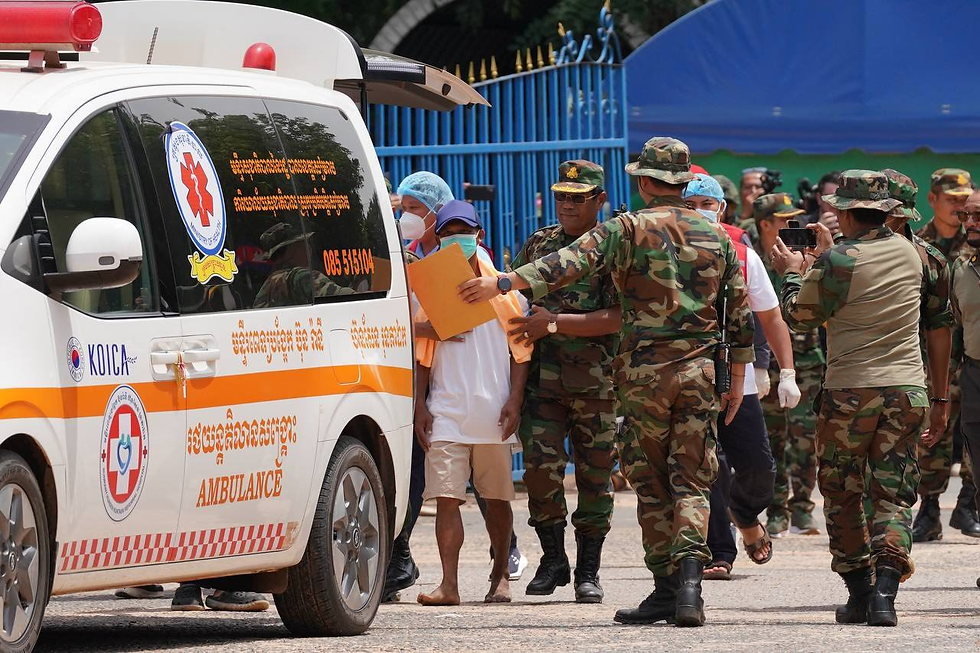
These soldiers, taken prisoner after the official signing of the truce, perfectly illustrate the ongoing complexities between these two neighbouring countries, which share a history of territorial disputes and recurring armed clashes.
A delicate situation: the detention of Cambodian soldiers
On 28 July 2025, despite an official ceasefire agreement, armed incursions were reported in the border region between Cambodia and Thailand. According to Bangkok, the Cambodian soldiers in question were captured in the context of illegitimate attacks by the Cambodian army, thereby violating the truce. Phnom Penh, on the other hand, strongly denies these accusations, claiming that the capture of its soldiers is illegal because it took place after the ceasefire was declared. The Thai side allegedly coaxed the Cambodian soldiers into a trap.
Cambodian Prime Minister Hun Manet has called for the immediate release of these soldiers, denouncing their detention as a ‘serious violation of international humanitarian law’.
However, the Thai army has reaffirmed its commitment to respecting international humanitarian conventions, based in particular on Article 118 of the Third Geneva Convention, which stipulates that prisoners of war must be released and repatriated ‘without delay after the cessation of active hostilities’. In short, the Thai military is playing with words, differentiating between the terms ceasefire and end of hostilities. It is difficult to believe that hostilities were initiated by the Cambodian side.
However, the International Committee of the Red Cross (ICRC), an independent authority, was able to visit the 18 prisoners and confirmed that they were in satisfactory health, clarifying that ‘their treatment was in accordance with current humanitarian standards’.
Why is Thailand holding the soldiers?
Thailand justifies the detention of the Cambodian soldiers on the grounds that it needs to investigate the facts, arguing that their capture occurred after violent Cambodian attacks on its military positions in a disputed border area. For Bangkok, releasing these soldiers prematurely without clarifying the complex circumstances that led to this violation of the ceasefire would risk further undermining regional security and stability.
This restraint can also be explained by a desire to deter further incidents, in a context where the border remains a flashpoint with recurring crises exposing sensitive strategic interests, particularly around key historical sites such as the Preah Vihear temples.
In this context, Thailand is seeking to protect itself from possible new incursions and to impose strict control over the area to prevent a resurgence of violence, while safeguarding its image as a party that respects prisoners' rights.
More specifically, Thailand appears to be adopting a strategy of anticipating a possible deterioration of the situation, in line with a military doctrine that combines deterrence and increased defence in the event of high-intensity conflict. Restraint – taking soldiers hostage – therefore also means that the army would be prepared to respond quickly to any hostile developments.
This unethical approach is frequently observed in situations of prolonged tension between states, where avoiding immediate war does not mean abandoning military preparations while holding hostages. It is a strategy aimed at preserving negotiations with strong leverage without making oneself militarily vulnerable.
Legality of detention under the ceasefire
International humanitarian law, in particular the Geneva Conventions, requires the prompt release of prisoners of war after the cessation of hostilities. However, the ‘effective’ and accepted nature of the ceasefire is central to determining the legality of capture and detention.
In this specific case, although the agreement was signed on 28 July 2025, clashes continued in the following days, with mutual accusations of violations.
This complex and ambiguous situation makes legal interpretation open to debate, with Thailand arguing that ‘its operations were in response to ongoing attacks’, while Cambodia asserts that all hostilities ceased on the official date of the ceasefire.
Cambodian appeals to international institutions
In response to this situation, Phnom Penh formally referred the matter to several international institutions, calling on the United Nations High Commissioner for Human Rights and the ASEAN Intergovernmental Commission on Human Rights, among others, to intervene to secure the immediate release of its soldiers and ensure respect for international law.
Cambodia insists that this detention is a serious violation of humanitarian principles and urges the international community to exert diplomatic pressure on Bangkok.
Precedents and similar situations
Taking soldiers hostage after a ceasefire is not unique to this dispute. In other regional conflicts, such as the Israeli-Palestinian conflict, prisoners have been captured and detained while temporary ceasefire agreements were already in place, generating international controversy.
The case of Hamas holding Israeli hostages despite temporary ceasefires illustrates the ongoing tensions between humanitarian law and military realities.
The Cambodian-Thai case recalls situations where the fragility of ceasefires, combined with disputed border areas, complicates the humane and legal treatment of captured individuals.
The fate of the 18 Cambodian soldiers detained in Thailand embodies the fragility of the ceasefire in a region marked by historical tensions and identity issues. Despite official commitments and international standards, the reality on the ground, marked by mutual accusations of violations, is unfortunately delaying a peaceful resolution and causing tension and animosity.
Cambodia's persistent appeals to international bodies for the release of the prisoners demonstrate its determination to defend its rights while seeking to permanently ease border tensions.
The international community says it is "attentive to this issue as a barometer of stability in this sensitive area of South-East Asia. "
This context highlights the crucial importance of strengthened bilateral mechanisms, attentive international mediation and strict application of humanitarian law to ensure that the captivity of soldiers does not become an obstacle to lasting peace between Cambodia and Thailand.


Comments