


Angkor Wat Named TripAdvisor’s Second-Best Tourist Destination in Asia in 2026

TripAdvisor has ranked the Khmer temple as Asia’s second tourist destination in 2026. A flattering distinction, a useful media signal — but for a site of this scale, it says less about its greatness than about the limits of the tool used to measure it.
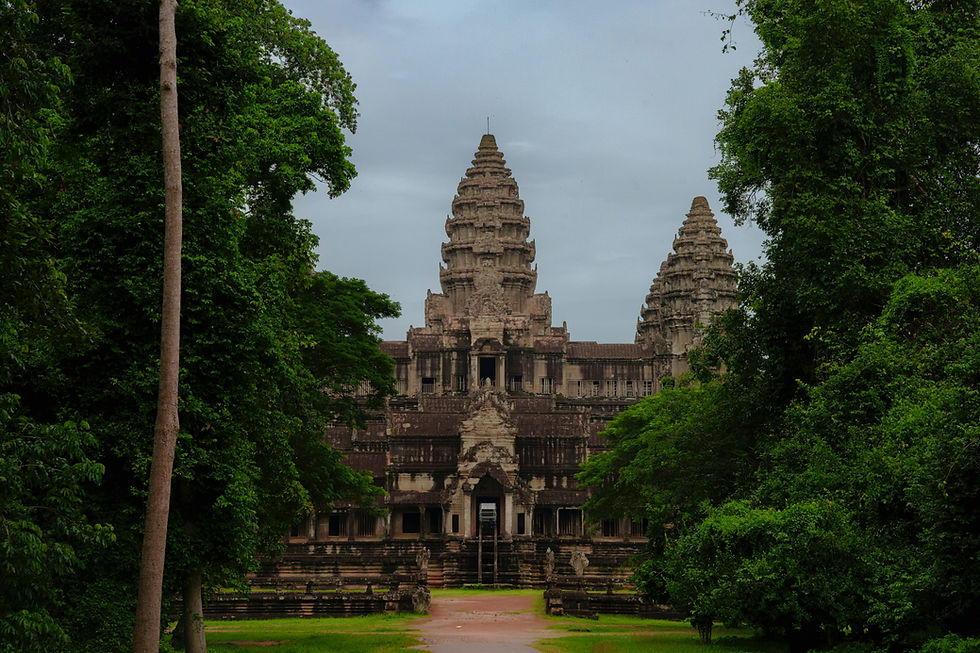
There are places that do not need to be crowned. Angkor Wat, built in the 12th century by the Khmer king Suryavarman II on the banks of the Tonlé Sap, has for decades ranked among the most visited and celebrated destinations in Asia. So TripAdvisor’s decision to place it second among Asia’s tourist destinations in 2026 is, first and foremost, a confirmation — and only then, news.
A monument that needs no laurels
Spanning nearly 400 square kilometers, the Angkor archaeological park is an entire city petrified in sandstone. Its five imposing towers, reflected at dawn in the sacred moats, have become one of Asia’s most iconic images — to the point of appearing on the Cambodian national flag, a distinction shared by no other monument in the world.
The architecture here is breathtakingly precise: bas-relief galleries stretching for hundreds of meters, cosmological axes aligned with the rising sun at the equinoxes, proportions modeled on the mythical geography of Mount Meru.
Listed as a UNESCO World Heritage Site since 1992, the site has benefited for more than a century from the restoration and research work of the École française d’Extrême-Orient. Its global reputation is the product of a long history — not of a rating algorithm.
“For Angkor, the TripAdvisor ranking confirms an ancient glory. It does not create it.”
What the TripAdvisor ranking says — and does not say
Understanding the real value of this distinction requires understanding how it works. The Travelers’ Choice Awards are not granted by a panel of experts or purchased through entry fees: they are based entirely on the quality and quantity of reviews submitted by travelers on the platform over the previous twelve months. “Best of the Best” winners belong to the top 1% of listings worldwide. It is a recognition of measured popularity — serious, but bounded.
TripAdvisor is undeniably an economic force. An Oxford Economics study found that the platform influenced more than 350 million trips and 1.8 billion overnight stays in a single year. In the United States, research has shown that user reviews were directly linked to billions of dollars in tourism spending. The ripple effect is real: the more a destination accumulates content and reviews on the platform, the more trips it generates, which in turn generate new reviews.
For a destination as famous as Angkor Wat, the award functions more as a signal of validation than as a driver of discovery. It confirms what travelers already know — and gives tourism boards a communication tool — rather than revealing an unknown gem to the general public. Its leverage is therefore structurally more limited than it is for a boutique hotel in the middle of Cambodia or a niche experience in Portugal.
A communication tool, not a magic wand
For the Cambodian tourism authority, however, this ranking still has concrete practical value. In a region where Thailand, Japan, and Vietnam are locked in fierce competition for international travelers, being named second in Asia is a clear communication asset, immediately usable in promotional campaigns and press kits. TripAdvisor itself encourages its winners to use the distinction in their marketing materials, newsletters, and media relations — the award is as much a visibility tool as it is a reward.
It also gives journalists and content creators a reason to (re)visit the subject of Angkor — as this very article proves. In that sense, its impact is real, even if it is narrative rather than structural.
It should also be noted that the ranking can fluctuate from one year to the next depending on the volume of reviews submitted during the period, regardless of any real change in the site’s quality. A drop in tourist traffic in a given year may be enough to push the ranking down — without saying anything about the intrinsic value of the place.
Siem Reap, a destination in its own right
A few kilometers from the temples, the city of Siem Reap has reinvented itself as an autonomous cultural and culinary destination. Night markets, refined Khmer cuisine, contemporary art galleries, and a hotel offering that ranges from family-run guesthouses to luxury riverside properties: the Angkor experience extends far beyond the archaeological site. A new generation of Cambodian professionals is promoting a more responsible kind of tourism, attentive to the long-term survival of the heritage on which they depend.
The real question: after the ranking
Second place on TripAdvisor is a form of recognition, but it also raises a responsibility that the award itself does not address. Intensive tourism — whatever the cause — requires careful management so as not to damage the integrity of a site whose fragility is well documented. Cambodian authorities and international organizations are working to regulate visitor flows, limit degradation, and remind visitors that Angkor is still a sacred space active for Buddhists in the region.
Second in Asia according to TripAdvisor, yes. But what makes Angkor Wat great — that rare ability to leave a visitor both humbled and amazed — escapes, by its very nature, any aggregation of stars. Rating algorithms measure satisfaction. They do not measure the silence one keeps long after returning home.


Comments