


What Are the UN’s Mediation Mechanisms for Peace Between Cambodia and Thailand?

The UN has a comprehensive set of mediation mechanisms to intervene peacefully between Cambodia and Thailand, based on the United Nations Charter (Chapters VI and VII), in order to prevent the escalation of the 2025 border conflict around Preah Vihear and other disputed areas.
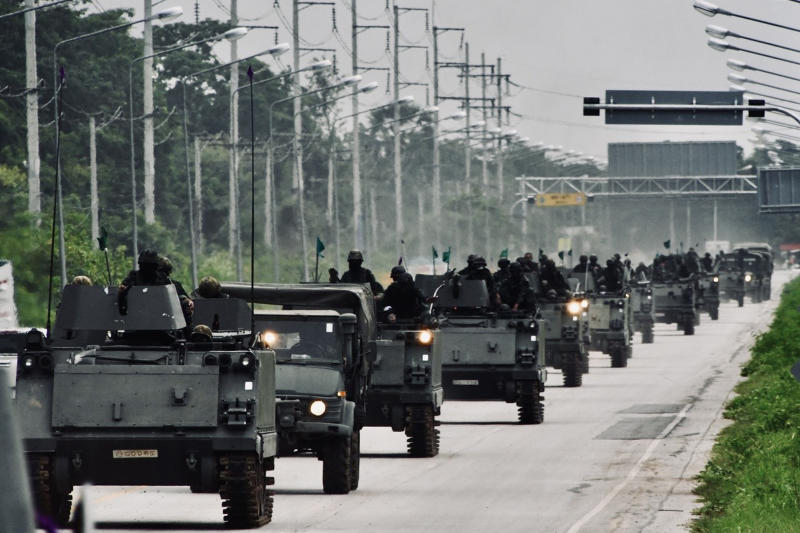
These tools, ranging from diplomatic good offices to judicial facilitation, have recently been activated through calls from the Secretary-General and meetings of the Security Council, but their effectiveness depends on the consent of the States involved and coordination with the ASEAN.
In the current context, marked by aerial strikes, massive displacements (750,000 people), and civilian casualties (at least 19 since December 2025), the UN prioritizes humanitarian protection while offering structured mediation.
Good Offices of the Secretary-General
Good offices involve a discreet or public intervention by the Secretary-General to facilitate dialogue, without imposing solutions. António Guterres has multiplied statements since July 2025, welcoming the Kuala Lumpur Joint Declaration (October 2025) facilitated by Malaysia and the United States, and calling for the consolidation of the July ceasefire through cooperative humanitarian de-mining.
On 17 December 2025, in the face of escalation with drones and artillery near villages and cultural sites, Guterres reiterated his offer of support for measures of mutual confidence, such as free movement of residents and secure returns of displaced persons. This mechanism can include the sending of a personal envoy for diplomatic shuttle efforts, as in past crises (e.g., 2011), and extends to coordination with regional actors for bilateral summits.
Security Council Mediation and Facilitation
The Security Council (SC) can initiate formal mediation through resolutions under Chapter VI (peaceful settlement of disputes), organizing private emergency consultations, such as those of July and December 2025 on border clashes. It often appoints a Special Representative or a Contact Group to monitor ceasefires, verify mutual accusations (e.g., Thai violations reported by Phnom Penh), and propose temporary demilitarized zones.
Historically, the SC has referred the matter to ASEAN (2011), but in 2025 it could extend this to a neutral observation mission if the parties consent, while threatening coercive measures (sanctions, embargo) under Chapter VII in the event of persistent refusal. Recent meetings have urged respect for the Kuala Lumpur Declaration and prioritized aid to the 750,000 displaced.
Mediator Role of the International Court of Justice (ICJ)
The ICJ offers a binding judicial mediation by interpreting its 1962 ruling (awarding Preah Vihear to Cambodia) and 2013 clarification of the adjacent area, a case brought by Phnom Penh in June 2025. The parties can submit a special compromise for a new case, or request an advisory opinion from the Security Council on border issues, favoring a legal rather than military resolution.
This process includes oral hearings, cartographic expertise, and provisional measures (e.g., troop withdrawals), protecting UNESCO cultural sites like Preah Vihear. The ICJ proved its effectiveness in 2013 by calming tensions and could in 2025 impose a definitive demarcation if Thailand accepts jurisdiction, despite its initial rejection of third-party mediation.
Support for Regional and Humanitarian Mediations
The UN supports ASEAN efforts via its Liaison Office, facilitating ministerial meetings (e.g., December 2025 under Malaysia’s ASEAN presidency) and providing observers to verify ceasefires.
The Office of the High Commissioner for Human Rights (OHCHR), led by Volker Türk, offers humanitarian mediation: independent investigations into illegal attacks (principle of proportionality), evacuation of victims of trafficking from Cambodian scam centers hit by bombardment, and respect for the Ottawa Convention on Mines.
Independent experts (e.g., on human rights in Cambodia) support CBMs (confidence-building measures) such as humanitarian corridors and protection of border casinos affected. The UN can deploy a Goodwill Mission to coordinate aid via UNHCR and OCHA, reaching 750,000 displaced people.
Annex Mechanisms and Perspectives
Other tools include the General Assembly for non-binding resolutions urging dialogue, or the Department of Peace Operations (DPO) for a temporary Observation Force if a formal ceasefire is signed—though unlikely without a Chinese (pro-Cambodia) or American (pro-Thailand) veto.
The Secretary-General can activate Article 99 of the Charter to alert the SC of a threat to peace. In the long term, the UN promotes a quadripartite mediation (Cambodia-Thailand-ASEAN-UN) for complete border demarcation, integrating satellite and historical data.
These mechanisms partly succeeded in October 2025 with the Kuala Lumpur Declaration, but persistent escalation highlights limits: Thailand’s refusal of external mediation and prioritization of bilateralism. For lasting peace, the UN insists on prioritizing civilians, rapid investigations, and a return to international law, with its Office ready to contribute actively.

A useful overview for anyone trying to understand how international mediation works. The Cambodia and Thailand example makes the topic more concrete and easier to follow.
This is an informative article about UN mediation and regional peace efforts. I like how it explains the mechanisms in a clear way while connecting them to a real border dispute.
TypeType is great if you enjoy exploring fonts at your own pace. The design of the font site feels calm and professional, which makes browsing enjoyable. I like that it doesn’t try to oversell anything. As a normal user, I feel respected and supported rather than pressured.
The core challenge of Wheelie Life is control under pressure. Players balance the bike on one wheel across rough terrain. Sudden obstacles test reflexes. Consistency leads to progress.