


The truth about Cambodian refugees in Thailand during and after the Khmer Rouge

In April 1975, the Khmer Rouge regime took over Cambodia, plunging the country into four years of absolute terror and unprecedented genocide. The fall of Phnom Penh was followed by a policy of terror, organised famine, forced labour, mass executions and forced displacement.
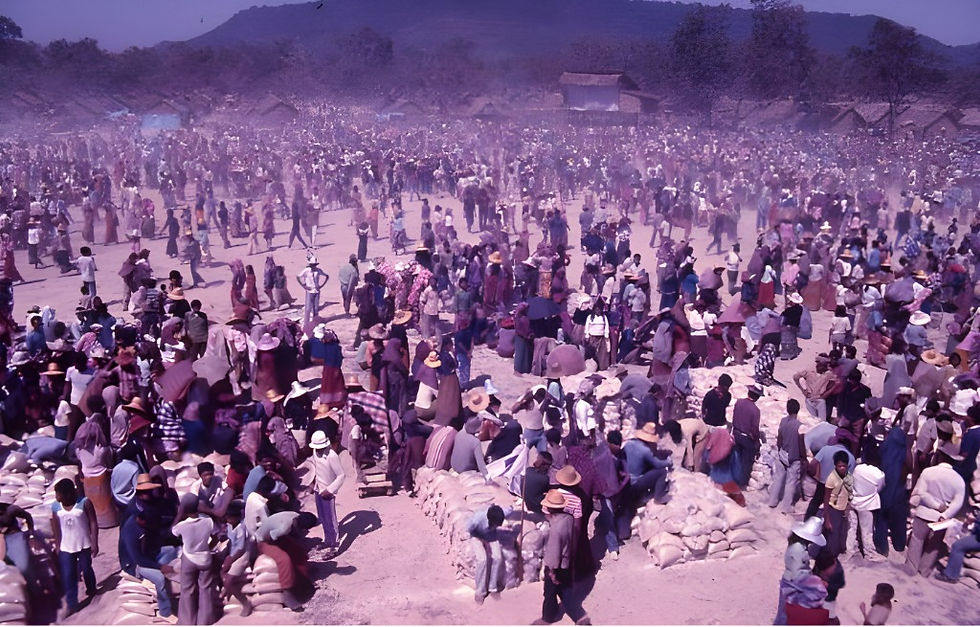
Dramatic Exodus and Border Violence
After the Vietnamese army toppled the Khmer Rouge in January 1979, Cambodia faced instability, famine, and further violence. That spring, around 140,000 Cambodian refugees crossed into Thailand. They met shifting borders, harsh violence, and complex geopolitical realities. One of the darkest episodes was the Dangrek mountain massacre in June 1979, where nearly 45,000 refugees were either forced back into Cambodia or killed by mines or the Thai military. This “Dangrek genocide” highlighted the brutality and desperation faced by refugees, who frequently encountered violence rather than safety.
Refugee Camps: Hope and Hardship
Refugee camps such as Ban Nong Chan, Khao-I-Dang, Sa Kaeo, and Site 3 Ang Sila in Thailand became temporary homes for the exiles. Khao-I-Dang, operating from late 1979 to 1993, was the largest, hosting over 150,000 refugees. These camps represented both sanctuary and suffering. Survivors recount shortages of food, precarious hygiene, insecurity, and the presence of Khmer Rouge and other armed groups within the camps. Many refugees lived without official registration or protection, hiding from Thai patrols in extreme conditions.
Beyond physical hardship, the camps were embedded in Cold War politics. Supported by China and the United States, Thailand sometimes used the camps to counter Vietnamese influence in Cambodia. The continued presence of Khmer Rouge factions made the humanitarian situation more difficult, and the camps were sometimes exploited for political and military purposes.
Thailand’s Response: Generosity and Ambivalence
While Thailand sometimes showed generosity—organizing food distribution, medical care, and education with the help of international agencies like the UNHCR, Red Cross, and various NGOs—the response was often ambivalent. Camps were rarely relocated deeper inside Thailand due to security concerns; military control and tight restrictions were imposed. Policies on “illegal” refugees fluctuated, and clashes among factions, as well as violence and cross-border raids, created local tensions.
Lasting Legacy and Consequences
During the 1980s and 1990s, waves of repatriation occurred, while some refugees resettled in countries like the United States or Philippines. Many Cambodian refugees stayed near the Thai border or integrated into Thai society, leaving a profound human and geopolitical legacy. For instance, the former Ban Nong Chan camp area remains a site of land disputes between Cambodia and Thailand, reflecting complex border and identity issues resulting from this tragedy.
Many survivors, such as Youk Chhang, dedicated their lives to documenting and sharing these experiences, highlighting abuse, hardship, resilience, and solidarity under extreme conditions.
Testimonies from the Camps
First-hand accounts from refugees highlight the pain of fleeing the Khmer Rouge and the harsh realities of the Thai camps. Khao-I-Dang, one of the largest camps, offered temporary protection but also constant insecurity, overcrowding, food scarcity, strict water rationing, and limited medical care. Internal tensions were high, with theft, violence, and abuse carried out by some Thai guards. The trauma of family separations, loss, and destruction of traditional bonds deeply wounded the refugees. The Dangrek massacre remains one of the most harrowing episodes, symbolizing despair and abandonment.
Resettlement stories from abroad describe the challenges of rebuilding lives far from home, while carrying deep physical and psychological scars.
A Complex Historical Narrative
The experience of Cambodian refugees in Thailand during and after the Khmer Rouge era is a complex story of survival, war, international politics, and the endurance of humanity under extreme adversity. It is marked by hope, abandonment, refuge, and exploitation. These events continue to shape the collective memory and relations between Cambodia and Thailand, revealing the enduring scars of genocide and forced exile, and the ongoing quest for dignity and recognition among survivors.


They are not returning to their homes. They were all killed by the Thai military at Ghost Mountain.
Thank you for this.
If Thailand had chosen to do nothing, we could have simply closed the border and watched the genocide from a distance 👉 it would have cost us far less.
Instead, Thailand allowed Cambodian civilians to flee across the border to escape the Khmer Rouge. Among those who crossed were not only civilians, but also armed elements who attempted to infiltrate along with refugees — a reality acknowledged by the UN itself.
The official refugee camps established with UNHCR cooperation were located in flat areas inside Thailand, roughly 20 kilometers away from the Dangrek Mountains. It is neither logistically nor practically credible to claim that tens of thousands of refugees were forcibly marched from lowland camps to mountain terrain as alleged.
Thailand could have closed its borders and done nothing, but instead allowed refugees to escape the Khmer Rouge.
The official camps were about 20 km from the Dangrek Mountains, monitored by UNHCR and international media. Claims of a mass massacre lack credible evidence.
The genocide was initiated by the Khmer Rouge. After its collapse, hundreds of thousands of Cambodians fled toward the Thai border. Those who entered Thailand were not only civilians but also armed elements who attempted to infiltrate among refugees, which required screening.
Thailand, with UN assistance, carried out refugee screening to separate civilians from armed groups, and over 200,000 refugees were officially registered in UNHCR-managed camps. These are documented facts.
However, personal memory and historical fact are not the same thing. Claims of a massacre of tens of thousands of refugees by the Thai military require verifiable evidence such as UN reports, Red Cross records, court cases, satellite data, or international media documentation. None exist to support this allegation.
In…