


Gulf Tensions Threaten Cambodia's Growth: ADB Warns of Energy and Supply Chain Shocks

According to a study by the Asian Development Bank (ADB), the escalation of tensions in the Gulf region could cost Southeast Asia up to 2.3 percentage points of growth by 2027. For Cambodia, a country heavily reliant on energy imports, the risk of a sustained rise in oil and liquefied natural gas (LNG) prices is compounded by shocks to supply chains and remittances.

A Structural Energy Vulnerability
Cambodia is among the most exposed developing economies in Southeast Asia to a prolongation of the conflict in the Middle East, according to the ADB Briefs report published in recent days. Even though the kingdom does not have major direct trade links with Gulf countries, it is fully bearing the consequences of rising energy prices, which the document describes as the "main transmission channel of the shock."
With a significant negative balance for hydrocarbons—Cambodia imports almost all of its refined oil and gas needs—any increase in prices mechanically translates into a deterioration of the terms of trade. The study emphasizes that "even moderate increases in energy prices can generate significant income losses" for economies with large deficits in this area.
In a scenario of prolonged tensions lasting one year (report scenario 3), the Brent crude oil price would exceed $155 per barrel in the second quarter of 2026 and remain above $140 until early 2027, before a gradual return to normal. In this case, the Asian LNG benchmark index (Japan Korea Marker) would soar, increasing electricity costs for a country where gas-fired thermal power plants are playing a growing role in the energy mix.
Growth and Inflation: Lessons from Macroeconomic Models
The macroeconomic simulations conducted by the ADB using Oxford Economics' Global Economic Model allow for estimating the regional impact. For all of developing Southeast Asia, a severe and prolonged crisis (scenario 3) would result in a cumulative GDP loss of 2.3 percentage points over the 2026-2027 period, and a cumulative inflation increase of 3 points.
Cambodia, although not explicitly named in the regional tables, shares the characteristics of sub-regional economies: high energy intensity, dependence on global supply chains for industrial inputs (textiles, construction), and vulnerability to logistical disruptions. The report stresses that "developing Southeast Asian economies would experience the most marked growth losses" in the event of a sustained flare-up.
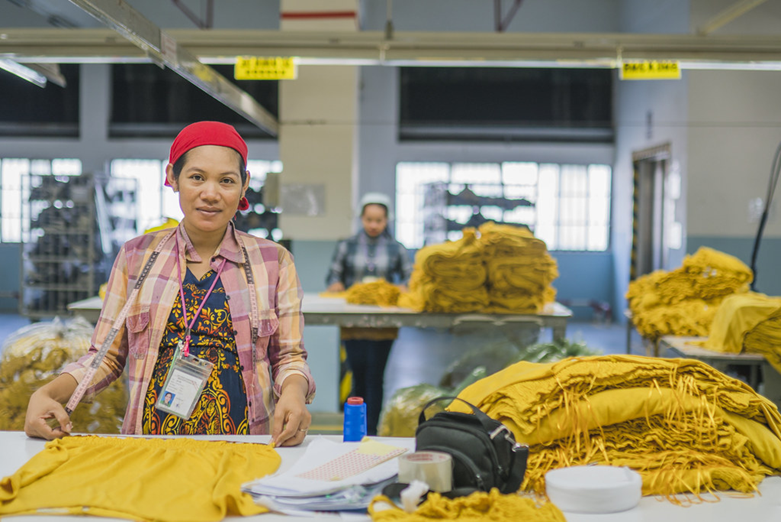
Moreover, the surge in sea and air freight prices—illustrated by the Dirty VLCC Middle East–PRC index (TD3C), which has nearly doubled in just a few days—could raise the cost of Cambodian imports. The kingdom, whose textile industry relies on imported chemical inputs and fibers, would see its margins shrink and competitiveness erode.
The Remittances Channel, an Underestimated Risk
The study draws attention to an often-overlooked transmission mechanism: remittances from migrant workers. Although the report's data (figure 7) does not break out Cambodia, it shows that several South and Southeast Asian economies receive more than 5% of their GDP in transfers from the Middle East. "A downturn in activity in Gulf economies affected by the conflict could reduce demand for foreign labor and thus remittance flows," the authors warn.
For countries like Cambodia, where remittances contribute to balancing payments balances and supporting household consumption, such a shock would add to rising energy bills and tighter financial conditions.
Public Policies: Avoiding the Trap of Subsidies
In the face of these risks, the ADB formulates economic policy recommendations that would resonate particularly in Cambodia. While inflationary tensions might prompt freezing fuel prices or increasing energy subsidies, the institution's economists advocate the opposite: "Policies should prioritize stabilization over suppressing price signals. Allowing, at least in part, the pass-through of energy price increases can encourage energy savings and investments in alternative sources."
They recommend targeted and temporary aid for vulnerable households, rather than generalized subsidies that burden public finances without incentivizing sobriety. On the monetary front, the emphasis is on targeted liquidity support to avoid excessive volatility, rather than aggressive rate hikes.
A Resilience Test for the Cambodian Economy
As the Middle East conflict enters a critical phase, Cambodia, like all of Southeast Asia, faces an unprecedented resilience test. While a short and contained conflict (scenario 1) would have only a limited impact on activity, a deterioration toward a scenario of prolonged tensions (scenario 2 or 3) would durably affect growth, inflation, and external balances.
The ADB report concludes by noting that "persistent disruptions on maritime or air routes could significantly weaken growth prospects." For Cambodia, whose economic rise relies on trade openness and macroeconomic stability, managing this new shock will need to combine short-term responsiveness with acceleration of long-term energy and logistics transitions.


The process of Samagra ID Download seemed difficult at first, but this article made everything easy to understand. Highly useful for anyone needing assistance.
Using the samagra portal mp has made many processes easier. I checked my details on the samagra portal mp, and everything was well organized. It helps users update their information and track benefits. Such initiatives are important for improving service delivery and making government systems more transparent.