


Entrepreneurship in Cambodia 2025-2026: A Strategic Guide to Seizing Opportunities in a Growing Market

Updated: Dec 2, 2025
Officially launched last Friday, the guide "Entrepreneurship in Cambodia 2025-2026" establishes itself as a flagship publication to capture all the dynamics of a country undergoing major economic transformation. Produced by the France-Cambodia Chamber of Commerce and Industry (CCIFC), this book offers a comprehensive, professional, and smooth view of the Cambodian business climate, combining precise numerical data, sharp analyses, and testimonies from entrepreneurs who embody local success.

Targeting investors, leaders, and influential players, the document outlines a strategic map to integrate a market characterized by sustained growth, a dynamic youth population, and growing geopolitical influence in Southeast Asia.
Robust macroeconomic framework and evolving prospects
Cambodia shows a GDP of approximately 46.4 billion dollars in 2024, with a population of 17.6 million inhabitants, more than 70% of whom are under 30 years old, an ideal profile for an economy with strong growth potential. The Asian Development Bank (ADB) anticipates for 2025 a growth rate of around 4.9%, slightly revised downward due to regional tensions and trade uncertainties but confirming the resilience of the Cambodian economy.
According to Deputy Prime Minister Aun Pornmoniroth, this dynamic is partly driven by the industrial, agricultural, and tourism sectors, with strong emphasis on macroeconomic stabilization and fiscal sustainability.
However, other institutions like the IMF project more cautious growth with 4.8% in 2025 followed by 4.0% in 2026, pointing to risks such as trade tensions, slowing investments, and external shocks, notably the rise of American tariffs. This context supports a government approach combining fiscal prudence and structural reforms aimed at strengthening competitiveness and diversification.
Key driving sectors structuring the economy
The document pays particular attention to economic pillars:
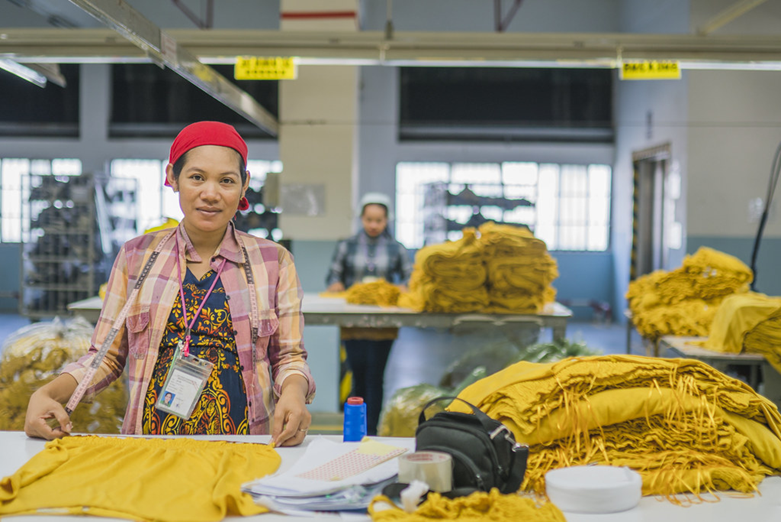
Textile and clothing: The textile sector remains the main driver with 52% of exports in 2024, generating over 13 billion dollars and employing one million people, mainly young women. International industrial partners such as Adidas, HM, Levi’s, or Puma have established factories, benefiting from local know-how and competitive logistics chains. Despite a recent increase in US tariffs to 19%, exports remain robust due to early purchasing on the American market, keeping this sector at the heart of export growth.
Agriculture and agri-food: Employing 36% of the active population and representing 22% of GDP, Cambodian agriculture is undergoing a transformation. Rice, the dominant crop covering 95% of cereal plantations, ensures near self-sufficiency nationally and exports 445,000 tons to the EU and ASEAN. Diversified crops such as cassava, cashew nuts, and tropical fruits complete the offer. However, the agri-food industry remains underexploited, representing only 2.4% of GDP and calling for increased support to modernize the sector. The guide also highlights the climate challenge, with droughts and floods impacting productivity and encouraging the strengthening of sustainable practices and organic farming, still marginal (0.5% of farms).
Automotive and sustainable mobility: Although emerging, the automotive sector is growing rapidly with increased demand for urban and utility vehicles. The document mentions government targets for gradual electrification of the vehicle fleet (40% by 2050) with attractive incentives. Peugeot, through Stellantis, is a key player in this niche but dynamic segment.
Industry and infrastructure: Manufacturing extends beyond textiles towards electronics and automotive accessories, higher value-added products. The Vinci Airports consortium manages major international airports (Phnom Penh, Siem Reap, Sihanoukville), ensuring increased connectivity. Major infrastructure projects, such as the Sihanoukville port and logistics centers, enhance international competitiveness and facilitate access to the regional market.
Digital and fintech: In strong expansion, the digital sector experiences rapid growth in e-commerce (1.5 billion USD in 2024) and fintech transactions (12 billion USD), with high potential still partially untapped. The government aims to strengthen the digital ecosystem as a lever for economic diversification.
Entrepreneurs in the spotlight: French success stories in Cambodia
The guide highlights influential entrepreneurs whose experiences embody Franco-Cambodian success and provide valuable lessons:
Pascal Catry (Ucare Pharmacy) founded the first modern pharmacy chain in Cambodia with 27 establishments. Thanks to his dual French expertise and deep knowledge of the local market, he adapted the pharmaceutical offering to the Cambodian landscape, importing quality products mainly from France and optimizing management processes.
Soreasmey Ke Bin (Confluences) serves as a bridge between the two cultures, leading a consulting firm specialized in supporting foreign companies in Cambodia. His personal and professional journey illustrates the success of a business strategy built on a deep understanding of the cultural and economic terroir, as well as the development of effective partnerships.
The guide thus emphasizes that entrepreneurial success relies on adaptability, continuous training, participatory management, and strong sensitivity to the local context, all keys to building sustainable success in Cambodia.
Entrepreneurial ecosystem and challenges to overcome
The publication describes a rapidly maturing entrepreneurial community, with French SMEs and startups invested in catering, digital, agri-food, and consulting. This active community brings innovation and an ability to adapt to local market needs.
However, several challenges remain: access to financing is limited, professional training needs to be intensified, and the regulatory framework requires simplification to stimulate investment. The document reviews special economic zones and proposed tax advantages, encouraging a favorable business environment overall.
Financing, partnerships, and investment flows
Cambodia maintains strong attractiveness for Foreign Direct Investment (FDI), with a flow of nearly 4.4 billion USD in 2024 and an accumulated stock of 52.7 billion USD, despite more uncertain global conditions. China is the main investor, followed by Vietnam, South Korea, Singapore, and Japan. France plays an important role through major companies (Vinci, Sanofi, Pernod Ricard, BRED Banque Populaire) and its active SMEs in several strategic sectors.
The guide also mentions co-financed projects by international cooperation, notably the AFD, which invests more than 100 million euros annually in infrastructure and essential services. Proparco supports initiatives in renewable energy, agri-food, and health, consolidating the private sector’s role in sustainable development.
Stronger regional integration thanks to ASEAN and trade agreements
Cambodia, a member of ASEAN since 1999, benefits from regional integration that facilitates trade exchanges and investments. The Regional Comprehensive Economic Partnership (RCEP), effective since 2022, opens a broader market to the country including China, Korea, Japan, Australia, and New Zealand, thus strengthening its attractiveness.
Bilateral agreements, notably with China, Vietnam, South Korea, and the European Union, support this dynamic. The guide analyzes the implications of these agreements on priority sectors and highlights opportunities for increased cooperation.
This "Entrepreneurship in Cambodia 2025-2026" guide is therefore an economically and strategically valuable manuscript, combining analytical rigor and journalistic fluidity, dedicated to a discerning readership seeking to understand the subtleties and potentials of the Cambodian economy. It serves as an essential compass to effectively support entrepreneurial ambitions in a country at the crossroads of emerging Asia.
Each section of the document is carefully documented, with updated numerical data, precise analyses, and portraits of influential players who together draw a vibrant map of a Cambodia moving towards a prosperous, inclusive, and sustainable future.

Comments