


China Tightens Its Grip on Cambodian Trade as Imports Surge in 2025

China is consolidating its dominant position in Cambodian trade, with more than half of all goods imported in 2025 coming from the Middle Kingdom, according to official data from the General Department of Customs and Excise (GDCE).

Exploding figures in 2025
The year 2025 marked a record high for Cambodia’s foreign trade. Total imports soared to USD 33.88 billion, up 18.7% from 2024, while exports reached USD 31.81 billion, bringing overall trade volume to USD 65.69 billion (+14.2%).
At the heart of this momentum, China stands out as the leading supplier: USD 18.04 billion in imports, a spectacular 34.3% increase, accounting for 53.25% of all incoming goods.
This overall bilateral volume, including Cambodia’s modest exports to Beijing (USD 1.68 billion, down 3.6%), peaks at USD 19.73 billion, or +29.9% year on year.
Cham Nimul, Minister of Commerce, described China as the Kingdom’s “principal partner,” ahead of the United States (the second-largest export destination) and Vietnam. These figures, published on January 12 by the Khmer Press Agency (AKP), underscore a trend years in the making, now amplified by massive investment flows.
A sizeable trade deficit
The flip side of the coin is a record bilateral trade deficit of USD 16.36 billion with China, compared to USD 11.69 billion in 2024—an increase of 40%. Across all trading partners, Cambodia still posts an overall surplus of USD 1.93 billion, driven by textile shipments to Western markets, but this margin remains fragile in the face of voracious import demand.
Lor Vichet, Vice President of the China-Cambodia Commerce Association (CCCA), attributes this dominance to structural factors:
“Strong diplomatic relations, agreements such as the CCFTA (China-Cambodia Free Trade Agreement) and the RCEP, as well as the influx of Chinese investors, explain this surge.”
In 2025, China accounted for 54.25% of approved foreign direct investment (USD 10 billion in total), fueled by projects in energy, infrastructure, and manufacturing.
Which Chinese products are flooding the market?
Imports are concentrated in goods essential to the Cambodian economy. Leading categories include raw materials for factories (cotton, synthetic fibers), everyday consumer goods (consumer electronics, clothing), machinery and automated equipment, utility vehicles, construction materials (steel, cement), and agricultural fertilizers.
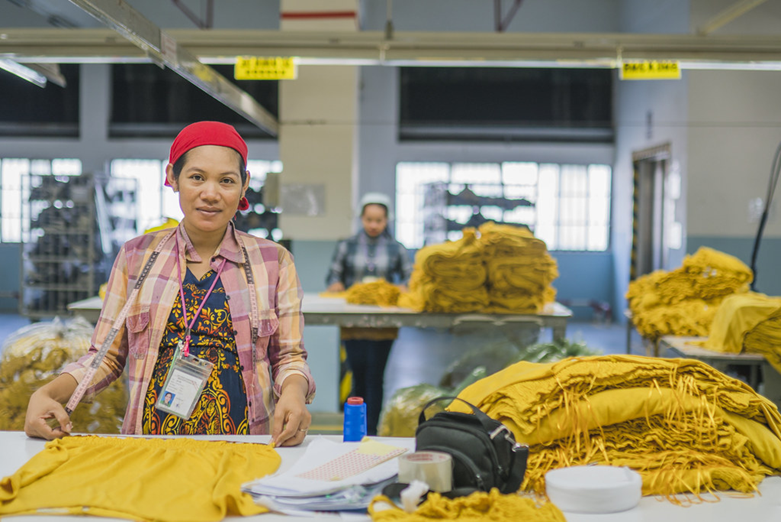
These flows directly support flagship sectors such as textiles (75% of exports) and electronics, where Chinese-owned factories operating locally assemble products for re-export.
This integration boosts productivity:
“Chinese machinery—affordable and well-suited—drives our local industries forward,” notes Vichet.
At the same time, Chinese tourism is booming, with 2.36 million visitors in 2025 (+45%), stimulating demand for imported products. However, this windfall masks vulnerabilities: potential overvaluation of the riel due to foreign currency inflows, and exposure to Sino-American geopolitical fluctuations.
Historical and geopolitical context
The roots of this dependency trace back to the 2010s, when Beijing became Cambodia’s top investor (USD 1.15 billion as early as 2019). The Belt and Road Initiative (BRI) accelerated the shift: highways, ports, and hydropower dams financed by Chinese loans now represent 40% of the Kingdom’s public debt. In 2025, the Sino-Cambodian Funan Techo Canal project—a 180-kilometer commercial waterway—illustrates this push.
At the ASEAN–China summit in October 2025, 35 agreements were signed, targeting USD 30 billion in trade by 2030. As a pivotal ASEAN member, Cambodia is nevertheless diversifying: its exports now reach 169 destinations (+5), with a 12.4% increase toward the EU and the United States.
Toward diversification?
Faced with this asymmetry, the Royal Government is calling for balance. “We must boost agriculture, mining, and tourism to expand exports to China,” the Minister argues.
Initiatives such as the “Rice for the World” program aim to export Khmer rice, while special economic zones are attracting other investors, notably from Japan and South Korea.
Yet economists are sounding the alarm: excessive dependence leaves the country vulnerable to shocks, such as rising Chinese prices. The International Monetary Fund (IMF) recommends fiscal reform to curb non-essential imports and strengthen local value chains.
Vichet forecasts continued growth (+25% in 2026), but insists: “Diversification is key to lasting resilience.”
Societal and environmental impacts
On the ground, Chinese influence is palpable. Jobs created (300,000 in Chinese-owned factories) are boosting urban employment, but tensions persist: regional inequalities, household indebtedness as Cambodians consume imported goods, and environmental pressure from mega BRI projects (deforestation, river pollution).
This commercial shift cements China as the engine of Cambodia’s economic development (GDP growth revised to 6.8% in 2025), while underscoring the need for a proactive strategy to turn dependency into a balanced partnership.


Comments