


Cambodia's GFT Sector Hits $1.4B in January Exports

The garments, footwear, and travel goods (GFT) sector generated nearly $1.4 billion in exports in January in Cambodia, according to an official report from the Ministry of Commerce released on Friday. This figure, which precisely reaches $1.398 billion, marks a 7.2% increase compared to January 2025, confirming the sector's driving role in the kingdom's economy.

Garments lead with $1.014 billion (+6.7%), closely followed by footwear at $196 million (+16.8%), while travel goods and bags saw modest growth at $188 million (+1.1%). Representing 46.5% of the country's total exports, GFT remains the top foreign currency earner. Its main markets are the United States, the European Union, Canada, and Japan, which absorb 40% and 30% of shipments respectively, according to Cambodian customs statistics.
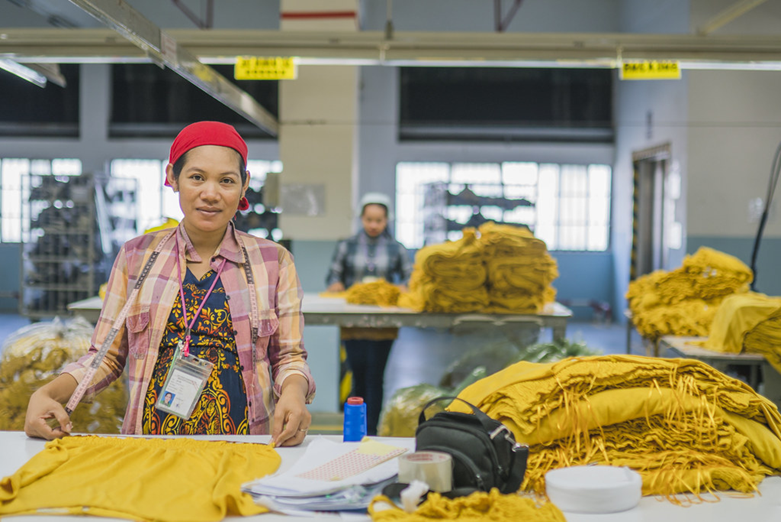
More than 1,500 factories and workshops now employ over 900,000 workers, mostly women, according to the Ministry of Labor and Vocational Training. January's performance highlights the sector's resilience amid global challenges, even as uncertainties persist around supply chains and trade tensions.
Growth Boosted by Diversification
Despite an international context marked by inflation and industrial relocations in Southeast Asia, Cambodia's GFT sector benefits from its post-Covid "low-cost hub" status. The World Bank, in its October 2025 report on the Khmer economy, attributes this vitality to client diversification: European orders surged 12% thanks to free trade agreements, while the United States remains the top market despite potential customs surtaxes under the Trump 2.0 administration.
Structural Challenges and Green Transition
Yet, shadows loom. The ILO warns, in its 2026 study on decent work in Cambodia, about stagnant wage conditions—a monthly minimum wage of $218 for GFT workers, up 8% in 2025 but insufficient against Phnom Penh's food inflation (14% year-over-year, per the Ministry of Economy). Factories face shortages of Vietnamese cotton and competition from Thailand, boosted by subsidies. Meanwhile, pressure for a green transition is intensifying: the EU threatens to suspend tariff preferences if 30% of exports fail to meet ESG standards by 2027, a challenge for a sector still reliant on diesel generators.
Hun Manet's government is betting on automation and training: 50,000 workers were trained in 2025 through the national "Skills for the Future" program, according to the Ministry of Labor. It remains to be seen whether January's momentum heralds a record-breaking 2026, or if headwinds—geopolitical and climatic—will slow the pace.


Comments