


Cambodia & Nature: Suwanna Gauntlett, the guardian of the world’s forests

Cambodia & Nature: Suwanna Gauntlett, the guardian of the world’s forests....After twenty-five years in Cambodia saving tigers, elephants and rainforests, the founder of Wildlife Alliance passes the baton. A look back at the journey of a woman who refused to choose between nature and humanity.
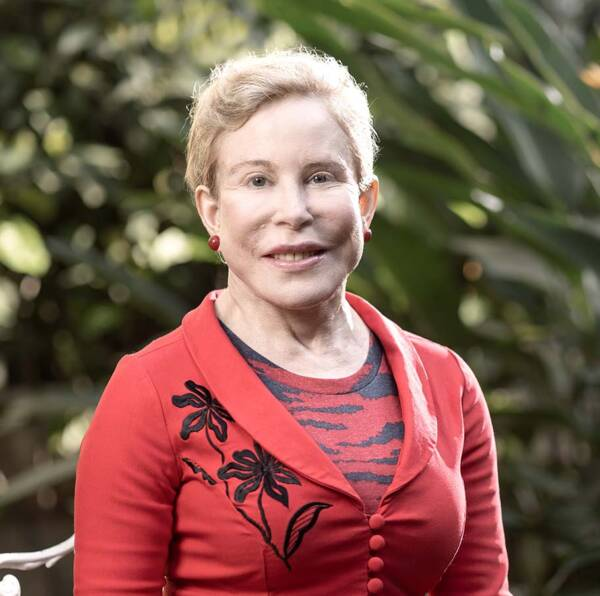
A vocation born in the Brazilian jungle
Some destinies are unforeseeable, and others seem carved into the bark of trees. Suwanna Gauntlett’s belongs to the second category. Originally from San Francisco, she grew up in Brazil and Europe — a nomadic childhood that sharpened her view of the world. It was in the Amazon rainforest that a decisive encounter sealed her life: a jaguar tortured by poachers. That unbearable sight ignited a flame in her that never went out.
After higher studies in France and Switzerland — bachelor’s, master’s, then doctorate — she entered the conservation world not through the plush corridors of international NGOs, but on the ground. Through the boreal forests of Siberia, the wind-lashed coasts of India, the turquoise waters of the Galápagos. Wherever wildlife was retreating, Suwanna advanced.
From the Siberian tiger to Orissa’s turtles: a global campaigner
In 1994, Suwanna Gauntlett found herself in Russia’s Far East alongside Steven Galster to save the Amur — or Siberian — tiger from the brink of extinction. Together they trained and equipped specialized patrols, the famed “Amba” units. In barely five years, poaching dropped by 80%. Tiger numbers, which had fallen to 80 individuals in 1994, exceeded 400 by 2000. An ecological miracle built through the sweat of night patrols in the frozen taiga.
In 1998, she answered the call of the Wildlife Conservation Society of India. On the Orissa coast, 40,000 carcasses of Olive Ridley turtles littered the shore, victims of industrial fishing. Suwanna organized maritime law enforcement, intercepted offending vessels, and achieved astonishing results: from 8,700 nests in 1998, numbers rose to 600,000 in 1999, then surpassed one million in 2000.
In the Galápagos, she helped the Ecuadorian government expand the marine reserve from 2 to 40 nautical miles in 1998, giving the archipelago protection worthy of its legendary biodiversity. The same modus operandi everywhere: start from the field, work with local authorities, and measure results.
Cambodia, the forest of her life
In 2000, Suwanna settled in Cambodia. The country was only just emerging from decades of conflict; its forests were ravaged by trafficking, its wildlife slaughtered to feed the Chinese black market. She saw an absolute emergency — and an opportunity to build something lasting.
In July 2001, she created with the Forestry Administration the first wildlife trafficking enforcement unit in Southeast Asia: the Wildlife Rapid Rescue Team (WRRT). Endowed with judicial authority to arrest smugglers, the unit accumulated an eloquent record over twenty years: 7,054 traffickers arrested, 72,787 live animals seized, 18.5 tonnes of bushmeat and animal parts confiscated.
In 2002, the alarm was at its peak in the Cardamoms: between 35 and 40 arson attacks ravaged the forest daily to free land for real estate speculation. In just a few months, 37 elephants and 28 tigers were killed.
Suwanna seized the breach, working simultaneously with the provincial governor, three ministries, and dozens of village communities. She had illegal land titles revoked, dismantled corruption networks, and obtained in 2003 a territorial zoning agreement that still holds today — more than twenty years after its signing. Result: zero elephant poaching since 2006.
Between 2004 and 2016, she achieved the cancellation or reduction of 34 economic land concessions that threatened to swallow the Cardamom Forest — an area representing more than half of Yellowstone Park. Today, 17,478 km² of continuous forest remain preserved in the Cardamoms, one of the greatest conservation successes in Asia.
Conservation and development: the same equation
What sets Suwanna Gauntlett apart from many other conservation figures is her deep conviction that deforestation and poverty are two sides of the same tragedy. “Our only chance to save the world’s most important tropical forests is to preserve what remains. High-quality forest carbon offsets offer us the best way to keep forests standing,” she said during Cambodian Independence Day in 2023.
In 2003, she co-founded with the Koh Kong governor the Sovanna Baitong community agriculture project: land, market access, education and healthcare for the poorest landless farmers. The village of Chi Phat, once a den of poachers and illegal loggers, transformed into an award-winning community ecotourism destination. Hundreds of families now live from the forest — without destroying it.
The Southern Cardamoms REDD+ program, which she championed, generated tens of millions of dollars in carbon credits, reinvested directly into communities: roads, bridges, schools, medical centers, wells, university scholarships and more than 5,000 local jobs.
A hands-on demonstration that protecting nature is also building people’s future.
A voice that carries, honors that attest
In 2018, Forbes Asia listed her on its annual Heroes of Philanthropy list, honoring a woman who had devoted some $30 million of her personal fortune to the cause she defends. Neth Pheaktra, spokesperson for Cambodia’s Ministry of Environment, said then: “Ms. Suwanna Gauntlett deserves this honor because she has devoted herself mentally and physically to mobilizing considerable resources to protect Cambodia’s natural resources and biodiversity.”
In September 2022, at the Global Conservation Gala in San Francisco, she received Global Conservation’s prestigious Lifetime Achievement Award — the supreme recognition for a lifetime devoted to saving the planet’s ecosystems.
Her recognition by the former Cambodian prime minister on multiple occasions attests to a rare political legitimacy for a foreign figure in this country.
A regular columnist in Forbes for several years, she writes opinion pieces across a remarkably broad spectrum: carbon credits, tiger reintroduction in Cambodia, ocean acidification, global energy policy, deforestation and Indigenous communities. Her scientist’s pen — alert, precise, never dogmatic — helps bring the voice of conservation to the economic and financial circles that ultimately decide the fate of forests.
Passing the torch
In June 2026, Wildlife Alliance announced a leadership transition: John Willis, longtime director of operations, takes the reins of the organization as CEO.
Suwanna Gauntlett, founder and CEO since its creation, hands over the reins — while remaining a board member. Cambodia has been her home for more than twenty-five years; she is not truly leaving it.
Wildlife Alliance’s press release soberly summed up what few words could contain:
“What distinguished Suwanna was her understanding that conservation and development are not opposing interests: they are inseparable.”
A conviction she embodied across five continents, in forests few of her contemporaries have traversed.
Renowned designer Bill Bensley, whose Shinta Mani Wild hotel borders the Cardamom Forest, perhaps summed up better than anyone what Suwanna means to those who have known her: “My real-life superhero.”
─────────────────────────────────────────
Sources: Wildlife Alliance (http://wildlifealliance.org), Forbes Asia Heroes of Philanthropy 2018, Phnom Penh Post, Global Conservation (http://globalconservation.org), Bensley Collection.


Comments