


Cambodia Continues to Consolidate Its Position at the Heart of Asian Trade

Cambodia continues to strengthen its position at the heart of Asian trade. The Kingdom’s commercial exchanges with member countries of the Regional Comprehensive Economic Partnership (RCEP) recorded strong growth during the first eleven months of 2025, reflecting deeper regional economic integration and the impressive vitality of Cambodia’s productive base.
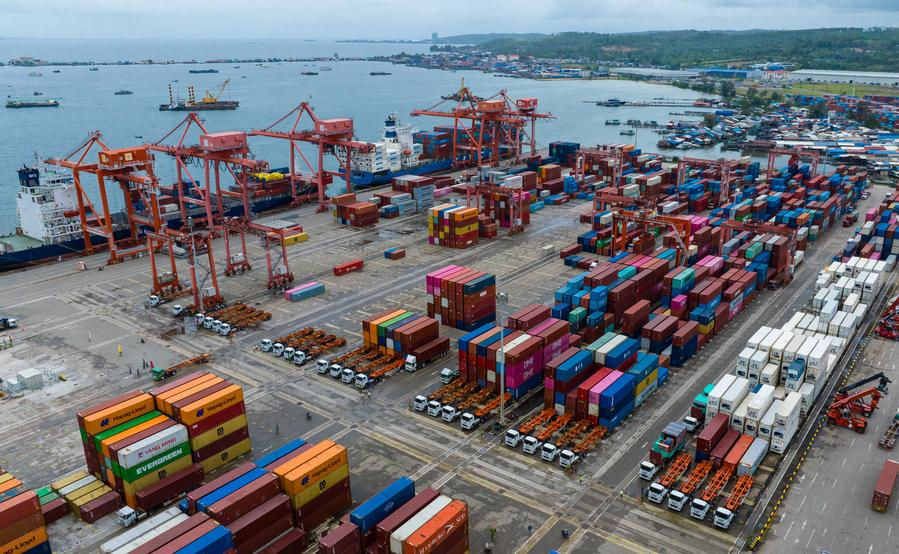
According to a report released by the Ministry of Commerce, Cambodian exports to RCEP countries reached USD 8.85 billion, an increase of 5.99% compared with the same period in 2024 (USD 8.35 billion). Goods shipped to this expanded market now account for 31.2% of the country’s total exports, which amounted to USD 28.37 billion between January and November 2025.
Rapidly Expanding Bilateral Trade
It is on the import side, however, that the momentum proves particularly striking. Over the same period, Cambodia imported USD 27.54 billion worth of goods from RCEP countries—an impressive surge of 19.17% compared with the USD 23.11 billion recorded a year earlier.
This dual dynamic has pushed Cambodia’s total trade with RCEP partners to USD 36.39 billion, representing a year-on-year increase of 15.67%. In other words, nearly two-thirds (61.53%) of the Kingdom’s total international trade volume—estimated at USD 59.13 billion—now takes place within this vast Asian bloc.
For Penn Sovicheat, Secretary of State and spokesperson for the Ministry of Commerce, these figures are no coincidence:
“The RCEP agreement plays a decisive role in Cambodia’s economic development. It ensures sustained long-term export growth and facilitates the upgrading of our products in regional markets,” he said.
RCEP, a Catalyst for Economic Integration
Effective since January 1, 2022, the RCEP (Regional Comprehensive Economic Partnership) is the world’s largest free trade agreement, bringing together 15 Asia-Pacific economies: the ten ASEAN countries—including Cambodia—alongside China, Japan, South Korea, Australia, and New Zealand. Together, these nations account for more than 30% of global GDP and nearly one-third of international trade.
For Cambodia, the agreement holds major strategic importance. It anchors the national economy within regional value chains, promotes export diversification, and attracts new industrial investments. In a context of global slowdown and post-pandemic disruptions to supply chains, this regional positioning has become a decisive asset.
Trade Dominated by Manufacturing and Agribusiness
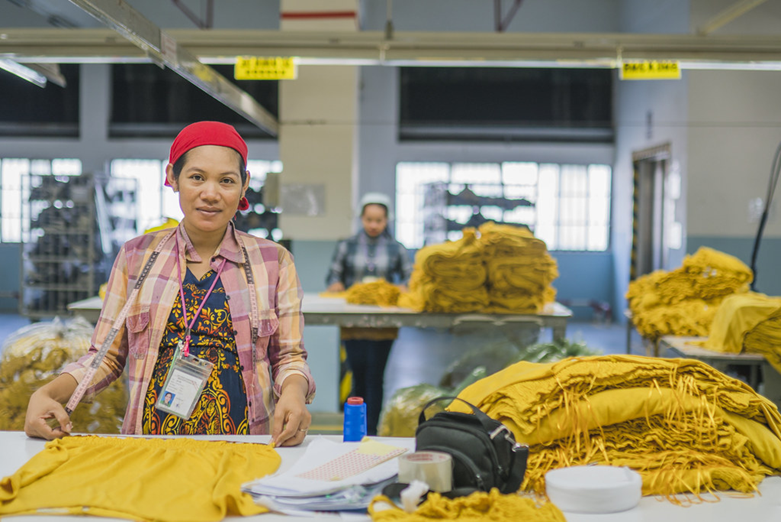
Among exported products, Cambodia highlights garments, footwear, rice, bicycle components, and electronic parts. These goods find strong demand particularly in China, Japan, and South Korea, where appetite remains high for low-cost or labor-intensive products.
On the import side, the Kingdom relies heavily on machinery, electrical equipment, construction materials, chemicals, and industrial inputs sourced from major RCEP economies. This structural dependence illustrates Cambodia’s position within the regional value chain: a transformation and assembly hub still in the process of upgrading its skills and capabilities.
An Assertive Economic Diplomacy
Since joining the agreement, Cambodia has multiplied initiatives to maximize the benefits of RCEP. The government has launched several support programs for exporting companies, with a focus on logistics training, digitalization of customs procedures, and the promotion of quality standards for agricultural and manufactured products.
The Ministry of Commerce is also working to enhance regulatory compliance among local firms in line with the standards required by regional partners:
“Our SMEs must learn how to conquer these markets by adapting to regional standards,” emphasizes Penn Sovicheat. “RCEP offers considerable opportunities, but it also demands greater competitiveness, production discipline, and faster innovation.”
A Magnet for Foreign Direct Investment
The impact of RCEP is also visible in foreign direct investment (FDI) flows. Special economic zones in Sihanoukville and the Phnom Penh Economic Zone are seeing a marked increase in the establishment of Chinese, Japanese, and South Korean companies seeking to benefit from the combined advantages of competitive costs and preferential access to Asian markets.
These investments are no longer limited to garment manufacturing. New projects in electronics, agro-industry, and logistics point to a gradual diversification of Cambodia’s productive base—an encouraging signal, analysts say, for skilled job creation and industrial modernization.
A Bet on Moving Up the Value Chain
The issue of trade imbalance remains, as imports currently far exceed exports—an indication of an industry still dependent on foreign inputs. However, for Cambodian authorities, this imbalance reflects a phase of growth and investment rather than a structural weakness.
The medium-term national strategy aims to strengthen local processing capacities and encourage industrial innovation, so that the value added of exports increases progressively. RCEP is seen as a lever to structure this industrial independence while consolidating diplomatic relations with major Asian powers.
At a time when many emerging economies are feeling the effects of geopolitical tensions and a slowdown in global trade, Cambodia’s performance stands out as a sign of resilience and successful adaptation. Backed by strong demographic momentum, political stability, and a strategic geographic position, the Cambodian economy continues to capitalize on the dynamics of Asian regionalization.

Comments