


Nicolas Forissier in Cambodia: Paris Looks to Strengthen Economic Ties with Phnom Penh

France's Minister Delegate for Foreign Trade and Attractiveness, Nicolas Forissier, visits Cambodia on 9 and 10 July to meet the Kingdom's leading economic officials and the French business community. The trip lays the groundwork ahead of Emmanuel Macron's visit in November for the Francophonie Summit, and comes as bilateral trade stalls in early 2026, following an otherwise encouraging 2025.

Nicolas Forissier, Minister Delegate to the Minister for Europe and Foreign Affairs in charge of Foreign Trade and Attractiveness, will travel to Cambodia on 9 and 10 July with the aim of deepening the economic relationship between France and Cambodia and increasing French investment in the country.
The visit follows a series of high-level meetings held as part of the ongoing strengthening of bilateral ties between France and Cambodia. It comes ahead of a visit by French President Emmanuel Macron to Cambodia in November 2026, on the occasion of the 20th Francophonie Summit to be held in Siem Reap.
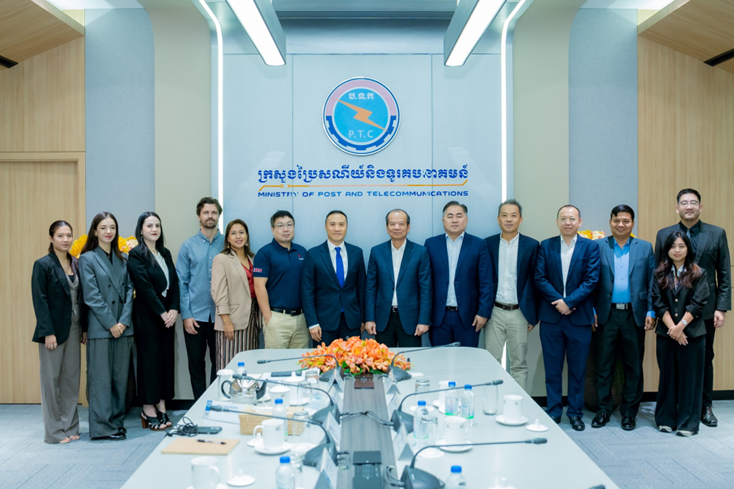
The minister will hold talks with several senior Cambodian officials: Deputy Prime Minister and Minister of Economy and Finance Aun Pornmoniroth, Minister of Commerce Cham Nimul, Minister of Mines and Energy Keo Rottanak, and Minister of Health Prof. Chheang Ra. He will also meet with the thriving French business community in Cambodia, which numbers at least 200 companies. The visit will conclude on 10 July with a press conference, held in French and Khmer, at the French Embassy.
Who Is Nicolas Forissier?
Born on 17 February 1961 in Paris, Nicolas Forissier is a graduate of Sciences Po Paris and holds a history degree from Paris-Sorbonne University. He began his career in communications and the press before founding and running several companies in the printing and regional press sector in the late 1980s.
Elected a municipal councillor of La Châtre, in the Indre department, in 1989, he served as its mayor until 2017, while also sitting in the National Assembly as a deputy for the Indre since 1993, across several consecutive terms. He has twice held ministerial office, as Minister of State attached to the Minister of Agriculture, Food, Fisheries and Rural Affairs from 2004 to 2005, then as Interministerial Delegate for Agrifood and Agro-Industry from 2006 to 2007, and as National Mediator for the Agriculture Support Plan between 2009 and 2010.
A regional councillor for Centre-Val de Loire, he chairs the region's finance committee as well as its main opposition group. He has also chaired the board of the French Foreign Trade Centre (CFCE) and Ubifrance, and served on Bpifrance's national steering committee — a career path that long prepared him for the challenges of French foreign trade. Appointed Minister Delegate for Foreign Trade and Attractiveness in October 2025, he has since undertaken numerous trips abroad — including to Cameroon, Denmark and Greenland — to promote French economic interests.
Trade Slips Back in Early 2026
Nicolas Forissier's visit comes, however, against a less favourable backdrop than it might first appear. According to the latest figures from France's customs authority (DGDDI), Franco-Cambodian bilateral trade stood at €357 million in the first quarter of 2026, down 3.4% year-on-year. This decline follows an otherwise strong 2025, when trade grew 17.5% to reach €1.75 billion, driven notably by aerospace and agri-food — suggesting the start of 2026 marks a pause in that momentum rather than a lasting reversal.
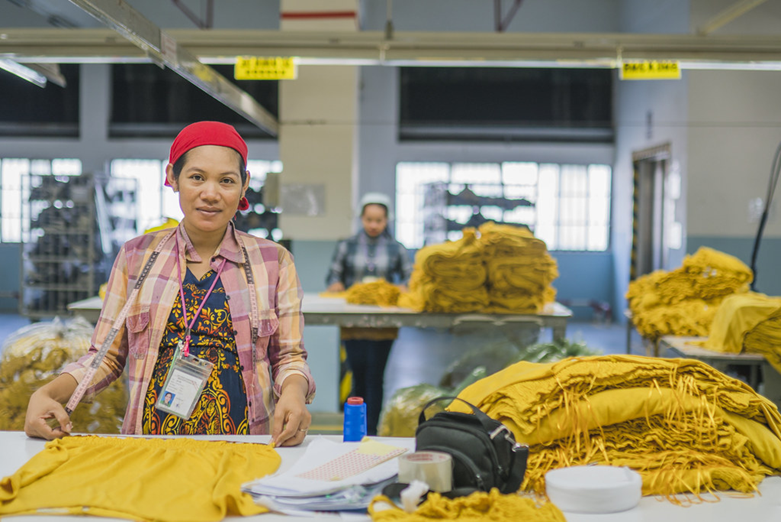
France's trade balance remains in deficit, at roughly €300 million for the quarter, despite a slight improvement. French imports, still dominated by textiles and footwear, fell 4.1% to €329 million. French exports, meanwhile, rose 6% to €28.3 million, driven by pharmaceutical, agri-food and perfumery products, which together account for nearly 80% of the total.
That export rebound comes with a caveat, though. It is partly driven by the sale of two ATR 72-600 aircraft destined for Cambodia Airways — planes actually purchased by Singapore-based leasing firm Avation, which then leases them on to the Cambodian carrier. Statistically, this transaction will be recorded as a French export to Singapore rather than to Cambodia, which tends to further understate the true scale of direct trade between the two countries.
On the investment side, France ranks only 9th among foreign direct investors in Cambodia, with 44 qualified investment projects approved since 1994 for a cumulative total of USD 380 million — well behind South Korea, Japan, Singapore and Malaysia, even as it remains the leading European investor in the Kingdom. France's economic footprint, then, still falls short of its stated ambitions, which is precisely what gives this ministerial visit — focused on reviving investment — its purpose.
French investment in Cambodia is concentrated mainly in construction, agri-food, energy, infrastructure and tourism, driven by major groups such as Vinci, through its Cambodia Airports subsidiary, Total Energies, Sanofi, Pernod Ricard and BRED Banque Populaire. Development cooperation rounds out the picture: the French Development Agency (AFD), present in Cambodia since 1993, has committed more than €1.5 billion in cumulative financing, having recently doubled its annual commitments in the water, energy and vocational training sectors.
The French business community is organised chiefly around the French-Cambodian Chamber of Commerce and Industry (CCIFC), founded in 1998 and now counting more than 250 active members, making it the leading private network of French companies in the Kingdom. It is this community — more than 200 companies according to the Embassy — that Nicolas Forissier will meet during his visit.
This Cambodian stop is part of a broader Southeast Asian tour: the minister will go on to Malaysia, another ASEAN member state, to deepen cooperation in sectors considered strategic — energy, infrastructure, health, the circular economy and critical minerals.

Comments