


Cambodia in the Hour of Francophonie: When a Discreet Kingdom Steps Onto the World Stage

There are diplomatic gatherings which, more than others, reveal a country’s trajectory. By hosting the 20th Francophonie Summit in November 2026, Cambodia reaches a milestone that, beyond protocol and customary speeches, says something essential about what this Southeast Asian kingdom has become — long scarred by history, now attentive to its own international stature.
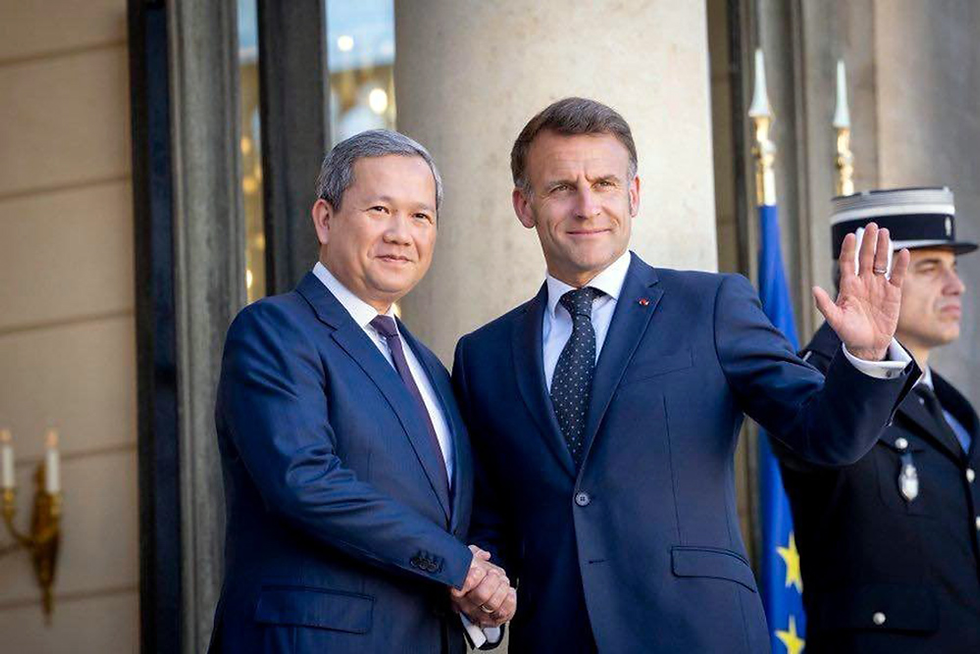
For the first time, the blue flag of the International Organisation of La Francophonie (OIF) will fly over Phnom Penh. Ninety member states and governments — 53 full members, 5 associates, 32 observers — will send their representatives. Nearly 396 million French speakers, from Dakar to Quebec, from Brussels to Hanoi, will have their eyes turned toward a country whose relationship with the French language remains unique, shaped by colonial domination, traumatic rupture, and a contemporary usage that diplomacy has managed to revive.
“Welcome to Cambodia”: these three simple, direct words resonate as much as a political statement as a cultural one.
A diplomacy forged through experience
Those who might be tempted to downplay the logistical challenge should consider the record. Over the past twenty-five years, Cambodia has organized three ASEAN Summits — in 2002, 2012, and 2022 — hosted the 13th Asia-Europe Meeting (ASEM) Summit in 2021, organized the Siem Reap-Angkor Summit on a Mine-Free World in 2024, chaired the 43rd ASEAN Inter-Parliamentary Assembly in 2022, celebrated the 32nd Southeast Asian Games in 2023, and held the Islamic Summit in 2025.
Each of these events, in its own way, has demonstrated the country’s ability to orchestrate the presence of heads of state, multilateral delegations, and complex diplomatic mechanisms.
The 2021 ASEM Summit deserves special mention. Organized in a virtual format — a constraint imposed by the Covid-19 pandemic — it brought together 30 European countries and 21 Asian countries, as well as the ASEAN Secretariat.
Despite the circumstances, Phnom Penh managed to produce tangible results: a Chair’s Statement, a Phnom Penh Declaration on post-Covid socio-economic recovery, and concrete directions on Euro-Asian connectivity. This is no small feat for a country still sometimes, and somewhat condescendingly, described as a “small state with limited economic resources.”
Francophonie as a strategic space
It would be reductive to see this summit merely as a prestige exercise. Francophonie is not just a linguistic community: it constitutes a geopolitical space in its own right, marked by tensions between North and South, between a certain French — and distinctly French — conception of multilateralism, and the aspirations of Global South countries seeking their own voice. Cambodia, in this regard, occupies a carefully balanced position: a member of ASEAN, a privileged partner of China, heir to an ambiguous relationship with former colonial power France, and open to investments and cooperation from all directions.
Hosting the Francophonie Summit therefore also means choosing to engage with this space in a more assertive way, at a time when France itself is rethinking its “pré carré” in Africa and seeking new anchors in Asia. Phnom Penh is well aware that its visibility in the Francophone sphere can serve as a diplomatic, economic, and cultural lever — provided it does not allow itself to be reduced to the role of a mere exotic backdrop.
Restoring peace for shared prosperity and lasting stability: a theme that resonates strongly in a region where memories of war remain vivid.
A theme grounded in reality
Cambodia has chosen to place its summit under the banner of peace and shared prosperity. The theme — Restoring peace for shared prosperity and lasting stability — cannot be read as an empty slogan in a country that, less than fifty years after the genocidal horror of the Khmer Rouge, seeks to position itself as an actor of regional stability. There is a narrative coherence here that even the most seasoned diplomacies sometimes struggle to construct so naturally.
Logistics, security, and event management teams are now working to coordinate what promises to be a dense summit: delegations from 90 countries, final documents to negotiate, and protocols to observe for heads of state, some of whom may never have visited Phnom Penh before. Responsible institutions and working groups are mobilizing to ensure the smooth execution of every stage.
Maturity cannot be decreed
A more fundamental question remains: what does it mean for a country to “mature” on the international stage? Not merely hosting summits efficiently — although that is no small feat — but demonstrating the ability to shape debates, propose initiatives, and build alliances that go beyond simple geographic proximity. It is by this standard that the 20th Francophonie Summit will, in part, be judged. Will Cambodia seize this platform to make its own voice heard — not just as a host, but as a distinct Cambodian voice — on the major issues shaping the Francophone world?
The warm hospitality of the Khmer people, the richness of a cultural heritage that has survived the harshest trials, and the energy of a rapidly transforming capital all provide a favorable setting. But diplomacy, like literature, is as much about style as it is about substance. And in November 2026, Cambodia will have the rare opportunity to define its own before the world.
The 20th Francophonie Summit will take place in Phnom Penh on November 15 and 16, 2026. This is the first time Cambodia has hosted this event. The International Organisation of La Francophonie brings together 90 member states and governments.
Agence Kampuchéa Presse

I honestly didn’t expect Drive Mad to have such creative level design. A few stages almost feel like puzzle games because choosing the right speed matters more than simply driving forward.