


Cambodia : Bak Nim, Healing Bodies and Souls in the Shadow of the Khmer Rouge

In Kampot province, a community center is working to mend the bodies and souls of those who survived the Khmer Rouge hell. Half a century after the genocide, the wounds remain — and the memory is more urgent than ever.
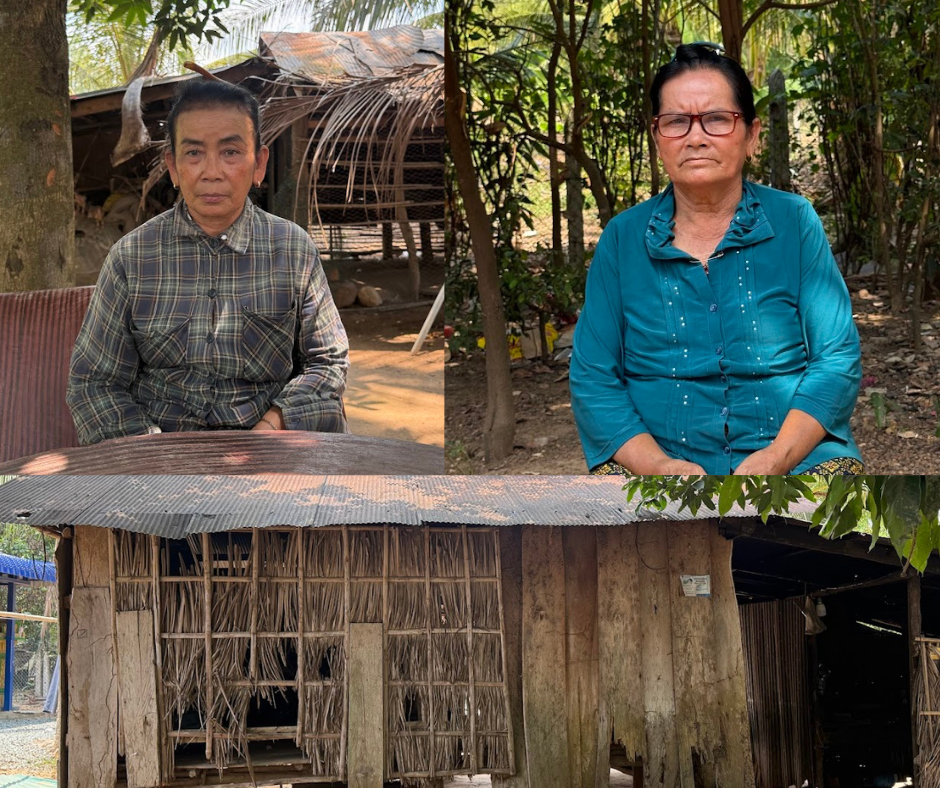
At the end of a red laterite track, far from the paved roads of Chum Kiri district, Bak Nim village seems suspended in a time the rest of Cambodia wanted to forget. Rice fields stretch endlessly, children play under mango trees, and the elders — the real elders, those who endured the unspeakable — sit in the shade of their stilt houses, silent.
Their bodies bear the precise accounting of a monstrous era: four years under Pol Pot's regime, from 1975 to 1979. Forced labor, organized famines, loss of loved ones, constant terror. Fifty years later, their aching joints, weary hearts, and haunted nights still bear witness.
It is for these men and women that the Documentation Center of Cambodia (DC-Cam) — the pioneering organization for Khmer genocide memory, founded by Youk Chhang — created the Bak Nim Community Healing Center: a community healing center at the intersection of public history and public health. An initiative that seeks to answer a question as simple as it is urgent: how do we care for those who have bequeathed us everything, including the story of the horror?
“My eye hurts, half my body too”
Mom Nao is sixty-three years old. She learned about a free medical consultation from neighbors and got up at dawn to secure her spot. Sitting across from the doctor who came from Phnom Penh, she describes her ailments with the modest precision of people accustomed to suffering in silence: nerve pain in one eye, intermittent paralysis on half her body, stomach cramps that strike without warning. She has never been able to get proper treatment. Medical infrastructure has never reached Bak Nim.
Koem Reng, fifty-eight, complains of a stiff neck and numbness in his limbs. He took whatever medications he could find in the past. Phlung Yoeng, Chouk Thenh, Sou Yien — each carries their own catalog of physical sequelae, inherited from decades of precarious living conditions worsened by the regime's traumas. These sick bodies are, literally, living archives.
During the first consultations organized by DC-Cam in March 2023, two volunteer Filipino doctors compiled a devastating health assessment. Among the villagers examined: 85% suffered from hypertension, ranging from moderate to severe; 50% had type 2 diabetes, several unaware of their own diagnosis; 30% showed electrocardiogram abnormalities — rhythm disorders, left ventricular hypertrophy, traces of silent heart attacks.
“Due to near-slavery working conditions, famine, and the loss of loved ones, those who survived the Khmer Rouge are not healthy today,” summarizes Youk Chhang, DC-Cam's director. “Keeping their stories alive is crucial. The best way to do that is to let them tell them themselves. So we must do everything to help these witnesses live longer.”
A village on the perpetrators' side
Bak Nim holds a particularity that DC-Cam does not shy away from: the majority of its inhabitants were, during the genocide, on the Khmer Rouge side. In the moral geography of Cambodian memory, the village has long been a pariah. Neither fully victims nor ever truly reintegrated into the national narrative, its people have lived in a painful gray zone.
“Reconciliation,” explains Youk Chhang, “requires reconnecting every broken fragment of our society — memory, truth, justice, peace, and socio-economic development. Rebuilding trust is the key. When these villagers finally meet doctors in a modern health facility, they experience true care. It helps them rebuild themselves.”
It is in this spirit that the organization has gradually extended its interventions to Bak Nim. After medical screenings, DC-Cam organized a trip to Phnom Penh for fifteen survivors — many had never left the province. A visit to the Royal Palace, a meeting with the Philippine ambassador, discovery of a capital in full transformation. For people who spent decades withdrawn into themselves, the experience was, according to collected testimonies, both overwhelming and liberating.
A center inspired by a revolutionary rice granary
The architectural project of the Bak Nim Community Healing Center carries meaning in itself. Youk Chhang says he commissioned four architecture students to design its model. The guiding image came from an old Khmer Rouge rice granary in Veal Veng, Pursat province — a symbolic repurposing of a terror edifice transformed into a space of care and memory. A way to turn history against itself, extracting something human from it.
In 2024, DC-Cam took another step by delivering an X-ray machine and other essential hospital equipment to Bak Nim's military infirmary — a donation from Phnom Penh's InterCare hospital. This infirmary, under the 31st Infantry Brigade, also serves as a community health center for civilians, especially elderly genocide survivors. It has forty-two staff members, including three doctors. A luxury, on the scale of an isolated rural area.
Against the race against time
Behind the medical urgency looms another, even more relentless one: time itself. Direct survivors of the 1975-1979 period are between sixty and ninety years old. Every year that passes takes irreplaceable voices. DC-Cam has already collected testimonies from over 32,000 survivors nationwide, identifying ten dominant chronic diseases in this population along the way. The USAID-funded “History and Healing” project extends this work by combining research on survivors' living conditions with awareness campaigns and concrete health improvement initiatives.
Young volunteers from CamboCorps, DC-Cam's civic arm, regularly tour the province to interview elders, gather stories, and distribute “memory boxes.” Faced with these men and women who lived the unimaginable, they try to imagine: “What would we have done in their place?” The question is not rhetorical. It is, say the organization's leaders, the starting point of any genocide education worthy of the name.
Photo and Text by Phat Punlork
Documentation Center of Cambodia (DC-Cam): www.dccam.org -
Bak Nim Community Healing Center: baknim.dccam.org


Comments